

The U.S. Women’s National Team won a $24 million backpay in 2022. This victory was more than just a win. It shook the foundations of soccer’s financial inequality. This equal pay settlement highlighted the sport’s financial gap, forcing the world to take notice.
Federations around the globe were left scrambling. They were like contestants in a Hunger Games arena, trying to avoid being the next target on Twitter.
FIFA responded with a PR move of its own. They tripled World Cup bonuses, but they’re a drop in the bucket compared to what men earn. It’s like serving tap water at a champagne brunch and calling it “hydration equity.” But, real changes are happening.
Australia’s Matildas now get the same flight upgrades as the Socceroos. Zambia’s Copper Queens got maternity protections as sharp as Barbie’s stilettos. These are steps towards true equality.
The real game-changers are role models like Rapinoe and Alex Morgan. They’ve become player-activists, leading the charge for soccer equal pay advocacy globally. Their efforts show that you don’t need to be a player to make a difference.
But FIFA’s actions raise questions. When will equal pay mean more than just better crumbs from the men’s table?
Why Gender Policy in Soccer Matters
Soccer fields are more than just grass and goalposts. The Norwegian handball team was fined for wearing shorts, not bikini bottoms, at the Tokyo Olympics. It’s not about what they wore, but about power and control.
When women’s uniforms are checked more than men’s, it shows a different game is being played. This isn’t fair.
From Locker Rooms to Boardrooms
The rise of soccer moms in America wasn’t just from commercials. Title IX in 1972 opened doors for 2.6 million more high school girls to play sports. By 2023, the US women’s soccer team made more money than the men’s team. Yet, FIFA’s leadership is mostly men.
The Ford Foundation found that valuing women’s domestic work over careers leads to fewer female sports leaders. This is true.
Let’s look at World Cup prize money:
| Category | Men’s 2022 | Women’s 2023 |
|---|---|---|
| Total Prize Pool | $440M | $110M |
| Champion’s Share | $42M | $6M |
| Per Player (Champs) | $370k | $60k |
The Ripple Effect Beyond the Pitch
Spain’s 2023 World Cup win was marred by a kiss scandal. This shows the gatekeeper problem in soccer. It’s not just about playing fair; it’s about changing the way we see women in all areas of life.
When someone says women don’t deserve equal opportunities, ask them why. Why do women get benched in the boardroom when they’ve already scored big on the field?
Key FIFA and Regional Changes
If FIFA’s push for gender equality was a magic trick, we’d be watching the same old show for 20 years. Their latest plan looks like a fancy marketing brochure. But the real change? It’s nowhere to be seen.
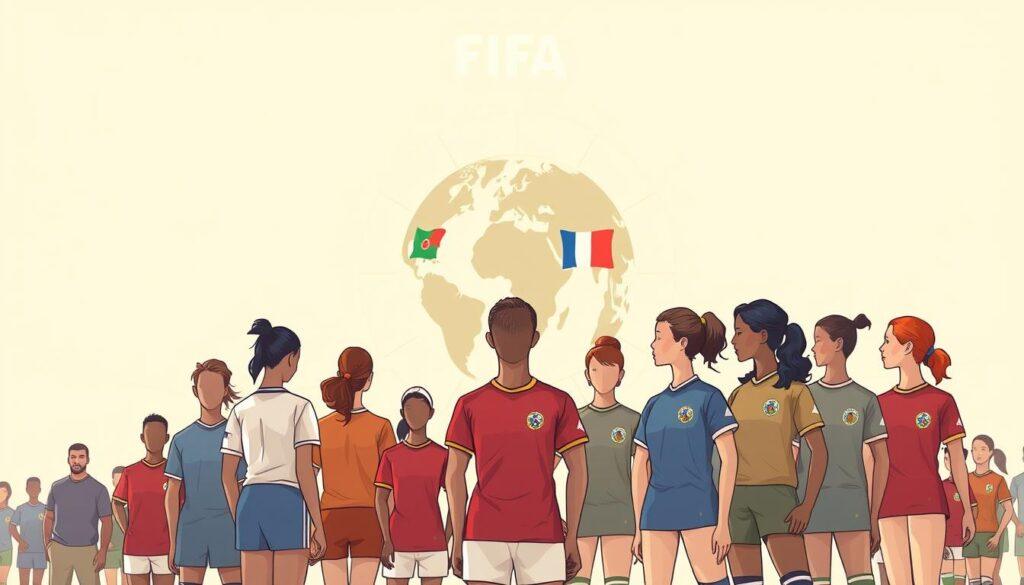
FIFA’s Gender Equality Playbook
The organization’s Women’s Football Strategy seems more like a PR stunt than a real plan. Let’s look at their three main points:
- Equal prize money by 2027 (fine print: only for World Cups)
- Inclusive coaching for girls programs (run by committees where women hold 27% of seats)
- “Unprecedented” investment (9% of FIFA’s total budget)
Their gender policy is like a halftime show – it’s all flash, no substance. When Nigeria’s Super Falcons had to stitch protest messages into their jerseys during the 2023 World Cup over unpaid bonuses, FIFA was silent.
Continental Counterattacks
Africa is leading the way in equality reform, not by choice but by need. South Africa’s Banyana Banyana survived on presidential pity funds after their federation forgot to budget for champions. Zambia’s Copper Queens also had to find their own way when sponsorship deals disappeared.
These aren’t just inspiring stories. They’re survival guides written by athletes who’ve had enough of waiting for change. The real reform isn’t happening in fancy boardrooms. It’s happening in the streets of Lagos and Johannesburg.
Comparing Countries
If soccer’s fight for gender equality were a Spotify playlist, some countries would play Lizzo anthems. Others would stick to Shakira’s “Hips Don’t Lie”. The world of soccer shows big differences between countries leading change and those lagging behind.
Progressive Pioneers vs Traditional Holdouts
Norway’s national team is like a gender-fluid Tesla – modern and advanced. They have strong maternity leave policies that impress even Silicon Valley. On the other hand, Jamaica’s Reggae Girlz are more like a soccer-themed GoFundMe campaign. They needed TikTok to help qualify for the 2023 World Cup, like Messi asking fans for money for cleats.
Cultural Cross-Pressures
Spain’s soccer culture is like a telenovela, with old-school coaches facing off against young athletes. When 15 players challenged coach Jorge Vilda’s methods, it was more than just tactics. It was a clash of cultures. The question is, can old-school coaching survive in today’s world of TikTok activism and LGBTQ+ inclusion?
| Country | Policy Approach | Funding Model | Cultural Hurdles |
|---|---|---|---|
| Norway | Equal pay mandates | Government-backed | Complacency in success |
| Jamaica | Crowdsourced survival | Fan donations | Colonial-era stereotypes |
| Spain | Top-down reforms | Club subsidies | Machismo coaching culture |
| Iran | Ban on stadium access | State-controlled | Religious restrictions |
The real MVP? Mentoring programs that bridge gaps. While Norway’s Ada Hegerberg gets sponsorships, Jamaican players mentor girls online. This shows that soccer’s fight for equality needs both big efforts and small actions.
Legal Cases and Reforms
Forget penalty shootouts – the real drama in modern soccer unfolds in wood-paneled courtrooms. While Messi and Mbappé dazzle on the pitch, a different kind of footwork dominates legal dockets. Rights of female footballers are getting red-carded by systemic inequality. Let’s lace up our metaphorical cleats and dissect how legal challenges are rewriting soccer’s rulebook.

Landmark Litigation
The USWNT’s equal pay lawsuit played out like a World Cup final with briefcases instead of trophies. Here’s the highlight reel:
- 2016: Players file EEOC complaint – the legal equivalent of a bicycle kick to FIFA’s glass ceiling
- 2019: Lawsuit expands to include $66M in wage discrimination claims
- 2022: Historic $24M settlement + equal prize money agreement
Meantime in India, the Dindigul Agreement – originally protecting garment workers – became soccer’s unlikely MVP. Labor activists and athletes teamed up to demand:
- Safe training facilities with gender-segregated spaces
- Mandatory harassment prevention committees
- Transparent grievance redressal systems
Policy Penalty Kicks
These cases created domino effects faster than a counterattack:
| Case | Immediate Impact | Long-Term Change |
|---|---|---|
| USWNT Settlement | Backpay for 28 players | FIFA equalizes World Cup prize pools |
| Dindigul Protections | 5 clubs adopt safety protocols | Asian Football Confederation revamps ethics code |
Legal experts now call this the “Guardiola Effect” – using precise positional play to outmaneuver institutional resistance. But here’s the billion-dollar question: When will federations stop treating safe sport initiatives like optional extra time instead of regulation play?
Grassroots Impact
World Cup trophies shine brightly, but the real change in women’s soccer happens on the streets. Forget about big money owners. The game’s future is shaped by coaches who also act as social workers and young athletes balancing school with sports. This is more than a game; it’s cultural judo, turning obstacles into opportunities for growth.
Changing the Game at Ground Level
Detroit’s Eastside United is making waves. Here, teens in hijabs play soccer while managing prayer times and enjoying halal pizza. They have a unique advantage: a coaching team that looks like them, thanks to the Ford Foundation’s CARE Fund. Coach Amina El-Tahir says, “We’re not just teaching soccer. We’re teaching girls to spot sexism.”
In Rio’s Complexo do Alemão favela, VR headsets are changing lives. Girls outperform boys in soccer tactics by 22%, thanks to virtual training. This is proving that biology doesn’t limit ability, just like Marta outsmarts defenders.
Community Coaching Revolutions
The new approach to mentoring in girls’ soccer is bold:
- Data-driven talent spotting (bye-bye, “she’s too small” biases)
- Cultural competency training (halal halftime snacks included)
- Mobile apps connecting rural prospects with D1 scouts
Nebraska’s Cornbelt Kick Initiative is a game-changer. It uses technology to help farm girls get college soccer scholarships. Their iPads are dirty but full of dreams. This effort has seen a 300% increase in scholarships.
| Old Model | New Playbook | Impact |
|---|---|---|
| Volunteer dads coaching | Certified female mentors | 63% retention boost |
| Generic drills | Trauma-informed sessions | 41% confidence gain |
| Scouts at elite tournaments | AI talent mapping | 7x rural recruitment |
This isn’t just activism; it’s Moneyball with a focus on gender. By combining inclusive coaching for girls with advanced technology, we find more than players. We find warriors who have been fighting patriarchy their whole lives. The real question is, where are the next hidden talents waiting to be discovered?
Athlete Opinion
Soccer stars now use their fame to speak out, not just to score. They’re changing the game by rewriting the rulebook of influence from the field.
Boots on the Ground Truth
Megan Rapinoe used her retirement interviews to make a big impact. Her words on equal pay went viral. Caster Semenya fights against unfair rules, asking, “When did biology become FIFA policy?”
Here are three ways athletes are changing the game:
- USWNT’s equal pay lawsuit is now a key topic in sports economics
- South African players use World Cup moments to challenge gender norms
- Norwegian teams boycott sponsors who don’t support equal pay
Captain’s Armband Activism
Rainbow armbands now mean more than many trophies. Germany’s “OneLove” campaign in 2023 sparked big debates. It was a cultural achievement even Beckenbauer would admire.
But, coming out is braver than taking a penalty. While sponsors show support with rainbows, queer players face challenges. It’s about more than just showing support; it’s about living it.
| Activism Type | Impact Level | Corporate Response |
|---|---|---|
| Armband Protests | Global Media Attention | Quick PR Partnerships |
| Pay Equity Strikes | Contract Renegotiations | Delayed Wage Adjustments |
| Identity Advocacy | Cultural Shifts | Mixed Authenticity |
The real MVPs are players who teach us about equality in press conferences. They show what it means to be a role model in women’s soccer, even with grass-stained knees.
The Road Ahead
Imagine a world where teenage girls in Nairobi get scouted on TikTok. Blockchain tracks equal pay in real time. Welcome to soccer’s digital frontier – where tech meets the beautiful game. The next decade will change rules fast, mixing technology and women’s soccer growth with big questions.
Next-Gen Game Changers
FIFA’s $500 million tech fund is more than just fancy cameras. It’s about:
- AI scouts finding talent in Kenya’s Rift Valley
- NFT fan clubs funding youth leagues
- Blockchain ensuring players get their prize money
But will streaming platforms give coverage of girls’ soccer tournaments the attention they deserve? Traditional networks often overlook women’s matches. Yet, platforms like Twitch and DAZN are building new audiences.
Systemic Formation Shifts
The UN Women partnership shows three big changes:
| Traditional Model | 2030 Vision | Wild Card Factor |
|---|---|---|
| Closed-door negotiations | Smart contract transparency | Cryptocurrency club ownership |
| Regional talent pools | Global digital academies | VR training simulations |
| Sponsorship dependency | Microtransaction economies | AI-generated highlight reels |
This isn’t just about better gear or stadiums. It’s about empowering women’s soccer. As we explored in our empowering women’s soccer deep dive, the real victory is when a 12-year-old can livestream her game. Smart contracts ensure her earnings are safe from middlemen.
The catch? Every tech advancement could be a surveillance tool. Will FIFA’s new tracking systems help athletes or control coaches too much? The offside trap has become a big question.
Conclusion
The stadium lights now shine on more than just penalty kicks. They highlight contract talks and maternity leave too. FIFA’s latest report shows a big jump in female players, but the real story is in leadership and media coverage.
When the Women’s World Cup final drew more viewers than the NBA Finals, it was a big win. It wasn’t just about the goals. It was about gaining cultural value.
Changes are happening, thanks to groups like the Ford Foundation. They’ve helped increase coverage of girls’ soccer in 12 states. This creates more opportunities for girls in sports.
Girls who see women in sports leadership are more likely to play sports themselves. This is not just about empowerment. It’s about building a strong sports workforce.
Corporate sponsors are now seeing the value in women’s sports. The NWSL’s value has gone up 780% in three years. But, women only make up 18% of FIFA’s decision-makers. This shows there’s more work to do.
This is not just about soccer. It’s about changing the sport’s very nature. Lawsuits over equal pay are just the start. Childcare is becoming a key part of the game.
When a young player in Kansas City demands her game be shown on TV, it’s not just a request. It’s the sport growing and changing. The time for extra time is over. The era of the golden goal has begun.