
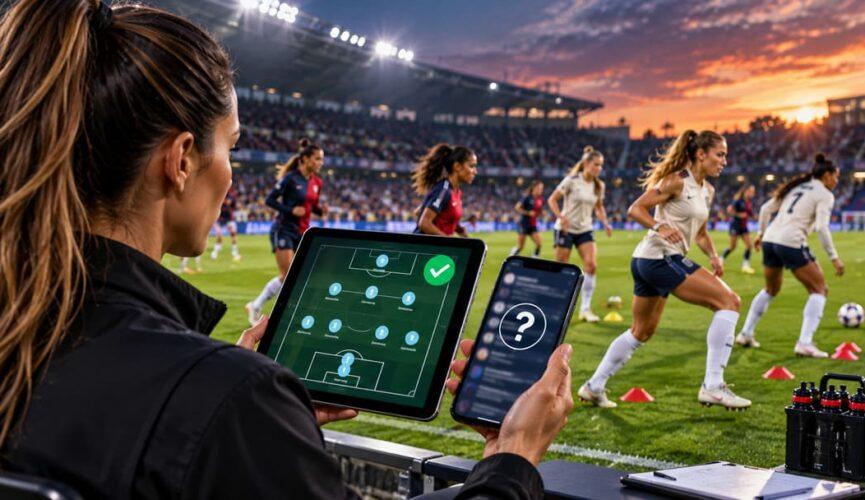
Women’s soccer injury rumors can spread faster than an official team announcement. A player disappears from a training photograph, a fan shares an outdated lineup, or a coach offers a vague update about someone’s fitness. Within hours, uncertainty becomes a confident claim that a key midfielder is injured, a striker will miss the next match, or a goalkeeper has lost her starting position.
For adult supporters who follow sports discussions online, the speculation can extend into forums such as TheRX betting community, where users exchange predictions, match opinions and reactions. Those conversations may reveal what fans are thinking, but they cannot establish a player’s medical condition or confirm an upcoming lineup. Even widely repeated claims need an identifiable source.
The challenge is learning to distinguish three things: what a team has officially confirmed, what remains unknown, and what a possible absence could mean tactically. That distinction helps supporters discuss women’s soccer with greater accuracy while respecting the players behind the headlines.
Why Women’s Soccer Injury Rumors Become Matchday News
Player availability influences almost every aspect of a soccer match.
A missing center-back can force a defensive reshuffle. An unavailable midfielder may change how a team progresses the ball. Losing a regular winger can affect both attacking width and defensive pressure.
Supporters naturally want this information before kickoff. The trouble begins when a plausible explanation is treated as a verified fact.
Consider a hypothetical situation: a forward is absent from a club’s promotional training video. Someone suggests she has suffered an injury. Another account reposts that suggestion without the original uncertainty. By the time it reaches a larger audience, the story says the forward has been ruled out.
Yet the original observation established only one thing: the player did not appear in that particular video.
She might have trained separately, appeared outside the edited footage, received permission to miss a session, or simply not been included in the post.
None of those possibilities should be presented as the actual explanation without evidence.
An observation is not the same as a diagnosis. That principle should guide every discussion of unconfirmed player availability.
What Official NWSL Availability Reports Actually Tell Fans
The National Women’s Soccer League provides a useful starting point through its official NWSL availability report.
The report organizes player information by club and uses categories including Out, Questionable and International Duty. Its listings can identify injuries, season-ending injury designations, maternity leave and excused absences.
These categories answer different questions.
An Out designation establishes that a player is listed as unavailable in that report. It does not automatically explain the complete medical situation or establish an exact return date.
A Questionable designation indicates uncertainty over participation. It should not be rewritten as confirmation that the player will miss the match.
International Duty identifies a different reason for absence. It is not evidence that the player is injured.
Equally important, a player who does not appear among the reported absences is not necessarily guaranteed a starting position. Coaches can make tactical selections, manage minutes or use different combinations without the decision being injury-related.
Reports also have dates. A status published earlier in the week should be checked again against newer official information before anyone describes it as the latest team news.
Four Types of Information That Fans Often Confuse
A useful way to assess women’s soccer injury rumors is to ask what each source can actually prove.
| Information | What It Establishes | What It Does Not Establish |
|---|---|---|
| Official availability report | A player’s reported status at a particular time | The full diagnosis or guaranteed return date |
| Club or coach statement | The details explicitly confirmed in that statement | Unannounced medical information or future selection |
| Official starting lineup | Who has been selected to start and, where shown, the substitutes | Why someone was excluded |
| Forum post or social-media rumor | What another person is claiming | That the claim is accurate or independently verified |
The most common error is moving from the second column to the third without additional evidence.
For example, a player appearing on the bench confirms that she is among the selected substitutes. It does not prove she can play a full match at maximum intensity.
Likewise, a player missing from the starting eleven might be injured, but could also have been rotated for tactical or workload reasons.
The appropriate conclusion depends on the information available, not the explanation supporters find most convincing.
How to Verify Women’s Soccer Injury Rumors Before Kickoff
The best verification process begins by establishing the exact fixture and date.
A screenshot from an earlier match may contain genuine information that no longer describes the current situation. Before sharing it, identify when the original announcement was published and which match it concerned.
Next, compare the claim with the club’s official communications and the league’s most recent availability information. A named reporter’s account of a coach’s press conference can provide additional context, particularly when the original comments are accessible.
Finally, check the official starting lineup and substitutes when they are published.
These announcements resolve some uncertainties but not necessarily all of them. A missing player may still have no publicly confirmed medical explanation.
It also helps to distinguish between different kinds of evidence. A video of a player warming up establishes that she participated in the visible activity. It does not necessarily establish that she is fully fit or certain to start.
A private message attributed to a team employee deserves even more caution. Without independent confirmation, it remains an unverified claim.
The goal is not to collect the greatest number of posts repeating the same story. It is to trace the information back to a reliable, dated source.
Ten accounts repeating one unverified report do not constitute ten independent confirmations.
What a Missing Player Can Change on the Field
Once an absence is confirmed, the next useful question is tactical rather than medical.
Suppose a team loses its regular holding midfielder.
That midfielder might normally offer a passing option to the center-backs, shield space in front of the defense and cover for attacking full-backs. Replacing her with a more attack-minded player could affect several phases of play.
The most revealing questions would concern positioning and responsibilities. Who receives the first pass when the team builds from the back? Who protects the central channel when possession is lost? Does the midfield press as a unit or become stretched?
Now imagine that the unavailable player is a winger.
The consequences may be different. A replacement could favor movement inside rather than staying wide, which might require a full-back to advance more aggressively. The team could maintain its attacking threat but create opportunities through different movements.
These are examples, not predictions about any particular club.
BanatZayed’s guide to reading women’s soccer matches beyond the scoreline offers a useful framework for following movement, pressing and defensive organization. The same observation skills help fans evaluate lineup changes without making unsupported claims about individual players.
A star’s absence may be significant, but the team’s response matters just as much as the missing name.
Player Privacy Deserves the Same Attention as Accuracy
There is a limit to what supporters are entitled to know.
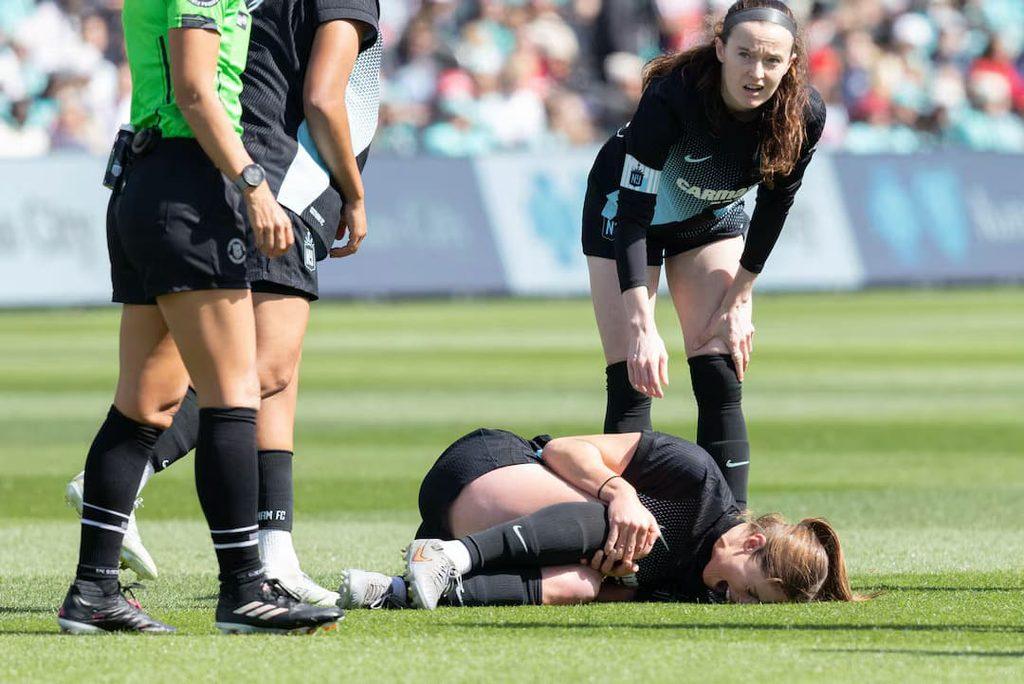
A club may communicate that someone is unavailable for personal reasons without providing further information. That does not give spectators permission to invent an explanation.
Speculation about medical diagnoses, family circumstances, pregnancy or private disagreements can be especially damaging when it circulates under the appearance of insider reporting.
The distinction between professional analysis and personal speculation should remain clear.
It is reasonable to discuss whether a missing midfielder changes a team’s formation. It is not reasonable to attribute that absence to a private medical condition without credible confirmation.
Clubs also have legitimate responsibilities involving player privacy and welfare. Supporters may want more detailed updates, but incomplete public information should not automatically be interpreted as evidence that something suspicious has occurred.
A responsible fan conversation can acknowledge uncertainty without filling the gap with rumors.
Why Corrections Matter as Much as Breaking News
Sports discussions rarely stop after the first announcement.
A player initially listed as questionable might later appear in the matchday squad. A reported absence could be clarified by the club. A screenshot circulating online may turn out to describe an earlier fixture.
When that happens, the original interpretation needs to change.
One useful habit is to separate an observation from its proposed explanation.
“The player was not in the starting lineup” describes something that can be checked.
“The coach dropped her because of a disagreement” proposes a cause that requires its own evidence.
That discipline makes corrections easier because the conversation was never built around pretending uncertainty did not exist.
It also improves the quality of post-match analysis. Instead of repeatedly debating an unconfirmed story, supporters can examine what the selected players actually did, how the team adapted and whether the tactical adjustment worked.
A Better Way to Follow Matchday News
The value of accurate player information extends beyond predicting who will win.
It helps fans appreciate coaching decisions, recognize the demands of squad management and understand why a team may look different from one match to the next.
Women’s soccer injury rumors will continue to circulate wherever supporters gather. The existence of a rumor is not necessarily the problem. The problem is when an unsupported explanation becomes accepted as established fact.
Start with the latest official information. Check the date. Confirm the lineup. Separate the observable football consequences from personal assumptions.
When reliable information is unavailable, saying that the situation remains unconfirmed is not a failure of analysis.
It is often the most accurate assessment anyone can make.