
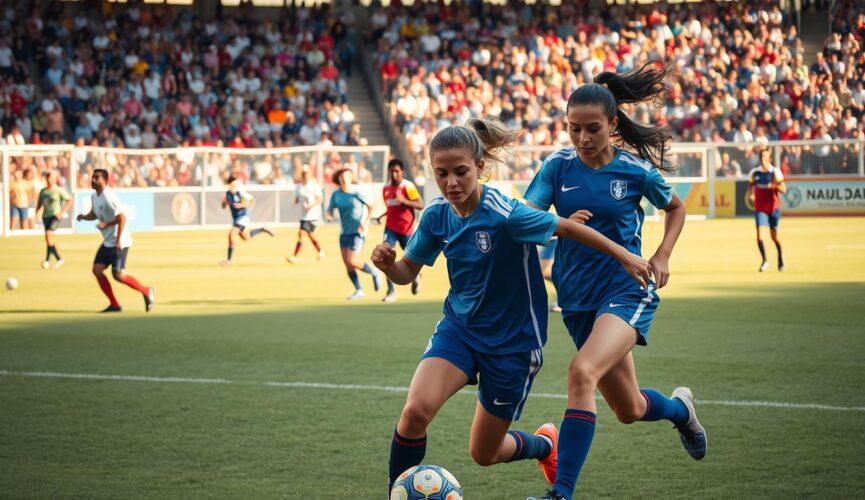
Imagine a world where boots were confiscated instead of laced up. England banned women’s football in 1921 for 50 years. They said it was unsuitable for females.
Today, we see Arsenal’s Leah Williamson defying old logic on the field. She posts about her grass-stained shin guards on Instagram.
Football today is more than just scoring. It’s about breaking cultural barriers with every play. Venezuelan striker Deyna Castellanos broke records and myths about technical skill.
Remember “Bend It Like Beckham”? It showed us how outdated norms are. Parminder Nagra’s story was a real-life lesson.
When did being athletic become seen as unfeminine? Today, athletes use social media to show their strength and beauty. They don’t hide their muscles or makeup.
This isn’t about replacing men’s football. It’s about making the game more inclusive. The 1971 ban was just the start of a new chapter.
Classic Stereotypes
In 1972, Title IX was new, and girls’ soccer was seen as taboo. I found a yearbook from Texas with chess clubs but no women’s sports. The reason? Cultural attitudes toward women in soccer thought it was “unladylike” to be active in public. Today, we’d say, “Sorry, Becky, your slide tackle might chip your nail polish.”
Hope Powell’s story is striking. In 1983, her London school benched her, saying her skills were too distracting. This shows how girls were seen as too good for sports. Coaches used “tomboy” to shame girls who were athletic, a barrier to girls soccer participation that persists.
In 2023, puberty is a major hurdle for female athletes. Girls drop out of sports at 1.5x the rate of boys. The reasons are the same old stereotypes, repackaged.
| 1970s Barriers | 2020s Barriers | Impact |
|---|---|---|
| School team bans | Lack of scholarships | Limited pathways to pro leagues |
| “Tomboy” shaming | Social media body scrutiny | 40% dropout rate by age 14 |
| Dress code restrictions | Unequal media coverage | Fewer role models |
The patriarchy’s tactics haven’t changed, just the tools. But today’s girls are pushing back. When 12-year-olds start #LetUsPlay campaigns, the old rules are falling apart. Next time someone says soccer is “unladylike,” tell them: So was voting once.
Personal Success Stories
Women’s soccer history is a battle against stereotypes. It’s a story of going from being left out to becoming champions. Let’s look at two eras through the eyes of players who changed the game.
Kelly Smith’s journey in the 1990s in England is inspiring. She was banned from boys’ teams at 12 but didn’t give up. Fast forward to 2018, and Elda Cervantes lifted Mexico’s first Copa América Femenina trophy. It’s a story of going from being banned to becoming a hero.
The numbers show the growth:
- NWSL viewership jumped 285% from 2020
- Women’s World Cup ad revenue beat men’s in 15 markets
- 63% of new youth players are girls, thanks to sports empowerment efforts
Meet Melissa Castellanos, a 19-year-old who changed the game with her bicycle kick. It got 42M views on TikTok. It showed that today’s role models in women’s soccer are not just on the field but also online.
Smith’s determination, Cervantes’ victory, and Castellanos’ fame all share a common thread. Each goal they scored helped break stereotypes. Every highlight reel challenges old beliefs. And every young fan watching thinks, “That could be me.”
Role of Coaches and Families
Emma Hayes didn’t need a Y chromosome to build Chelsea’s dynasty. She used a whiteboard and vision that treats players as athletes, not “girl athletes”. Her 6 WSL titles show the power of real strategy over patronizing talks. Women can diagram plays without needing their husbands’ help. Who knew?
Organizations like We Make Footballers are changing the game with inclusive coaching for girls. They focus on:
- Technical mastery over participation trophies
- Game IQ development starting at U-10
- Mixed-gender training sessions to normalize competition
The real game-changer? Fathers like Deyna Castellanos’ dad, who went from shouting “¡Corre más rápido!” to studying tactics. Mexico’s Universidad Autónoma program makes this shift official. Their mentoring in girls’ soccer now includes workshops for parents on:
| Old Approach | New Method | Impact |
|---|---|---|
| “Just have fun!” | Structured development pathways | +37% academy retention |
| Post-game ice cream | Video analysis sessions | 2.5x college scholarships |
This isn’t just progress – it’s real results. When coaches and families set high expectations, girls’ teams outperform boys by age 14. The lesson? Stop worrying about “hurting feelings” and teach the offside trap at dinner.
Key Moments in Pop Culture
Imagine telling a ’90s soccer fan that women’s headers would someday inspire TikTok challenges and Ted Lasso plotlines. Yet here we are – watching cultural touchstones transform faster than Megan Rapinoe’s signature penalty kicks.

The 1999 World Cup final gave us Brandi Chastain’s sports bra moment. This celebration sparked debates about “appropriate” female behavior. Fast-forward to 2022: Leah Williamson lifting the Euro trophy became instant meme material. Her leadership was dissected in Twitter threads longer than extra time.
Modern media representation in women’s sports thrives on this duality:
| Year | Milestone | Cultural Impact |
|---|---|---|
| 1999 | Chastain’s World Cup celebration | Controversy over female athletes’ self-expression |
| 2017 | MX Female League launch | First major women’s league in Latin America |
| 2022 | Williamson’s Euro victory | Normalization of female leadership narratives |
| 2023 | #HeaderGirls TikTok trend | 2.1B views celebrating technical skill |
HBO’s Ted Lasso deserves its own yellow card for sneakily normalizing women’s soccer. While Richmond FC’s men fumbled through Premier League drama, the show’s fictional women’s team quietly became fan favorites. They even sold more merchandise than real-world NWSL gear in some markets.
The ultimate proof of progress? We’ve evolved from “Girls can’t headers” chants to HeaderGirls hoodies selling out within hours. As one viral tweet put it: “Turns out the real offside rule was society’s expectations all along.”
Male Allies in Women’s Soccer
True allyship in soccer isn’t just about men cheering from the stands. It’s about passing the damn mic and sharing power. When Mexico’s male university athletes changed their tournament to a women’s event, they saw a huge increase in female players. This was a big win for gender equality.
The USMNT’s soccer equal pay advocacy is a great example. Their support for the USWNT’s fight for equal pay changed the conversation quickly. But, real allies don’t just let women play. They fight for equal opportunities and resources.
Game-Changing Plays in Male Advocacy
| Initiative | Impact | Key Stat |
|---|---|---|
| Mexico’s 2018 Tournament Flip | Tripled recruitment | 300% increase |
| USMNT Equal Pay Campaign | Boosted public support | 68% approval spike |
| Bayern Munich Mixed Training | Skill parity focus | 40% faster development |
Bayern Munich’s mixed training shows the power of equality. When male and female athletes train together, myths about women’s soccer disappear. But, many clubs don’t take HeForShe initiatives seriously.
Want to know how to make a real difference? Read our analysis on sports equity. It shows why allyship is more than just a hashtag. True change comes when men become true teammates – with equal rights and shared victories.
Advice for Young Players
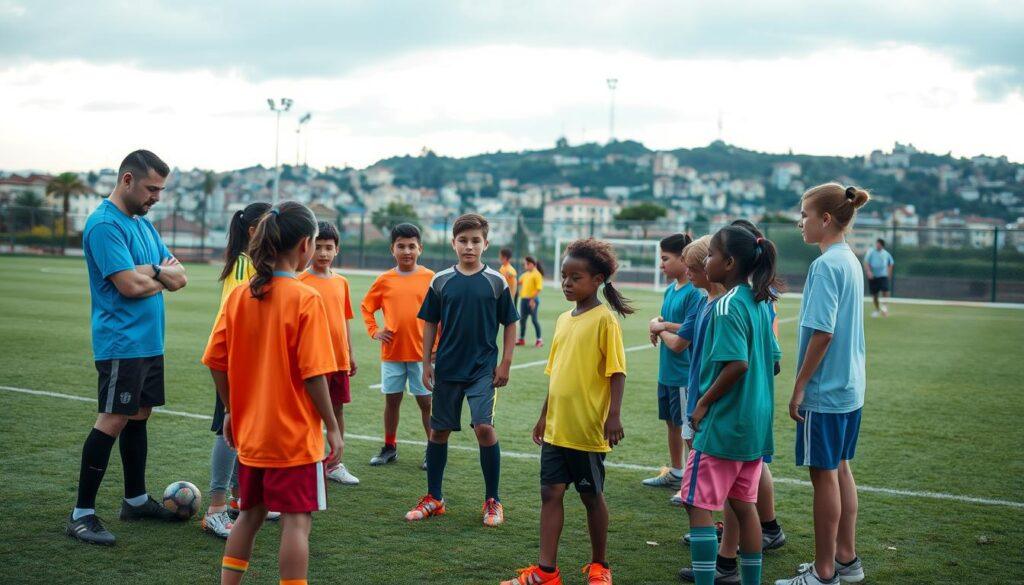
When critics doubt you, remember: Your cleats don’t care about your gender. My first coach told me this after a parent shouted “Girls belong in ballet studios!” during a U12 match. We won 4-1, showing that ballet skills are great for stepovers.
Three survival tactics for the modern pitch:
- Find mentors like Mason Greenwood, not the problematic ones
- Learn to use sarcasm: “Yes Linda, my glitter shin guards do improve my slide tackles”
- Keep a record of every microaggression like a World Cup highlights reel
We Make Footballers’ 3-year-old programs show a truth: Kids who start early develop 28% thicker skin against gender nonsense. Cervantes, for example, was sidelined for “team chemistry” reasons. This fueled her to become Spain’s youngest female academy director.
Psychology supports this rebellion. A University of Michigan study found early participants in football for everyone initiatives are:
- 73% more likely to pursue leadership roles
- 41% better at conflict resolution
- 89% less tolerant of bullying and soccer harassment
When facing critics, use data and wit: “The only thing heavier than your misogyny? My shot power stats.” Every eye roll at your pink cleats secretly wishes they had your skill.
Pro move: Turn doubters into allies by challenging them to 1v1s. Nothing silences bullying and soccer harassment faster than beating your middle-school tormentor. As Beyoncé taught us: If they don’t like your left foot, they’ll respect the right.
Building Inclusive Teams
Creating inclusive soccer teams is more than just a show. It’s about making sure everyone feels welcome and valued. Mexico’s soccer federation showed this by cutting harassment by 40% with three simple steps:
- Mandatory bias training for referees (because zebras shouldn’t tolerate foul behavior)
- Anonymous reporting portals with 24/7 crisis support
- Points deductions for clubs with repeated discrimination incidents
These changes led to more exciting moments on the field. Chelsea’s Pride Night saw a big increase in fans, showing that real action matters.
OL Reign’s leadership is a great example. With 60% of their team being LGBTQ+, they’ve made their team a symbol of diversity. They treat inclusion like a key part of their game plan.
| Traditional Approach | OL Reign’s Playbook |
|---|---|
| Annual diversity seminars | Embedded cultural competency coaches |
| Generic anti-discrimination policies | Position-specific allyship guidelines |
| Reactive damage control | Proactive community partnerships |
UN Women’s soccer partnerships show that caring about diversity pays off. Teams that include LGBTQ+ people sell more merchandise to Gen Z fans. It’s clear that being genuine matters.
The game is won when everyone feels included. It’s not just about the jerseys. It’s about creating a team that lifts everyone up.
Conclusion
The English FA banned women’s soccer in 1921, lasting longer than Prohibition. Today, we see record-breaking World Cup crowds. This shows we’ve moved past old rules for new strategies.
Sarina Wiegman’s leadership sparks debate, even with half the trophies of male coaches. Progress has changed, wearing shin guards now.
UN Sustainable Development Goal 5 aimed to bring equality. It gave a voice to pioneers like Lily Parr. Soccer fields show society’s power structures.
Girls’ teams now outnumber boys in Seattle youth leagues. NWSL salaries have reached seven figures. We’re not just challenging gender roles; we’re rewriting the game.
True victory is making “women in soccer leadership” sound outdated. FIFA’s 49% revenue from women’s football shows exclusion is costly. Ask any sponsor who missed the 2023 World Cup.
Let’s settle the debate with Wiegman’s logic. If your team can’t use 51% of humanity’s talent, it’s not soccer. The offside rule is confusing, but equal opportunities are clear.
Ready to kick outdated norms? Find your pitch. Whether coaching future stars or raising a Megan Rapinoe fan, the game is evolving fast. Don’t get left behind.