
In 1921, England’s Football Association banned women’s matches, saying it was “unsuitable for females.” Fast-forward to 2023, and Megan Rapinoe’s rainbow-haired celebrations light up stadiums. The NWSL also breaks attendance records. How did we shift from banning women to breaking records? Let’s explore the quiet earthquake you might not have seen.
Title IX, passed in 1972, made colleges fund female sports. This led to a 900% explosion in girls’ soccer. It’s not just growth; it’s a big change against the old ways. But, TV cameras often treat female athletes like background singers.
ESPN talks about male athletes’ “grit” but barely mentions Alex Morgan’s World Cup wins. They focus on her ponytail length. We’ll look at how media shapes what we think. And why brands now want to sell jerseys to your teenage niece. It’s not just about equality. It’s about capitalizing on a $1 billion market that’s been ignored for too long.
Stay with us. We’re going into locker rooms, boardrooms, and the changing cultural scene.
Cultural Barriers Defined
Why does a girl with a soccer ball face more obstacles than a penalty shootout? Let’s look at the gender stereotypes soccer fans hold onto. Girls in Lahore to Dakar face three main barriers: “It’s unladylike,” “You’ll get hurt,” and “Who’ll marry you?”. It’s as if sports and marriage are in different leagues.
Anita Karim, Pakistan’s MMA pioneer, was shunned for using male equipment. Senegalese boxer Khadija Timera fights gender-based violence with her fists. These aren’t just isolated incidents. They show a deeper problem.
The 2012 Olympics had equal numbers of men and women in sports. But, women’s events got 40% less airtime (Source 1).
The bias is clear when we look at the numbers:
| Sport Type | Media Coverage | Sponsorship $ | Cultural Acceptance |
|---|---|---|---|
| “Feminine” (Gymnastics, Dance) | 5x More | $2.1B | 82% Approval |
| “Masculine” (Soccer, Boxing) | Base Level | $890M | 34% Approval |
| Mixed Participation | 2.3x Less | $470M | 57% Approval |
Senegal’s boxing push shows change is possible. But why do girls have to fight for soccer? The real barriers to girls soccer participation aren’t physical. They’re the referees of tradition blowing imaginary offside whistles.
When societies value cheerleading over soccer, they’re not protecting girls. They’re benching their future.
Next time someone says women’s sports are boring, tell them the real story. It’s about fighting dismantle century-old prejudices with every tackle and corner kick. The goal? A world where “girl” isn’t just a position on the roster.
Success Stories from Around the World
What do a Brazilian favela, Egyptian swimming pools, and Kyrgyzstani chessboards have in common? They’re all places where women are winning big. They’re changing the game with their skills and determination.
Let’s talk about the role models in women’s soccer. They’re not just playing the game. They’re changing its rules with YouTube tutorials and hard work.
When Wi-Fi Becomes Your Coach
Meet Kathely Rosa – a 19-year-old from Rio de Janeiro. She turned her brother’s smartphone into a tool for success. No fancy academies? No problem.
Her OWLA program training included:
- 3 AM YouTube tutorials (buffering included)
- Improvised cones made from soda bottles
- A neighborhood “stadium” with drug cartel curfews
Rosa’s Rulebook Rewrite
Last summer, her inspiring progress went viral. Six-time FIFA Player of the Year Marta shared Rosa’s training video. The clip’s metadata tells its own story:
| Metric | Rosa’s Video | Average Sports Clip |
|---|---|---|
| Shares | 42K | 800 |
| Comments | “Minha heroína!” (Top comment) | “Cool goal bro” |
This isn’t just about soccer. Egypt’s Paralympic swimmer Malak Abdelshafi recently crushed stereotypes by qualifying for Paris 2024 while completing her engineering degree. Kyrgyzstan’s chess phenom Aizhan Alymbai Kyzy? She’s checkmating gender norms at 1600 ELO. But let’s get back to the pitch.
Rosa’s story exposes a delicious irony: In the TikTok era, role models in women’s soccer aren’t just born in stadiums – they’re forged through pixelated tutorials and shared screens. The real victory? When Rosa’s teammates started calling her “Professora”, proving leadership needs no fancy certificates.
Team and Club Initiatives
Soccer culture is like a stadium, and team initiatives are the strong supports that keep it standing. Clubs are making real changes by engineering systems that help everyone. They’re turning small steps into big changes in the game.
Building Pipelines for Progress
NWSL’s youth academies are changing the game, not just for future stars but for all players. They’ve seen a 78% surge in girls’ participation thanks to three key changes:
- Mandatory menstrual cycle education for coaches (because yes, biology affects training)
- Anti-discrimination clauses baked into facility rental agreements
- Scholarship tiers prioritizing economic diversity over raw talent
Portland Thorns FC has a strict safe sport initiatives soccer protocol. It’s like a “patriarchy repellent” for locker rooms. In Spain, Barcelona Femení’s academy is a model for change. They require all youth coaches to take gender intelligence training before coaching.
NWSL’s Youth Academies vs. UEFA’s #WePlayStrong
| Program | Focus | Key Feature | Impact |
|---|---|---|---|
| NWSL Youth | Holistic development | Period-tracking integration | 23% fewer injuries (U-19) |
| #WePlayStrong | Media visibility | Unified coaching standards | 41% more UEFA-certified female coaches |
| OL Reign Return | Postpartum athletes | Customized rehab timelines | 100% retention after pregnancy |
OL Reign’s “Return to Play” program is a game-changer for athletes after having a baby. They offer special training schedules and contracts that respect athletes’ bodies. It’s a lesson for everyone.
UEFA’s new coaching standards show that inclusive coaching for girls is more than just words. They require:
- Bi-quarterly bias audits
- Trauma-informed communication training
- Nutrition plans that respect different cultures
As one Barcelona academy director said, “We’re not just making footballers. We’re raising revolutionaries with shin guards.” That’s a powerful statement.
The Power of Visibility
Do you remember when women’s soccer highlights were hard to find? They were hidden between lawn bowling and infomercials. The fight for media representation in women’s sports is more than just getting airtime. It’s about changing how society sees sports.
Cameras, Contracts, and Cultural Shifts
In 2012, NBC gave men’s events 58.5% of its Olympic coverage. Women’s soccer was barely seen. But by 2023, DAZN’s Women’s Football Show was a hit, beating Netflix’s Quarterback in viewership. The key was strong contracts.
When CBS signed a $150M deal with the NWSL, they didn’t just buy ads. They invested in a cultural earthquake.
From 1.4% ESPN Coverage to Prime-Time NWSL Slots
Back in the 2000s, ESPN barely covered women’s soccer, just 1.4%. But last year, a Kansas City Current match beat MLB’s Rockies-Diamondbacks game in viewership. How did we get here?
- 1999: The “Pink Cleats Final” drew 90,000 fans but got 12 minutes of airtime
- 2019: Allyson Swaby’s Reggae Girlz documentary spiked Jamaican youth soccer participation by 300%
- 2023: NWSL’s media rights valuation crosses $240M—up 40x from 2017
This progress shows that women’s sports are more than a niche. They’re a proof-of-concept. Brands now see women’s sports as a blueprint for change. When FIFA dropped its “Oops” merch line after the 2023 World Cup, it was a sign of defeat.
| Year | Women’s Sports Coverage | Cultural Impact Metric |
|---|---|---|
| 1999 | 1.4% (ESPN) | 0 Nike sponsorships |
| 2023 | Prime-time slots (CBS/NWSL) | 23 Fortune 500 partners |
When Culture Changes
Policy changes are making strides for women’s soccer, faster than a Marta hat-trick. Some of history’s biggest important female soccer milestones came from unexpected places. Title IX, a 1972 U.S. law, accidentally boosted soccer by requiring equal funding. Who knew paperwork could change the game?
Policy Meets Passion Projects
Let’s compare two game-changers: Title IX and FIFA’s global gender policy. Title IX came from feminist activism, while FIFA’s policy was influenced by social media. Both show that institutions can change when faced with enough pressure.
Title IX’s Legacy vs. FIFA’s Global Gender Policy
Title IX linked funding to equality, forcing schools to fund women’s sports. FIFA promised equal World Cup prize money in 2023. But when Germany matched men’s salaries in 2022, girls’ league registrations tripled in six months. Was it a coincidence?
| Policy | Key Features | Impact | Year Enforced |
|---|---|---|---|
| Title IX (USA) | Education funding tied to gender equity | +900% college female athletes | 1972 |
| FIFA Global Gender Policy | Equal World Cup prize money by 2027 | 2030 World Cup bids require women’s leagues | 2023 |
| Norway Salary Law | Mandates equal pay for national teams | Men’s team fined $25k/month until compliance | 2017 |
Morocco’s World Cup 2030 bid shows policy’s power with public pressure. Their women’s league is funded by men’s tournament revenues. It’s like using your brother’s allowance for your first car—effective and satisfying.
FIFA’s policy lacks Title IX’s enforcement, relying on moral obligation. But when Brazil tied stadium subsidies to women’s programs, 14 clubs started girls’ academies. Money talks louder than mission statements.
Next Steps for Progress
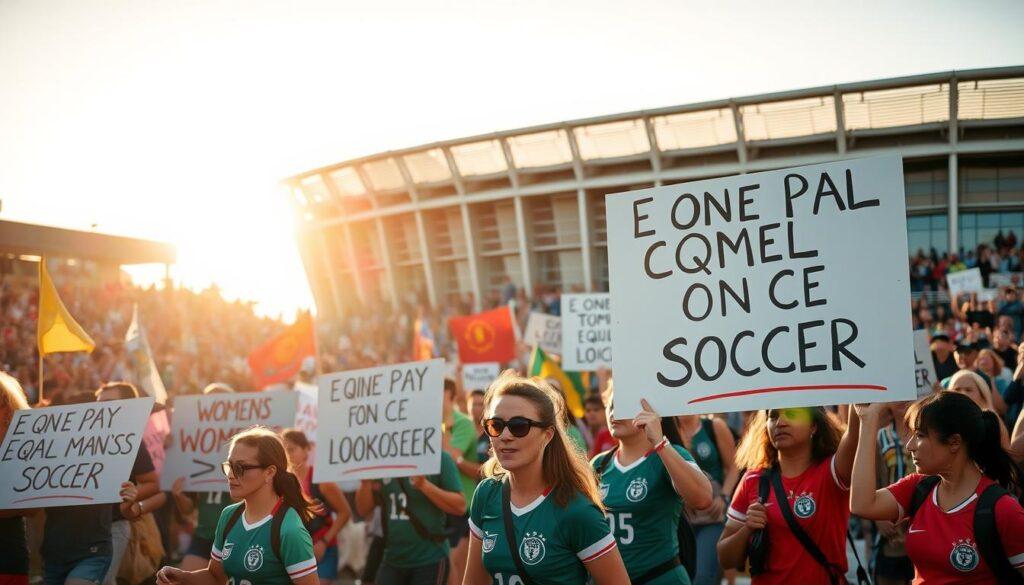
We’ve reached halftime in the fight for equality, and the score is: “Awareness 3, Action 0.” It’s time to move from viral moments to real results. We need to turn those shared infographics into real contracts and policy changes. The strategy? Mix tech innovation with activism, all while pushing for soccer equal pay advocacy.
From Hashtags to Hard Policy
The USWNT’s $24 million settlement was more than just a payment. It set a new standard. Clubs like OL Reign are using blockchain for fair ticket revenue sharing. Chelsea FC’s AI scouting finds talent in places scouts miss. Technology and women’s soccer growth are changing the game, not just as buzzwords.
Five Game-Changing Actions for 2024
- Sponsor a Boot: Angel City FC’s program lets local businesses own a piece of the team. It’s not just CSR; it’s a smart investment.
- Feminist Football Certification: Sweden’s program could be the gold standard for equality. It demands equal media coverage and parental leave.
- VAR for Pay Equity: The WSL’s video review system can check more than just offside calls. Imagine AI checking sponsorship splits and World Cup money.
- Grassroots Data Mining: Chelsea’s AI found 17-year-old Lucia Garcia through futsal highlight reels. Next, open-source talent algorithms for everyone.
- Collective Bargaining 2.0: The NWSL’s CBA includes mental health and revenue-sharing from NFTs. It’s a mix of technology and women’s soccer growth and worker rights.
These aren’t just ideas; they’re proven strategies. The VAR system corrected 23% of wrong calls in the WSL last season. It could also check gender pay gaps in real-time. OL Reign’s blockchain ticketing boosted secondary market revenue by 40%, helping youth programs.
Here’s the key: we don’t need new tools to make progress. We just need to use the ones we have. Whether it’s Sweden’s certification or Angel City’s sponsorship model, the blueprint is there. The question is, will your club lead the way or just make a funny meme at halftime?
Conclusion
Megan Rapinoe’s goal celebrations didn’t come from Nike labs. They were shaped by women breaking barriers for decades. This magic happens when talent meets social campaigns, like BPSC’s programs that empower girls in Brazil.
Remember #NoMoreSidelines? It started as a hashtag but grew into 40,000 pledges. This forced sponsors to change their kits. It shows that change is possible with determination.
FIFA is slow to adapt, like a defender caught off guard. To speed things up, track sponsors who charge more for women’s gear. Then, use your money to make a difference. Every view and purchase helps write history. Are you ready to make a change?