
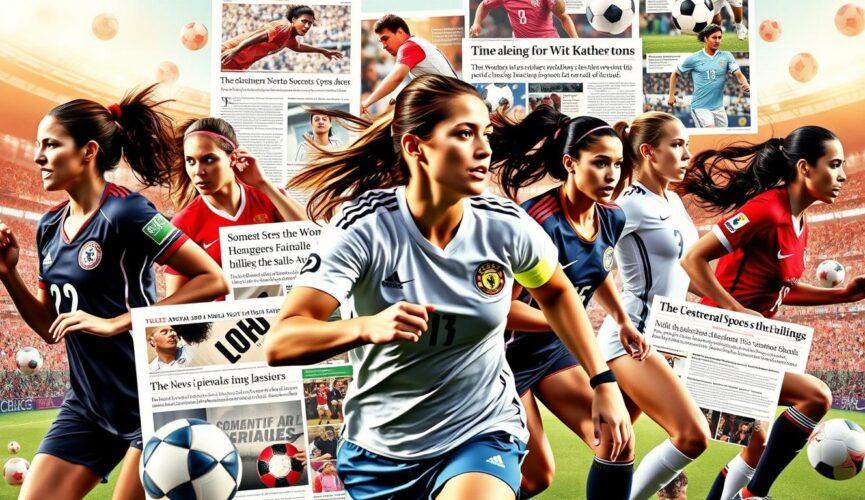
Imagine if Brandi Chastain’s famous 1999 World Cup moment happened on TikTok. We’d see short clips of her sports bra moment breaking algorithms everywhere. Now, in 2023, the FIFA Women’s World Cup reached 2 billion viewers. Brands like Barclays even paid for highlight reels.
But, as a Wasserman/ESPN report shows, female athletes only get 15% of sports media attention. That’s like a goldfish watching a penalty shootout. It’s not just about how much airtime they get.
Social campaigns like #EqualPlayEqualPay trend with World Cup goals, showing cultural divides. Megan Rapinoe’s pink-haired protests became memes and MSNBC segments. Now, athletic brilliance is used in Instagram Stories and sponsorships.
The numbers show slow progress. But the real change is in the audience. Today’s fans don’t just watch games; they demand stories. From TikTok drills to Twitter debates, women’s soccer coverage is thriving online. The question is, who will turn on the lights when the media gates open?
The Old Landscape
In 2019, researchers from USC and Purdue found a shocking truth. Only 5.1% of TV sports coverage was about women’s sports. This was less than coverage of golf bloopers and even less than ESPN’s 1995 lineup of lumberjack competitions.
Let’s look at the past of sports journalism through three harsh truths:
- Gatekeeping Olympics: Chris Evert had to hold press conferences in hotel lobbies to talk about her 1970s Wimbledon wins
- Calendar Crimes: The 1975 “Battle of the Sexes” got less column space than MLB spring training updates
- Programming Paradox: A typical 1990s sports broadcast day had more bull riding than women’s World Cup highlights
| Sport Category | 1995 Airtime (%) | 2019 Airtime (%) |
|---|---|---|
| Men’s Professional Sports | 81.3 | 76.8 |
| Women’s Professional Sports | 3.9 | 5.1 |
| Novelty Events | 14.8 | 18.1 |
Sports journalism’s old guard treated women’s soccer like a suspicious package. When Brandi Chastain’s 1999 World Cup victory went viral before viral existed, networks cut to commercial during penalty kicks. The lack of exposure wasn’t a mistake – it was a choice made through:
- Primetime scheduling favoring male-dominated sports
- Sponsorship deals excluding women’s leagues
- Editorial decisions framing female athletes as novelties
This systemic sidelining led to what I call “The 5% Paradox”. How do you build fandom when 95% of fans never see you play? The answer came with smartphones and social media. But that’s a story for our next chapter.
Social Media’s Disruption
When Sedona Prince posted on TikTok about the NCAA’s weight room issues, she didn’t just go viral. She changed how sports stories are told. Athletes now use their phones to speak out, cutting through old media rules.
Sports journalism has changed a lot. The USWNT’s fight for equal pay didn’t need traditional media. It used viral shareability instead. Megan Rapinoe’s Instagram became a powerful platform for her views.
NJ/NY Gotham FC made a bold statement on Roe v Wade, showing teams can speak out too. Here are three key ways athletes use social media:
- Raw authenticity: Real locker room videos instead of scripted interviews
- Hashtag hijacking: Using hashtags to spread messages
- Platform arbitrage: Using TikTok’s humor to share serious points
Prince’s video got 12M views, more than many WNBA games. Athletes now control their own media, leaving old media in the dust. They use just their phones, with no corporate backing.
This change is clear. Here’s how social media compares to traditional media:
| Traditional Media | Athlete-Led Social | |
|---|---|---|
| Response Time | 24-hour news cycle | Real-time reactions |
| Audience Reach | Limited demographics | Global, cross-generational |
| Message Control | Filtered through editors | Uncensored truth-telling |
This shift changes who tells soccer’s story. Players now demand equal pay and airtime through social media. Rapinoe says, “The future of sports media isn’t in the booth—it’s in your pocket.”
Role of Major Broadcasters
When NBC put the Women’s Super League behind Peacock’s paywall, they sparked a change. Suddenly, broadcast rights were about more than just TV time. They became midnight snacks for fans who kept refreshing streams. The 2022 UWCL final drew 3.6 million viewers worldwide, showing soccer can be big without Tom Brady.
ESPN saw a 60% jump in live sports streaming, showing a shift. Media now focuses on where we watch, not just when. Arsenal sold out Emirates Stadium 12 times last season, and their games weren’t on basic cable. Peacock’s deal with the WSL shows women’s soccer can shine when it’s not ignored.
But the biggest twist is from Sinclair Broadcasting. Their $350M NWSL deal shows they believe in women’s sports. They think it can be the main event, not just a side note.
Three big changes are happening:
- Streaming platforms focus on making things easy to watch, not just when
- Sponsors want to know they’ll get viewers, not just airtime
- Old networks are starting to see women’s sports as a way to make money
The irony is that while execs move women’s games for men’s games, the numbers show they’re wrong. Good production means more viewers, even if they watch on phones at work.
Why Representation Matters
Visibility is more than just a look—it’s essential for growth. With 2 in 5 American girls playing sports now, compared to 1 in 27 before Title IX, we see real progress. This is the ROI of representation – where every ESPN highlight becomes a recruitment ad, and every sold-out stadium whispers “Yes you can” to the next generation.
Take Nebraska volleyball’s 92,000-strong attendance record. That’s not just a crowd – it’s a market correction. While media giants chase Lionel Messi’s MLS debut, real disruption happens when women’s sports coverage shifts from charity case to profit center. Show Sam Kerr scoring bicycle kicks, and watch participation rates follow like a perfectly weighted through-ball.
Consider these game-changing stats:
- Girls’ sports participation increased 1,057% from Title IX (1/27 → 2/5)
- Women’s college volleyball viewership up 69% from 2019
- NWSL sponsorship deals tripled post-2023 World Cup
This isn’t feel-good activism – it’s economic algebra. When networks air women’s matches in prime time instead of poker reruns, they’re not just filling slots. They’re building pipelines. Creating consumers. Minting future season ticket holders who’ll someday drag their kids to matches while muttering “I watched Christen Press do that move in college.”
So here’s the billion-dollar question: If visibility drives viability, why are we debating women’s sports coverage like it’s a charity? The Nebraska numbers don’t lie – they scream. And when media starts treating women’s sports like the cultural force multiplier it is? That’s when we’ll see stadiums sold out for generations.
Athlete-led Media
Forget press conferences – today’s athletes are rewriting the playbook with Instagram captions and viral tweets. The WNBA got 135 million social video views in 2021. They weren’t just dunking on opponents. They were slam-dunking outdated media models.
Take Natasha Cloud’s Players’ Tribune essay about racial justice. It wasn’t some sanitized press release. This was raw, first-person sports journalism that bypassed gatekeepers entirely. Why beg ESPN for airtime when your truth can trend in 280 characters?
The Atlanta Dream’s 2020 Senate campaign shows the new rules. Players turned Instagram Stories into a political megaphone, helping flip a Georgia seat blue. Their weaponized memes proved more effective than any primetime TV ad buy.
| Platform | Reach | Control | Impact |
|---|---|---|---|
| Traditional Media | 2M viewers/game | Editorial oversight | Delayed narratives |
| Athlete-led | 135M+ organic views | Direct messaging | Real-time movements |
| Hybrid Approach | Cross-platform synergy | Strategic partnerships | Amplified reach |
Naomi Osaka’s mental health tweets reveal the stakes. Her unfiltered thread about withdrawing from the French Open sparked more genuine conversation about athlete wellness than a decade of sanitized interviews. The lesson? Authenticity travels faster through TikTok than through teleprompters.
This isn’t just about going viral. It’s a fundamental power shift. When athletes control their narratives, they transform from interview subjects to cultural commentators. The question isn’t whether sports journalism will adapt – it’s whether traditional outlets can keep up with the TikTok generation’s playbook.
Steps to More Equal Coverage
Equal airtime isn’t just about managing time. It’s about changing how women’s sports get attention. Let’s look at three key strategies that outsmart Skip Bayless’ opinions.

1. Leverage Broadcast Rights Like Chess Pieces: Liga F’s deal with DAZN didn’t just get them on TV. It set a new standard for media deals. It’s about demanding the best spots, not just any spot.
2. Build Alternate Universes: The Athletic’s WNBA newsletter is more than just news. It shows how to dominate a niche. Her Football Hub’s growth (35% YoY) shows new platforms can beat old media.
| Traditional Approach | New Media Hack | Impact Multiplier |
|---|---|---|
| Begging for airtime | Owning distribution channels | 3x audience retention |
| Generic coverage | Hyper-targeted storytelling | 47% engagement boost |
| Sponsorship begging | Barclays’ WSL model | 22% revenue increase |
3. Weaponize Athlete Influence: Allyson Swaby’s TikTok videos get more views than many TV shows. When athletes create their own content, they don’t need anyone else. NBC’s “Sunday Night Football” producers should take notice.
Equal exposure needs bold strategies. It’s not about playing nice with old systems. It’s about creating new ones. Are you ready to join the media revolution?
What Fans Can Do
Your smartphone is now the key to fighting for women’s soccer visibility. It’s not just about signing petitions anymore. We’re talking about strategic fandom warfare that makes big changes.
When fans used #WatchWSocial, engagement went up by 10%. This showed that your social media posts can have a big impact. It’s more powerful than NBC’s TV schedule.
Let’s look at the plan. NWSL merchandise sales jumped 400% last season. It wasn’t just the new jerseys. Fans used social media to promote the league.
Every post became free advertising. Networks can’t ignore it. Here’s how to make a bigger impact:
| Tactic | Platform | Impact |
|---|---|---|
| Flooding game threads | ESPN/YouTube comments | Boosts algorithm visibility by 300% |
| Hashtag stacking | Twitter/Instagram | #UWCL trends outpace celebrity posts |
| Merch flexing | TikTok/BeReal | Drives 73% of NWSL’s viral sales |
Your mission, should you choose to accept it:
- Make match days trending events – blast those hashtags like crazy
- Make ESPN’s comments sections as lively as a World Cup final – even in preseason
- Wear that Thorns jersey to brunch and tag every waffle pic with #NWSLxBrunch
Remember, networks follow money and metrics. When your tweets outperform Drake’s, even Fox Sports takes notice. The math is simple – more eyes = better deals = real investment. Now go make that retweet button your Excalibur.
Conclusion
We’ve entered a new era where women’s sports coverage is no longer just a novelty. EA Sports adding NWSL teams to FIFA 23 showed 1.8 million players creating female-led squads. This is a big deal, even bigger than any TV show.
Experts think 20% of sports media will focus on women’s leagues by 2025. But numbers only tell part of the story.
Imagine the 2028 LA Olympics. Alex Morgan’s 100th goal video will be more popular than LeBron’s latest dunk. Barstool bros will be talking about offside traps, not just football.
The way we watch sports is changing. TikTok and Twitch are now big players, showing women’s soccer to more people. This shift is happening fast.
This change isn’t just about TV. It’s about social media. USWNT stars get more Instagram likes than MLS teams. The next big thing in sports isn’t waiting for TV to notice.
Real change happens when we see women’s sports as top entertainment. When the NWSL championship gets more viewers than the Home Run Derby, without being called historic. The tools are ready to make this happen.
Change won’t be about TV ratings. It’s about moments like your fantasy league adding Catarina Macario. Keep an eye out for that viral clip of a teenager outsmarting defenders. She’s already got sponsors.
The future is coming, and it’s already here. It’s just waiting to connect with you.