
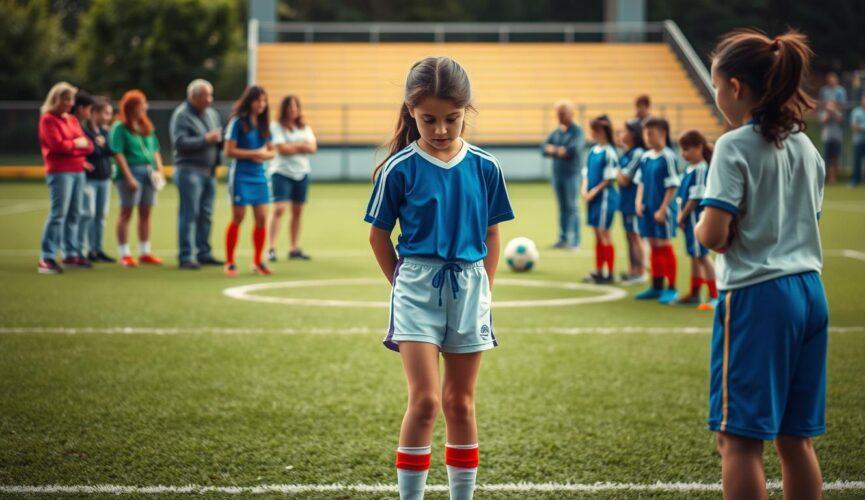
Imagine FIFA saying cleats are banned for left-footed players. It sounds crazy, right? Yet, 1.3 million girls miss out on high school soccer because of it. By 14, girls drop out of sports at twice the rate of boys. This is as shocking as a bad slide tackle.
So, why does this happen? It starts with a lack of female coaches in locker rooms. Imagine learning chess from someone who’s never seen a pawn. Cultural attitudes also play a part, telling girls that sports aren’t ladylike.
Access to sports is another big issue. Rural areas have more empty fields than girls’ teams. Urban programs are expensive, like a season of avocado toast. Title IX loopholes also create problems, with more gaps than a donut shop after 3pm.
But there’s a turning point: We’re losing more than just athletes. We’re losing future leaders who could change the game. The answer lies in safe sport initiatives that truly make a difference. These programs should be as common as ballet in middle school.
Identifying Barriers: Access, Cost, Culture
Let’s start by understanding why girls’ soccer programs often have limited budgets. The main barriers are access, cost, and cultural issues. These obstacles are as challenging as a tough midfield press in the World Cup final.
Access issues start where PE programs end: 32% of U.S. high schools don’t have girls’ soccer teams, NFHS data shows. Getting to the nearest field can be tough, needing two bus rides and a permission slip.
| Expense Category | Boys’ Team | Girls’ Team | Discrepancy |
|---|---|---|---|
| Equipment Budget | $2,800 | $1,200 | -57% |
| Travel Games | 12/year | 6/year | -50% |
| Certified Coaches | 3 | 1.5* | -50% |
| Field Maintenance | Weekly | Biweekly | -50% |
*Often shared with other sports
The monthly wage gap between soccer parents is $529. It’s a tough choice: “Do we pay for goalkeeper gloves or the electric bill?” Cultural attitudes also play a role, with 70% of girls feeling excluded due to stereotypes.
Media coverage of women’s sports is lacking, with ESPN covering only 5.7% of female athletes. LGBTQ+ inclusion in soccer is also a challenge, with only 18% of clubs having anti-discrimination policies for queer players.
Until we tackle these issues, girls’ soccer will continue to face barriers. It’s like they’re being substituted out of the game before they even start.
Local Success Stories
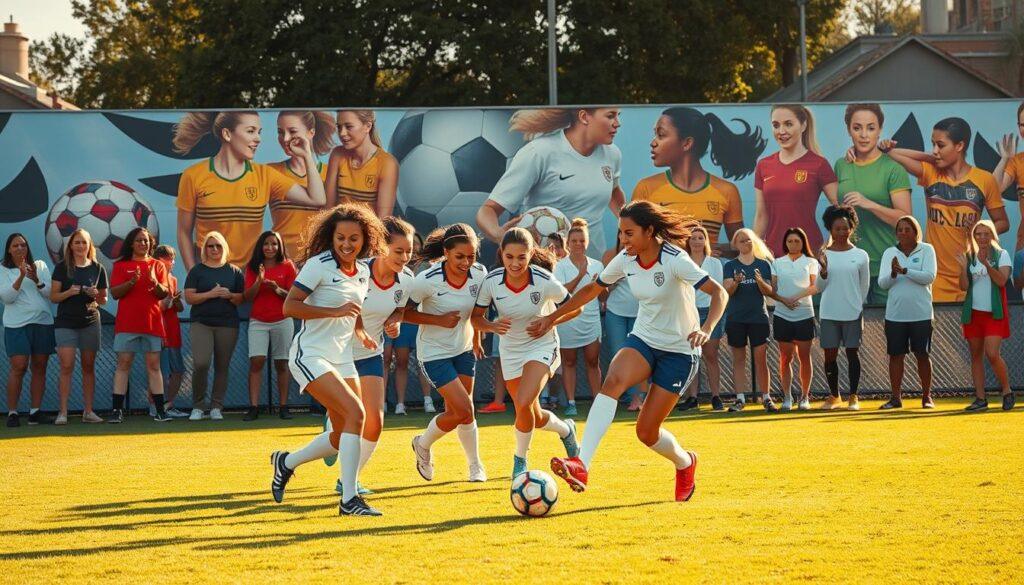
Forget fairy godmothers – today’s soccer revolution wears cleats and carries clipboards. Brazil aims for 30% women in soccer leadership but only has 2.7%. But, grassroots heroes are changing the game from parking lots to the sidelines.
Meet 16-year-old Marisol Reyes, who turned a Compton Walmart lot into a training ground. She uses traffic cones and TikTok tutorials. Her team’s secret? Weekly Zoom calls with retired NWSL defenders. “They teach us how to intercept passes and patriarchal BS,” she jokes.
In Austin, coach Lena Park leads an LGBTQ+ youth program. It shows economic empowerment through inclusive play. Her alumni now coach in three states.
Why does this matter? Let’s look at the numbers:
| Program Type | Leadership Pipeline | Retention Rate |
|---|---|---|
| VIP Soccer Camps | 12% | 18 months |
| Peer Mentoring | 63% | 5+ years |
Marta Vieira da Silva isn’t just scoring goals. She’s building leadership pipelines. Her foundation mentors more coaches than FIFA’s academies. “You want cultural attitudes to shift?” she asks. “Put women’s whistle around every neck.”
These stories are not just tales. They’re playbooks. A lesbian coach in Texas doubled her team’s sponsorship deals. A Muslim teen league in Minnesota outscored boys’ teams. They show role models are more important than stadium budgets. As one Texas defender said: “I don’t need Messi’s footwork – I need to see someone like me calling shots.”
Community Initiatives
Ever wonder how communities solve problems faster than big-time team owners? The real magic happens when we move from boardrooms to backyards. Let’s look at three initiatives that are changing safe sport initiatives soccer in creative ways.
The UN Women’s Colombia BMX program is a great example. It shows bike parks can also be soccer training grounds. This idea turned skate ramps into places for training, showing that with the right attitude, anything is possible.
In Minnesota, a TikTok fundraiser raised $50k in no time. Parents created fun goal celebrations that helped fund a new field. This shows how community efforts can make a big difference.
The secret to success? Three key things:
- Period-positive locker rooms stocked like Beyoncé’s rider
- Apps mapping field access gaps like dating app heatmaps
- Co-ed coaching squads where dads learn from teenage female captains
Scotland’s JogScotland model is worth a TED Talk. Their “Walking Football” leagues for seniors became a way to teach girls about soccer. When older women play soccer with teenagers, it challenges gender norms fast.
South Korea’s Running Sisters networks are another example. They combine book clubs with soccer, using local cafes to fund soccer kits. This shows how treating inclusive coaching for girls as a community effort can work.
Technology plays a big role too. Apps track everything from restroom access to coaching certifications. This creates heatmaps that push cities to improve. In Chicago, one league used Strava data to show girls walked 3x farther than boys. This led to quick changes in transport.
So, when someone says “sports equity needs big budgets”, show them the Minnesota moms who raised money with TikTok dances. Changing the game doesn’t need stadiums. It just needs neighbors willing to pass the ball forward.
Financial Aid Options
Let’s tackle financial barriers like Megan Rapinoe defends World Cup penalties – with precision and zero tolerance for nonsense. The math is simple: 58% of Indian girls abandon sports during menstruation, while 84% of UK teens lose interest post-puberty. Why? Because soccer economics often play like a rigged FIFA video game.
Here’s the playbook for leveling the field:
| Barrier Type | Impact | Solution | Success Rate |
|---|---|---|---|
| Equipment Costs | $300+/year | Gear Swap Programs | 72% retention |
| Menstrual Products | 58% dropout | Free Kits in PE Programs | 89% participation |
| League Fees | $1,200 avg. | Sliding Scale Payments | 64% enrollment |
| Sponsorship Gap | 4:1 funding ratio | Corporate Tax Incentives | 2023 NWSL +38% |
The real MVP? Menstrual equity funds. Imagine if every school’s PE programs stocked free tampons like they do basketballs. Portland’s “Kick & Flow” initiative proved it works – their girls’ soccer participation jumped 41% in one season.
Corporate sponsors are now aware of the pink tax backlash. Nike’s new “Equity Kicks” grants now cover:
- Tournament fees for low-income athletes
- Menstrual product stipends
- Transportation vouchers
Here’s the corner kick: soccer equal pay advocacy isn’t just about pro athletes. It’s about dismantling the $1.3B youth sports gap that’s sidelining future stars. Want 10x more Rapinoes? Fund girls’ teams like they’re Champions League prospects – because they are.
Pro Tip: Always check for scholarship loopholes. Many clubs hide funds like Ronaldo hides step-over moves. The Women’s Sports Foundation’s database lists 143 underutilized grants for the rights of female footballers.
Family and Friend Support
Imagine if your family’s cheers could light up the stadium. The truth is, 85% of top female athletes say family support means more to them than sports drinks. Yet, we treat parental backing like a basic service when it should be top-notch.
- The Body Image Bodyguards: 62% of teen athletes worry about their sports gear. But families can change this by being positive and supportive.
- The Menstruation MVPs: 77% of players say their periods affect their game. Smart families provide period-proof gear and support, turning challenges into strengths.
- The Carpool Conspirators: Why just have snacks when you can create pre-game excitement like Beyoncé’s shows? Dads sewing Pride armbands into jerseys is a great touch.
This isn’t about making soccer moms 2.0. It’s about using data to boost emotional support. Imagine tracking how much encouragement you give, like passes in soccer. Could your aunt’s words of encouragement be more powerful than a TED Talk?
We need to see families as places where talent grows, not just as drivers. For real sports inclusion, families should be: biomechanics consultants during growth spurts, gender-equality watchdogs at mixed tournaments, and emotional hedge fund managers during tough times.
Pro Tip: When your teen misses a penalty kick, don’t just say “You’ll get ’em next time.” Instead, say “That miss? Just testing our comeback episode – it’s going to be huge!”
Building Confidence
Building confidence in soccer isn’t about giving out medals for showing up. It’s about building strong self-worth. Media plays a big role in this, sometimes helping and sometimes hurting. Alex Morgan’s tea celebration at the World Cup became a big deal, showing role models matter most when they’re real.
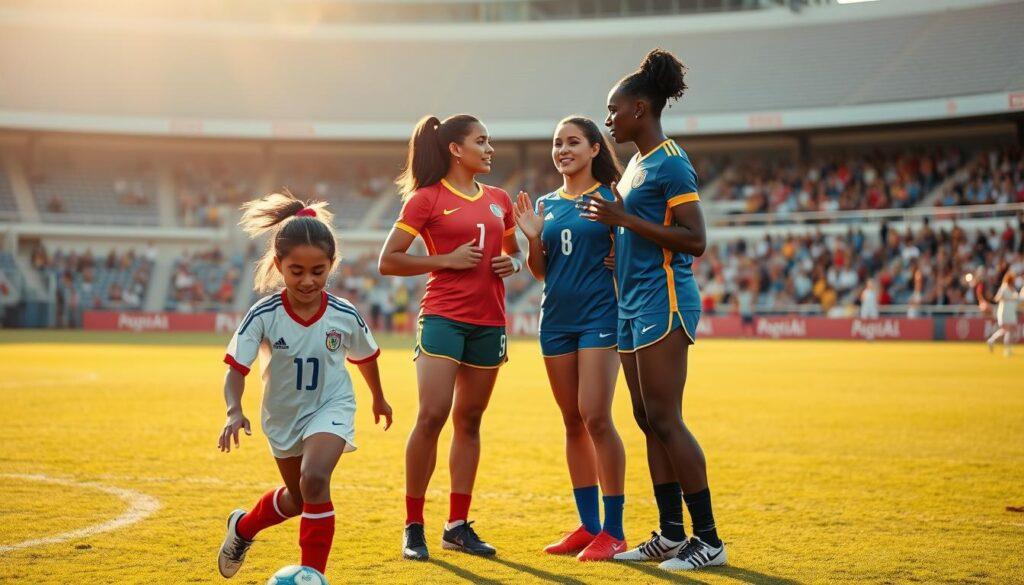
Nike’s “Dream Crazier” campaign was more than just selling shoes. It showed the power of confidence. It featured Megan Rapinoe and young athletes, asking why media matters. It showed that seeing women in sports can change how girls see themselves.
Studies say girls who see women in sports have better experiences. They feel more confident and capable. This shows that gender stereotypes are outdated and should be thrown away.
| Confidence Metric | Pre-Media Exposure | Post-Media Exposure |
|---|---|---|
| Tryout Participation | 38% | 61% |
| Leadership Roles | 22% | 47% |
| Skill Confidence | 41% | 68% |
Female athletes have a 20% lower risk of breast cancer. Sports aren’t just for the mind; they’re good for the body too. When someone says “you kick like a girl,” smart players say “thanks, I’ve seen Sam Kerr’s volleys.”
The biggest change is making women’s soccer milestones famous. The 1999 World Cup victory was a big moment for girls everywhere. Today, moments like Trinity Rodman’s highlights and NWSL sellouts are building blocks for confidence.
How Clubs Can Help
Most youth soccer clubs are stuck in the past. The Nebraska Blasters changed the game by moving practices to 7 PM and providing hijab-friendly jerseys. This simple change helped girls play better, without worrying about getting home or dressing modestly.
- Coach Queendom: 63% of players want female coaches. Yet, most clubs have more male coaches than female. It’s time to bring in more women from the NCAA.
- PE Program Crossovers: Work with schools to turn gym classes into soccer teams. Imagine scouts at dodgeball games.
- Sensor Revolution: Use smart balls to track kick speed by gender. This shows girls can kick hard too.
The Fit for Girls initiative found that flexible clothing keeps girls playing by 41%. It’s all about elastic waistbands > elitist traditions. Also, LGBTQ+ ally programs are more than just stickers. They include pronoun forms and training to stop sexist comments.
| Tactic | Old School | New Wave |
|---|---|---|
| Practice Times | 3:30 PM (conflict with school) | 7 PM (post-dinner, parent-friendly) |
| Gear Policy | One-size-fits-none shorts | Customizable kits with hijab options |
| Tech Integration | Clipboards & guesswork | Usage-tracking smart equipment |
Clubs that get it right are changing the game. They’re not just filling spots; they’re making soccer better for everyone. The goal is to create a place where every girl can thrive.
Conclusion
Imagine a world where girls play soccer without worrying about childcare costs. Where £529 monthly wage gaps don’t stop them from playing. And where 5% media coverage becomes 50% of what we watch.
We’re not just fighting for equal pay. We’re building stadiums for girls to play in.
Title IX showed us change is possible. After 1972, more girls started playing sports. But Eliza from Hamilton asks, “Why do girls have to wait for it?”
Forty percent of Fortune 500 female CEOs played sports. Think of the boardrooms we could fill by fixing access issues in school.
Clubs providing period products? Communities turning parking lots into soccer fields? These are not just dreams. They’re halftime adjustments.
When Scotland funded 41% of female athletes, they didn’t just create players. They built living sports inclusion billboards like Erin Cuthbert and Caroline Weir.
The final whistle’s blowing. It’s time for you to act. Volunteer to help with carpooling. Demand local papers cover girls’ soccer like it’s the Champions League.
Turn body image debates into fun soccer conversations. Because the real victory isn’t just winning. It’s making “barriers to girls’ soccer” sound as old as “women shouldn’t vote.” Game on.