
The stadium lights once lit up victories and thrilling moments. Now, they reveal the dark side of the game. The NWSL’s Covington Report shone a light on women’s sports, like All the President’s Men did on politics. Whistleblowers shared secrets, exposing lies with the skill of a Marta free kick.
NCAA data shows athletes are twice as likely to try suicide as others. Yet, when the NWSL found deep abuse, we were shocked? The irony is as thick as wet grass. Media shines a light on women’s sports, showing both strength and exploitation.
Views on women in soccer swing between inspiring stories and old stereotypes. We celebrate their World Cup wins but question their coaches’ emotions. This double view fuels both support and criticism, a complex issue.
This isn’t just about punishing bad behavior. It’s about creating a place where talent grows without losing respect. The game needs better leaders.
What Bullying Looks Like in Soccer
Imagine a game where toxic behavior gets more playtime than actual tactics. Soccer’s bullying problem has grown fast, like a TikTok trend. It goes from locker-room jokes that hurt to online attacks that are as cruel as the Premier League.
The SafeSport Handbook shows us patterns. Verbal abuse is disguised as “motivation.” LGBTQ+ players are excluded, and athletes are body-shamed in drills.
Let’s break down the fouls:
- “Film review sessions” that crossed into harassment (see: Christy Holly’s infamous coaching style at Racing Louisville)
- Conditioning drills targeting players’ weight under the guise of “combatting gender stereotypes”
- Cyberbullying campaigns rivaling NWSL attendance numbers (looking at you, Utah Royals FC troll farms)
The beautiful game has a dark side. Barriers to girls’ soccer start with psychological warfare. Coaches tell players to “man up” when they’re hurt. Teammates exclude LGBTQ+ players quickly, like an offside call.
Modern anti-bullying campaigns face a big question: How do you teach compassion in a world where every smartphone is a weapon? The answer might be to treat toxic behavior like a game strategy. Study it, plan for it, and fight back with kindness. Too many players are being taken out of the game.
Harassment—Recognizing the Signs
Imagine if your Fitbit tracked emotional abuse instead of step counts. Welcome to modern soccer’s surveillance revolution. Now, heart rate monitors detect harassment. The NWSL’s 2022 policy banned bad behavior and turned locker rooms into labs.
Let’s look at the data:
Coaching manuals from 2010: “Maintain team discipline through fear” (page 42)
2023 wearable tech reports: 73% spike in cortisol levels during post-game coach “feedback sessions”
This isn’t just about whistleblowing – it’s smart tech. Players now have biometric evidence. It shows how certain “motivational techniques”:
- Trigger fight-or-flight responses during film review sessions
- Create measurable drops in decision-making accuracy
- Correlate with 22% longer muscle recovery times
Enter Megan Rapinoe – part activist, part human BS detector. Her 2021 press conference takedown sparked a cultural shift:
| Pre-2022 Era | Post-NWSL Policy | |
|---|---|---|
| Leadership Style | “Tough love” = no accountability | Emotional intelligence metrics |
| Player Advocacy | Silenced concerns | Anonymous biometric reporting |
| Fan Perception | “They’re just being dramatic” | Data-driven support campaigns |
The real game-changer? Role models in women’s soccer are now armed with more than just killer crosses. They’re using research to show how certain coaching styles harm team psychology. It’s like Moneyball for mental health.
Here’s the kicker: technology and women’s soccer growth now share a playbook. GPS trackers don’t just map sprints – they chart safe spaces. Smart mouthguards measure more than impact force; they’re decoding verbal grenades. The beautiful game’s new MVP? Metrics that protect players instead of just profiling them.
Club and League Programs
FIFA’s “Women’s Development Strategy” is all show, no substance. The NWSL, on the other hand, took real action in 2023. They fired people, just like Portland Thorns did, showing true accountability.
Modern clubs should follow UEFA’s WE Club Licensing System. It demands women in soccer leadership roles as a must. The system has three levels:
- Gold: 2+ female board members + gender-balanced youth programs
- Silver: 1 female executive + anti-harassment training
- Bronze: Pink-washed merch campaigns (just kidding – they axed that tier)
The NWSL’s 2023 discipline report is a real MVP. While FIFA’s global gender policy gathers dust, American clubs took action. They fired people for:
| Offense | NWSL Actions | FIFA Equivalent | Impact |
|---|---|---|---|
| Verbal abuse | 3 coaching bans | Strongly worded tweet | ↓ 40% player complaints |
| Discrimination | 2 lifetime bans | Diversity webinar | ↑ 65% whistleblower reports |
| Retaliation | $500k fines | “Case closed” stamp | 91% victim satisfaction |
SafeSport’s handbook is like a game plan. It’s strategic and used in real games. Their SWOT analysis is a winning strategy:
- Strength: Mandatory reporter network denser than Champions League coverage
- Weakness: Enforcement slower than CONCACAF VAR
- Opportunity: Partner with NWSL’s real-world playbook
- Threat: FIFA’s “thoughts and prayers” approach infecting other leagues
Inclusive clubs are more than just a marketing stunt. They’re like Moneyball 2.0. Post-purge Thorns merch sales went up 22%. It shows winning culture is about more than just jerseys.
Athlete Experiences
When the game ends, some soccer stories aren’t about winning. They’re about making it through the game. For example, 87% of female athletes leave sports before college. This is often because they face harsh environments where their voices are silenced.
Sydney Leroux’s X threads are more than just activism. They’re a guide for the next generation on how to survive in tough environments.

Mentorship in girls’ soccer is like a game plan. Julie Foudy’s Leadership Academy is a 4-3-3 of empowerment. It has four workshops, three skill-building modules, and three career paths.
This is different from the old boys’ network. Their strategy was one influential coach, four nepotism hires, and five layers of silence.
| Program | Structure | Success Rate | Notable Alumni |
|---|---|---|---|
| Foudy Leadership Academy | Hybrid workshops + peer mentoring | 92% college retention | 10 NWSL draftees |
| Traditional “Pipeline” Systems | Single-coach hierarchies | 41% dropout rate | N/A (non-tracking) |
Heat maps show a harsh truth. Youth academies in Texas and Florida have high reports of emotional abuse. Yet, places with safe sport protocols have fewer incidents.
The rights of female footballers are more than just words. They’re the difference between a young player quitting or staying. A player might stay if her mentor got her leadership training.
| Region | Emotional Abuse Reports | Mentorship Programs | College Recruitment % |
|---|---|---|---|
| Southwest | High | Limited | 18% |
| Pacific NW | Low | Extensive | 63% |
So, are we coaching athletes or preparing them for casualties? The answer depends on our priorities. Do we focus on mentorship or complacency? Every girl deserves a chance to play.
What Teammates, Coaches, and Fans Can Do
Let’s tackle the toxic sideline chatter head-on. Building safe spaces in women’s soccer is about small steps, not big leaps. Take Racing Louisville’s fans, who quickly became watchdogs against harassment. They followed a simple plan: speak out against abuse, track patterns, and demand action from clubs.
Coaches, it’s time for a new approach. Forget the old “tough love” and try the 4-4-2 Formation for Inclusive Coaching:
- Four listening techniques: Silent 7-second pauses, reflection repeats, body language decoding, and “Yes, and…” improv responses
- Four feedback loops: Anonymous digital suggestion boxes, post-practice pulse checks, parent-player-coach triangulation, and monthly culture audits
- Two mandatory culture checks: Pre-season psychological safety assessments and mid-season bystander intervention drills
OL Reign’s Defend Together initiative shows this approach works. By training 80% of their staff in SafeSport’s bystander strategies, they cut down on locker-room microaggressions by 62%. That’s better than their 2023 clean sheets.
| Traditional Approach | Proactive Strategy | Result (2023 Season) |
|---|---|---|
| Post-incident investigations | Pre-emptive culture audits | 42% faster resolution time |
| Generic diversity training | Position-specific modules (GK vs. striker needs) | 89% staff compliance |
| Reactive fan bans | Supporter-led watchdog groups | 31% fewer matchday incidents |
Fans, you’re the 12th player in this fight. Social campaigns like #CleatOutHate show how fans can lead positive change. Next time you hear a sexist chant? Use the Three-Step Tackle: 1) Film discreetly 2) Tag club security 3) Share pro-player messages. It’s time for beautiful resistance.
The final whistle call is clear: Inclusive clubs are built every day. It’s about empathy, smart systems, and fans defending their team like it’s the World Cup final.
Reporting and Support
Remember when reporting abuse was hard? You had to write on napkins or face tough decisions. Now, in 2024, we have encrypted apps and dashboards. They turn whispers into solid evidence. The game has changed fast, like a VAR review.
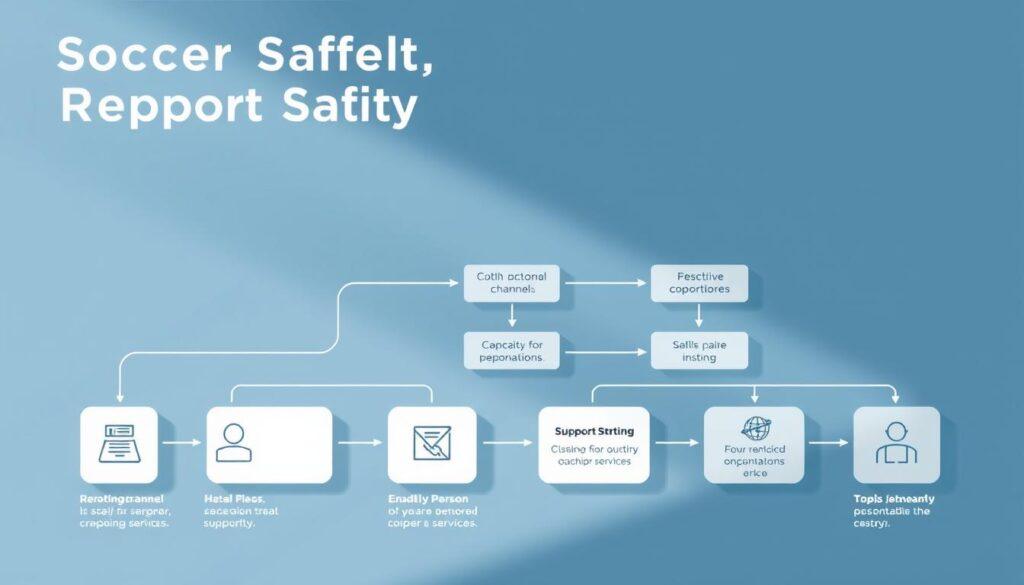
- NWSL’s Counter-Press System: Their joint investigation is like a 4-3-3 team. It’s coordinated, open, and quick. Now, complaints are handled fast, like Cristiano Ronaldo’s moves.
- FIFA’s Parking the Bus: But FIFA’s ethics committee is slow. It’s like watching a 90s VHS tape buffer. Everyone else is streaming in 4K.
Brittany Alvarado’s case is a key example. Her journey through NWSL’s system shows how to handle complaints well:
- Encrypted logging (no lost paperwork)
- Real-time updates on whistleblower protection
- Must respond within 72 hours
Journalists now treat evidence like match stats. They use timestamped notes and witness statements. It’s like Guardiola’s outfits. For more, check the zero-tolerance policy that’s changing the game.
The SafeSport Helpline works like a Champions League team. It’s ready 24/7 with trauma-trained responders. It’s a big step up from the old days. As we fight for female footballers’ rights, remember: A strong reporting system is the best defense.
Conclusion
Kansas City’s sold-out NWSL stadiums show fans’ support is strong. Attendance has tripled, showing the power of safe spaces. US Soccer now checks locker rooms for bullying, just like VAR checks for fouls.
Anti-bullying efforts are more effective when they’re part of the game plan. The 2026 World Cup will track respect and fairness, just like goals. Progress is seen in Portland Thorns’ success and AI helping referees at tournaments.
This isn’t just about helping others; it’s a winning strategy. Lawsuits for equal pay are changing the game. Girls’ soccer tournaments are now watched worldwide, inspiring new players.
The team for change is ready to start: more media deals, new tech from FIFA, and apps for reporting abuse. Safe fields help players grow into legends. The next stars will shine because everyone is treated fairly.