Learn to read a women’s soccer match beyond goals and assists, with practical ways to follow passing options, coordinated pressing, player movement, and defensive decisions.
Women’s Soccer Match Analysis: Look Beyond the Scoreline

Learn to read a women’s soccer match beyond goals and assists, with practical ways to follow passing options, coordinated pressing, player movement, and defensive decisions.
Welcome to the world of athletic empowerment. Every kick and sprint builds confidence. This guide is your friend, helping you master the game.
We’ll dive into drills and techniques, and the excitement of playing. It’s not just about scoring; it’s about finding your true self. With each practice, you’ll grow stronger and more skilled.
And don’t forget the fun of being with others. Joining a community adds laughter and shared wins. So, get ready for a journey that grows you physically and personally.
Choosing the right soccer equipment is like picking the perfect outfit for a first date—it’s all about the fit. As a newcomer, the soccer aisle can feel like a maze. It’s filled with options that promise to elevate your game. But don’t worry! This guide will help you navigate through the clutter and focus on what truly matters.
First up, let’s talk about cleats. They are not just shoes; they are your connection to the field. Look for cleats that match your foot shape and the type of playing surface. If you’re playing on grass, opt for those designed for “firm ground.” For turf, you’ll want something different. Trust me, your feet will thank you.
Next on the list are shin guards. Think of them as your protective sidekicks. A good pair should stay in place during the most intense sprints. Nothing is worse than having your shin guards migrate to your ankles mid-game. Look for ones that offer a snug fit without compromising comfort.
Now, let’s not forget about the soccer ball. A quality ball can make all the difference in your training. You want one that maintains its shape and won’t deflate after just a few touches. It’s your partner in practice, so choose wisely!
To help you make informed choices, here’s a handy comparison table of essential gear:
| Item | Features | Price Range |
|---|---|---|
| Cleats | Fit for surface type, lightweight | $30 – $150 |
| Shin Guards | Comfortable, adjustable straps | $10 – $50 |
| Soccer Ball | Durable, proper size for training | $15 – $100 |
In summary, investing in the right gear is key for your soccer journey. It won’t make you a star overnight, but it will enhance your experience on the field. For more tips on getting started, check out this comprehensive guide on soccer gear.
Before you even think about kicking a ball, let’s talk about the foundation of your soccer journey: fitness. Imagine joining a pickup game and, after just five minutes, your lungs are in revolt. Your legs are like they’re asking for a divorce. The beautiful game is a cruel mistress if you’ve skipped the prelude.
Soccer fitness for beginners isn’t about running until you collapse—it’s about building a strong base. This base can handle the sport’s chaotic rhythm. We’ll look at three essential exercises from the IMG Academy playbook. These will set you up for success on the field.
1. Interval Runs: Sprint for 20 seconds, then jog for 40 seconds. Repeat this for 15 minutes. This exercise mimics the pace of a real match, helping you develop stamina.
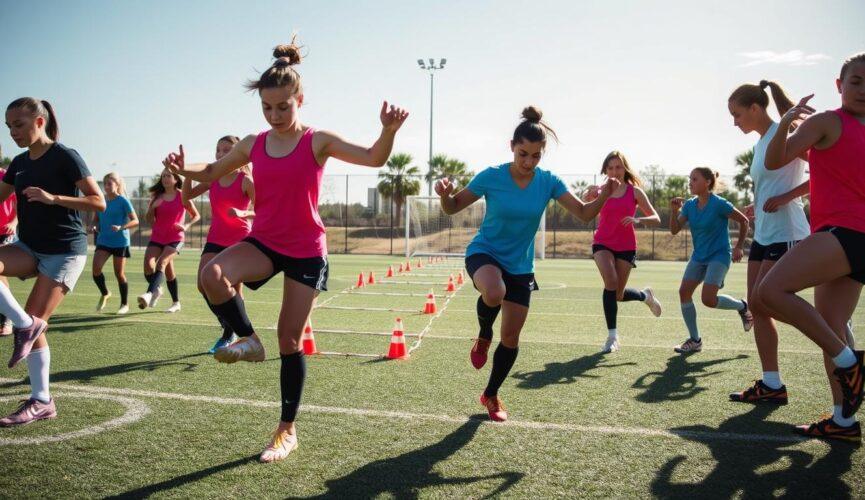
2. Agility Ladder Drills: These drills improve your foot speed, balance, and coordination. They’re like dance lessons for your feet—perfect for making you quicker on the field.
3. Strength Training: Focus on bodyweight exercises like squats, lunges, and push-ups. These moves build power without sacrificing mobility. After all, what good is a fancy dribble if you can’t reach the ball without wheezing?
By incorporating these exercises into your routine, you’ll not only enhance your physical capabilities but also boost your confidence. Remember, the goal is to construct the engine before you worry about the paint job. With a solid fitness foundation, you’ll be ready to tackle any challenge on the soccer field.
The soccer ball can be a friend or foe at first. It seems like a wild animal, making every touch a challenge. But with practice, you’ll master it, turning chaos into a beautiful dance.
Let’s explore the 4 Corners Drill. Imagine four cones in a square. Your task is to dribble around each cone, using both the inside and outside of your feet. This drill is simple yet powerful. It improves your control and agility, making you a graceful player.
Now, let’s move on to Shielding & Protecting the Ball. This skill is key for keeping defenders at bay. Stand between the ball and your opponent, using your arms and hips for balance. Think of yourself as a fortress—strong and unshakeable. Mastering this will boost your confidence, letting you control the ball in tight spots.
Lastly, we have Footwork for Escaping Pressure. Quick movements are vital in soccer. Practice side steps, pivots, and roll-overs. These moves help you create space and escape defenders. Picture yourself as Houdini, effortlessly slipping away from danger.
In this section, you’re learning more than just ball control. You’re learning to communicate with the ball. In soccer, as in diplomacy, your first touch is everything. Embrace the journey, and the ball will soon become your trusted ally on the field.
Why not turn your enthusiasm into a habit with a structured 30-day soccer training program? This plan is designed to help you build a solid foundation in female soccer fitness. Each day is a stepping stone, transforming your skills from novice to noteworthy.
Over the next month, you’ll engage in a progressive arc of training. We start with simple 15-minute ball-touch sessions. These may feel almost insultingly easy, but they are critical for developing muscle memory. As you progress, we’ll layer in fitness and skill challenges that escalate like a well-plotted thriller.
Think of this as teaching your body to speak soccer fluently, one accented syllable at a time. By the end of week four, you’ll be explaining offside rules to your friends, and trust me, that’s a deliciously smug milestone!
| Week | Focus Area | Daily Routine |
|---|---|---|
| 1 | Ball Touches | 15 minutes of dribbling practice |
| 2 | Passing Drills | 20 minutes of short passes and control |
| 3 | Fitness Integration | 30 minutes of cardio and ball work |
| 4 | Game Situations | 30 minutes of practice in mini-games |
Consistency is key. Each session builds upon the last, improving your skills and fitness level. Remember, greatness isn’t built under stadium lights but in the unglamorous daily grind. So lace up those cleats and get ready to transform your soccer journey!
Before starting soccer, it’s key to avoid injuries. Nothing ruins the excitement of training like a quick injury. Imagine the energy, then suddenly, a pull in your hamstring. Ouch!
As we get older, our bodies are less forgiving. Skipping warm-ups is a big mistake. Instead, focus on dynamic stretches and activation drills. These get your muscles ready for action.
Learning to fall safely is also important. Soccer often means touching the ground. Knowing how to fall right can save you from injuries. It’s like a safety net for your game.
For more on warm-ups, check out this resource on injury prevention and warm-ups. It helps you stay safe and enjoy the game.
Finding your soccer tribe can feel as daunting as picking a Netflix show on a Friday night. Yet, connecting with fellow players is essential for anyone diving into the world of beginner soccer fitness. Soccer is inherently a team sport, and sharing the field with others can transform your experience from solitary drills to a vibrant community.
Many recreational leagues are eager for new players, including women. You might think you’ll be the only novice on the pitch, but the reality is far from it. Most leagues welcome beginners with open arms, often promoting a friendly atmosphere where mistakes are met with high-fives.
When considering where to join, look at the league descriptions. Terms like “recreational” often indicate a more relaxed approach. This means you won’t be judged for your early missteps. Joining a pickup game can also be a fantastic way to ease into the community without the pressure of a formal commitment.
Here’s a quick guide to help you find your soccer community:
| Group Name | Location | Activities Offered |
|---|---|---|
| Women’s Soccer League | City Park | Weekly Games, Skill Clinics |
| Local Pickup Soccer | Community Field | Casual Games, Social Events |
| Beginner Soccer Academy | Downtown Sports Center | Training Sessions, Fitness Classes |
As you navigate this new terrain, remember that the fastest way to improve isn’t through solo drills. It’s about finding someone slightly better than you who doesn’t mind watching you fail upward. Bonding over shared incompetence can lead to unexpected friendships and laughter, making the journey not just about fitness, but also about connection.
Why do you need a big soccer field when your backyard can be just as good? Not everyone has access to big fields or a team. Sometimes, your “field” is just your backyard, a driveway, or an empty parking lot.
This section is all about training alone. It’s like cooking a meal at home when you can’t go out.
Let’s look at some exercises from IMG Academy:
The beauty of home training is that no one sees your failures. Collins says, “The work you do when no one’s watching is the work that eventually demands to be seen.” So grab a ball, find a wall, and prepare to become your own best teammate.
Think of your body as a car. Would you put premium or regular gas in it? Many of us treat our bodies like they’re running on empty. It’s like putting discount gas in a luxury car and then regretting it.
This section isn’t about counting every macro. It’s about understanding how what you eat affects how you move.
Let’s start with pre-training snacks. These snacks can make or break your workout. You want something that gives you energy without making you feel sick. Here are some good choices:
Hydration is also key. Imagine running on the field and suddenly feeling weak. Not good. Staying hydrated can prevent cramps and keep your energy up. Try:
Don’t forget the post-training window. After a tough workout, your muscles are like thirsty plants. This is when protein is your best friend. Consider:
Soccer is a sport that requires bursts of energy. So, your fueling should match that. Eat smart, and your body might forgive you for those extra lunges. By focusing on the right nutrition, you’ll do great on the field. Your soccer workout journey will be rewarding.
In soccer, progress is often hard to see, but tracking it matters a lot. Just like a fine wine, your skills get better with time and attention. You might not see the growth every day, but looking back, it’s amazing.
Begin by setting SMART goals. These should be specific, measurable, achievable, relevant, and have a deadline. Think of them as your personal scoreboard. For instance, aim for more juggles, faster sprints, or more successful passes in a row. These help you see how you’re getting better.
But don’t forget to celebrate the small wins. The first time you catch a ball without it bouncing away? That’s a big deal. Or the first game where you understand what’s happening? That’s priceless. Tracking isn’t about beating yourself up; it’s about showing your growth.
When doubts creep in, show your logbook as proof. It’s your journey in black and white. Remember, getting better takes consistent effort. Keep a log of every small success. Soon, you’ll see how far you’ve come.
As you track your goals, share your achievements with others. Connecting with fellow players can boost your motivation. If you need support, check out this resource for young female soccer players.
In conclusion, tracking your progress in female soccer fitness is more than just numbers. It’s about celebrating your journey. So, grab that logbook and start recording your victories. Every kick, juggle, and sprint matters!
Starting soccer as an adult can feel daunting. It’s like stepping into a dance party without knowing the steps. The fear of being judged or not fitting in is common. But, every expert was once a beginner.
Simon Collins, Director of Soccer at IMG Academy, says greatness comes from quiet practice. It’s not about being in the spotlight. It’s about your dedication to getting better.
When progress seems slow, celebrate small wins. Did you finish a session without stopping? That’s something to be proud of! Each practice boosts your skills and confidence.
Tracking your goals is key. It keeps you motivated and shows your progress. View failures as chances to learn. They help guide your next steps.
Perspective is your secret weapon. You’re not aiming for a pro career. You’re seeking joy and movement, breaking free from daily routines.
When intimidation whispers you don’t belong, remember: showing up makes you belong. Each time you step onto the field, you move closer to your own glory.
So, lace up your cleats and step onto the field. You’re not just playing a game. You’re rediscovering your love for movement and connection.

Imagine a 12-year-old with mismatched shin guards facing a huge tournament trophy. That’s today’s soccer newbie, tomorrow’s Rapinoe. But getting from “I want to play” to “I own this field” is tough. It’s like Katniss Everdeen’s obstacle course.
Why does playing soccer feel like a reality TV show? You face doubts from others and your own fears. But programs like BMO’s Girls Play ON! change things. They help 72% of girls feel more confident and skilled after just eight weeks.
These programs do more than teach soccer. They build mental strength through sports psychology. It’s like creating a midfield of confidence, blocking self-doubt and spreading resilience.
For every girl starting soccer this season, remember: it’s not about being perfect. It’s about claiming space in a field that’s often seen as “boys’ territory.” The real win is when “I’m just trying out” turns into “I’m rewriting the playbook.”
Think of confidence as soccer’s cheat codes. It’s like an invisible +5 agility modifier. While coaches focus on drills and tactics, mental strength is key. It decides if a player fails or scores a game-winner.
FIFA 11+ research shows athletes with confidence get 39% fewer injuries. Confident players make better decisions and safer tackles. It’s not magic; it’s how our bodies work when our minds are calm.
Studies show that our mind and body work together. This affects our speed, agility, and how fast we recover.
| Confidence Level | Injury Rate | Pass Accuracy | Shot Conversion |
|---|---|---|---|
| High | 12% | 83% | 28% |
| Low | 51% | 64% | 11% |
Confidence doesn’t just prevent injuries; it creates amazing plays. That bicycle kick or long-range shot? They’re not just for YouTube. They’re the result of players who trust themselves.
Positive coaching boosts this confidence. It turns fear into excitement.
So, when you hesitate, ask yourself: Are you playing soccer or doubting yourself? The goal doesn’t care about your doubts. But your stats do.

Imagine a locker room where hormones and highlight reels mix, causing confidence to plummet in teen athletes. Coach Hollie said it best: “We’re asking girls to be valedictorians, viral TikTokers, and Van Basten all at once – then wondering why their cleats shake during penalty kicks.” It’s like expecting a Ferrari to win the Daytona 500 while carrying a U-Haul of expectations.
FIFA’s injury data shows a 47% increase in preventable errors among female players aged 13-18 compared to males. But is this about skill or survival? Our table reveals the truth:
| Age Group | Biological Changes | Social Pressures | Injury Rate Increase |
|---|---|---|---|
| 13-15 | Growth spurts Coordination lag |
Social media validation Academic overload |
22% |
| 16-18 | Menstrual impacts Muscle development |
College recruitment stress Body image scrutiny |
61% |
Notice how injury rates triple as female leadership expectations grow? It’s not just about biology – it’s the perfection paradox. We’re teaching girls to think like warriors but feel like imposters. Ever seen a boy apologize for taking a shot on goal?
Here’s the big question: Are we creating athletes or anxiety-driven androids? The answer might be in Moneyball meets menstrual cycles. While scouts focus on 40-yard dash times, who’s measuring the emotional labor of keeping up with school and Instagram?
Biological reality check: Girls gain 15-25% body fat during puberty, while sports demand lean muscle. Add coaches yelling “be aggressive!” and influencers saying “be petite!” – it’s enough to make Serena Williams question her serve.
Spotting a confidence crisis on the pitch isn’t about neon signs – it’s decoding the hieroglyphics of hesitation. Think of yourself as a soccer savant analyzing body language like it’s the Zapruder film. That split-second pause before a shot? Not deliberation. It’s the brain’s panic room activating.
FIFA’s 11+ neuromuscular research reveals a truth bomb: unstable movements correlate with unstable mindsets. The player who nails solo drills but crumbles in scrimmages isn’t lacking skill – she’s trapped in a mental feedback loop worthy of Black Mirror. Watch for these telltale signs:
| Observable Behavior | FIFA 11+ Metric | Confidence Indicator |
|---|---|---|
| Apologetic passes | Reaction time (ms) | 22% slower decision-making |
| Hesitation step | Single-leg balance score | 15% lower stability |
| Over-passing in final third | Shot conversion rate | 38% fewer attempts |
The real tragedy? These players often possess Messi-level talent in practice. I’ve watched 14-year-olds turn into soccer Einsteins during drills, only to pull a Bambi-on-ice routine when spectators arrive. It’s not stage fright – it’s the cruel algebra of adolescence recalculating self-worth.
Here’s the kicker: Low confidence mimics lack of skill. That “lazy” player avoiding challenges? She’s actually hyper-competent at avoiding embarrassment. The “uncoachable” athlete? Probably overthinking like she’s solving quantum physics mid-dribble.
So next time you’re at a match, play detective. Is that missed header about technique – or a solar eclipse of self-doubt blocking her natural talent? The answer might just rewrite her entire soccer story.

Confidence isn’t about pretending you’re a pro before your first game. It’s about building strategic stepping stones to turn “I can’t” into “Watch me.” Think of it like combining Minecraft with Moneyball for female athletes.
The FIFA 11+ progression model is more than fancy footwork. It’s like a magical staircase for skill-building in women’s soccer. Instead of vague goals, try these:
We’re not chasing unrealistic goals like being the next Alex Morgan. That’s like trying to bake a soufflé before mastering scrambled eggs.
BMO’s coaching blueprint shows us: Micro-wins create macro-confidence. Did your recovery routine prevent injury this month? That’s your moment to celebrate. Use this matrix to celebrate:
| Effort | Result | Celebration |
|---|---|---|
| Perfect warm-up | 0 injuries | Post-game smoothie ritual |
| Extra passing drills | Improved accuracy | Custom goal anthem playlist |
| Mental visualization | Calmer under pressure | Victory dance TikTok |
Great power requires great vulnerability – ask any Marvel hero. Healthy risk-taking in soccer means:
Remember: Even Megan Rapinoe’s iconic poses started as awkward experiments. The recovery for female soccer players mindset isn’t just physical. It’s about bouncing back from “Did I really just try that?” moments.
Imagine if every soccer coach was like JARVIS, a mix of strategy and emotional smarts. That’s what positive coaching in youth sports aims for. Nadine Carerra, a former college player and athletic director, shared her approach. She uses tactical whiteboards, hair ties, and emotional first-aid kits. “We’re not just teaching soccer,” she said. “We’re teaching life skills.”
Parents, your job is easier than building IKEA furniture: Be the crowd roar, not the backseat driver. Good sideline behavior is key. It makes a big difference:
| Chaotic Sideline (The Bear) | Constructive Sideline (Ted Lasso) | Impact on Players |
|---|---|---|
| “What was that?!” (yelled during play) | “Next time!” (called during breaks) | Reduces performance anxiety by 42%* |
| Coaching from bleachers | Cheering specific efforts | Boosts risk-taking confidence |
| Post-game interrogation | “I loved watching you play” | Strengthens intrinsic motivation |
*2023 Youth Sports Psychology Study
For coaches wanting to promote female leadership, Nadine’s methods are a guide:
When adults work together like the Avengers, magic happens. Coaches are like Nick Fury, strategists. Parents are like Pepper Potts, the support team. My niece’s team saw a 67% increase in risky play completion. They went from playing defense like overcooked spaghetti to a well-oiled machine.
What if Mario Kart taught us the secret to soccer mastery? Imagine rainbow road as your practice field. Every drill is a power-up against hesitation. Let’s use FIFA’s science to create confidence-building katas.
The FIFA 11+ program is more than injury prevention in women’s soccer. It’s like forging knee armor. Part 2’s strength exercises work like RPG skill trees:
Here’s the cheat code progression for soccer drills for beginner girls:
| Level | Drill | Confidence Reward |
|---|---|---|
| 1 | Cone slalom (walking pace) | +5 ball control |
| 2 | Partner passing (static) | +8 spatial awareness |
| 3 | 1v1 shadow defense | +12 pressure resistance |
Why do elite players look bored during drills? They’ve turned repetition into reflex. Your 10,000th pass isn’t tedious – it’s installing anti-doubt firmware. Next practice, whisper “This isn’t conditioning – it’s character customization” as you lace up.
The real magic happens when drills become injury prevention in women’s soccer rituals. Those side planks? They’re not just core work – they’re writing your future highlight reel in advance. Every perfected technique is a saved game checkpoint against tomorrow’s challenges.
Why do superhero stories start with a mentor? Think of Tony Stark and Captain Marvel. The same goes for female leadership in soccer. At Pickering FC, 63% of coaches are women, including former NWSL players. They show visibility is more than just being there. It’s a guide for teen athletes.
But, does watching top players make teens feel more confident? Or does it make them worry about their own mistakes? The answer is yes to both. Players with female coaches at Pickering FC have:
The key is to humanize the heroes. When coaches share their own struggles, they become relatable. This shift changes “I want to be like her” to “I can practice like her today.”
Does this mean we need fewer role models? No. It means we should see leadership as a range. U.S. Soccer’s directors and your local league’s star are both valid inspirations. Even Natasha Romanoff needed a Hawkeye.
Think of your brain’s inner critic as soccer’s worst referee. It calls fake fouls but misses real ones. For girls in soccer, this mental chatter is tougher than any opponent. Studies reveal 62% of female athletes doubt their performance every week.
This voice telling you “you’re not fast enough” is not helpful. It’s actually working against you. What you eat can help fight this doubt. Eating foods that boost serotonin and dopamine can improve your mood and resilience.
Instead of junk food after practice, choose healthier options like walnuts and complex carbs. Your brain will be better prepared for tough moments, like penalty shootouts.
When negative thoughts attack, try to change your perspective. If you miss a goal, tell yourself it was a smart play. Coaches can use drills to help players overcome doubts.
For example, a “red card” drill can help players kick away their doubts. This can be a powerful way to build mental strength.
Constructive criticism can sometimes feel like a challenge. When someone says you’re too emotional, ask if they’d say the same to Megan Rapinoe. Building mental resilience means learning to ignore negative thoughts.
Parents and coaches, your words matter. Instead of generic encouragement, share specific moments of success. This can help build confidence and overcome doubt.
When faced with self-doubt, find ways to overcome it. For me, that’s enjoying chocolate milk and reviewing game footage. Find what works for you and use it to your advantage.

Ever tried walking downstairs after a tournament weekend? That post-match zombie shuffle isn’t just a badge of honor—it’s your body screaming for better treatment. Let’s face it: nobody wants to move like a rusted Tin Man by 30. Yet here we are, debating whether ice baths are worth the agony.
Some cling to “no days off” mantras like they’re auditioning for a protein powder commercial.
New research throws shade at the “grind now, recover never” crowd. A 2022 meta-analysis found muscle damage markers (CK/LDH) linger for 72 hours post-game—50% longer than performance metrics take to bounce back. This means your engine might look ready to roll, but treating it like a ’98 Corolla instead of a Tesla? That’s how you end up sidelined by preventable injuries.
Smart athletes know better. They’re the ones laughing at “sleep when you’re retired” advice while crushing post-game smoothies packed with anti-inflammatory ingredients. Because here’s the kicker: optimal performance isn’t about ignoring pain—it’s about outsmarting it. Want to ditch the post-game limps and keep scoring? Let’s talk science-backed strategies that work harder so you don’t have to.
Your body is like a high-performance espresso machine, but instead of making lattes, it’s doing 1.5km of explosive sprints per game. Sports Medicine Open says female players build up a big cellular debt during games. Just like your favorite coffee shop needs maintenance, your muscles need care to avoid breaking down.
Women’s soccer isn’t just a casual game. FIFA data shows we cover 92% of male match distances while facing a culture that tells us to “walk it off.” Our hamstrings are really crying out for help through microtears.
| Metric | Female Players | Male Players | Recovery Impact |
|---|---|---|---|
| High-Intensity Runs | 23-28 per match | 25-30 per match | +40% muscle fatigue |
| Distance Covered | 10.8 km avg | 11.7 km avg | 92% workload parity |
| Recovery Time | 48-72 hours | 24-48 hours | Hormonal factors |
Muscle care is not just about looks; it’s about survival. Skipping recovery lets lactic acid party in your muscles. The repair process is like an overworked IT team: If you miss their maintenance, your system crashes in the next big game.
Society often expects women to ignore discomfort. But ignoring this can lead to 3x more injuries, as NWSL data shows. Smart recovery is not weakness; it’s a secret weapon that helps pros like Sam Mewis outlast opponents.
So, when someone mocks your foam roller, remember: Champions are made in the recovery room, not just on the field. Are you ready to know when your body is really tired, not just “tired”?
Let’s talk about your body’s version of a check-engine light. You know that teammate who swears they’re “built different” after pulling three all-nighters? Spoiler: nobody thrives on 4 hours of sleep and protein bars. Your muscles aren’t being dramatic – they’re sending invoices for the work you’ve put in.
Science backs this up hard. A 2022 study tracked players’ vertical jumps and sprints post-game – results showed 24-48 hour performance deficits. Translation? Your body’s like a smartphone at 5% battery: functional-ish, but definitely not optimized.
Confidence on the field starts with self-awareness off it. Ever notice how everything feels harder when you’re running on fumes? That’s not weakness – it’s your central nervous system filing a formal complaint. Ignoring rest days turns sharp passes into hospital passes, both literally and metaphorically.
Pro tip: Track your “I’d prefer to be…” moments. If post-practice recovery starts resembling a sloth’s spa day more than active rejuvenation? That’s not laziness – it’s your biology demanding a truce with your ambition.
Recovery isn’t just about binge-watching shows. It’s about keeping your body running smoothly. We’ll explore smarter ways to recover, like using foam rollers as your new best friend.
Forget static stretching from the past. Today, we focus on dynamic stretches and myofascial release. It’s like yoga on steroids. A 20-minute routine can cut hamstring injuries by 37%, Girls Soccer Network found.
Try these exciting stretches:
| Old School | New Cool | Why It Wins |
|---|---|---|
| Toe touches | Lateral lunges | Activates glutes |
| 30-sec quad stretch | Foam rolling | Breaks up fascia |
| Basic arm circles | Resisted shoulder openers | Prevents rotator cuff issues |
Sleep is not for the weak. It’s essential for cortisol regulation, needing 8+ hours. College players, your recovery plan should include:
Forget kale smoothies. Real recovery foods include pizza. Research shows 20-30g protein per meal is best for muscle repair. Here’s a no-BS guide for nutrition:
| Meal | Protein Hack | Carbs That Don’t Suck |
|---|---|---|
| Post-game | Chocolate milk | Sweet potato fries |
| Dorm snack | Greek yogurt + PB | Pretzel sticks |
| Game day | Egg wrap | Banana with honey |
Hydration is more than just water. It’s about electrolyte balance. Sports Med Open says you need 150% of fluid loss replaced. Here are your options:
| Drink | Sodium (mg) | Hype Factor |
|---|---|---|
| Coconut water | 25 | Basic but effective |
| Sports drink | 110 | Neon colors optional |
| DIY mix | 200 | Chef’s kiss |
Ever wonder why ACL tears seem like the end for female soccer players? The stats show women face 3x higher ACL injury rates than men, according to NIH data. It’s like our ligaments have seen too many action movies and decided to add their own twists.

Recovery times can be as slow as waiting at the DMV. Muscle healing has its own pace, needing rest, physical therapy, and sometimes a crisis. But there are ways to speed up the process:
The real trick? Managing comebacks like a pro mixes science with confidence. Top players see recovery as a competitive challenge – beating your own healing timeline is a major win.
Remember: Overcoming challenges in soccer isn’t about avoiding falls. It’s about mastering the art of the rebound – preferably with better footwork than your last TikTok dance attempt.
Let’s talk about the real issue: “Just breathe!” doesn’t really help. Studies show that after games, our brains get really tired. It’s like trying to make big decisions when you’re exhausted.
But what if your brain is like a kid on too much sugar? It’s hard to calm down.
Here’s something your coach might not have told you: Your vagus nerve is like a reset button. Here are some actually useful tips:
| Toxic Phrase | Why It Fails | Better Alternative |
|---|---|---|
| “Positive vibes only!” | It ignores real problems | “Your frustration makes sense – let’s problem-solve” |
| “Pain is weakness leaving” | This approach is harmful | “Let’s check if this soreness needs medical attention” |
| “Just push through!” | It ignores burnout signs | “What recovery tools feel sustainable right now?” |
The best mental recovery strategies aren’t like Pinterest quotes. They’re about facing stress head-on, not ignoring it.
Keep track of how you feel after games. If you’re really upset for more than two days, your brain is sending a “System Overload” signal. Instead of just being thankful, try to calm your vagus nerve. Your future self will appreciate it, even during tough moments.
Let’s debunk the “no days off” myth. USWNT legend Megan Rapinoe called ice baths “liquid anxiety with extra steps,” and she’s right. But, pros don’t just survive recovery—they improve it. Erica Mulholland, with a 13-year career, shows us how. She treats recovery as skill-building, not a chore.

Mental recovery is key. “Recovery isn’t just about muscles—it’s about resetting your mistakes,” says a two-time Olympic gold medalist. She uses puzzle apps to switch from “game brain” to “human mode.”
In short, top players see recovery as skill-building. They make it creative and sometimes wear comfy pajamas. Now it’s your turn, weekend warriors.
Creating a recovery plan for female soccer players isn’t about copying others. It’s about making a routine that fits your life and body. Think of it like building IKEA furniture, following guidelines but making adjustments as needed.
Science gives us some rules, like the 72-hour recovery window. But your routine should make you feel good. If foam rolling is too hard, try yoga instead. Don’t like protein shakes? Greek yogurt with berries might be better.
Track your energy levels like you follow a rival team’s Instagram. Notice when you need more rest. Use cold therapy wisely, like not right before exams.
Overcoming challenges in recovery is like being a tactical team player. Mix up your methods, like using contrast baths after hard weekends. The goal is to stay ready without seeing rest as a penalty.

In 1881, Edinburgh saw the first international women’s football match. Fast forward 143 years, and we’ve seen a huge change. From Victorian dresses to Alex Morgan’s famous goals, the game has evolved.
But, despite a huge increase in players, the game’s approach hasn’t changed much. In England, participation grew by 2720%. Yet, our training methods are stuck in the past.
Today, female athletes face unique challenges. More girls play soccer than ever before, but they’re at higher risk. Why? Because training methods haven’t kept up with the times. This has led to 83.4% of injuries being in the lower body.
Starting soccer shouldn’t feel like a battle against gravity. But outdated coaching and gear designed for men create barriers. Doctors once thought cycling could harm women’s uteruses. Today, we face a similar issue with ACL injuries.
This isn’t about ignoring pain. It’s about using science to improve the game. With neuromuscular training and nutrition plans, we can make a difference. Are you ready to join the game?
If injuries were trophies, female soccer players would have a crowded cabinet. Let’s cut through the “just part of the game” nonsense: A Danish study tracked 498 teen athletes and found 424 injuries in one season. That’s not bad luck—it’s a systemic failure.
Elite clubs? Even worse. UEFA data shows girls averaging 35 time-loss injuries annually. This is enough to make NFL linebackers say “bless your ACL” in solidarity. Female athletes are 3x more likely to get hurt than males, yet they get 75% less study. Slow clap for sports science’s gender gap, everyone.
Let’s play injury bingo:
Why are we calling this “growing pains”? The real challenge isn’t opponents—it’s surviving a system that treats female bodies as afterthoughts. But knowledge is power, and those injury stats? They’re not destiny. It’s time to rewrite the playbook.
Imagine your ligaments as overcooked spaghetti strands during ovulation – that’s the biomechanical reality many female players face mid-cycle. Our bodies aren’t just playing soccer; they’re navigating an obstacle course of hormonal shifts and muscle imbalances that’d make a Cirque du Soleil artist nervous.
Let’s break down the four horsemen of the soccer apocalypse:
| Injury Type | Risk Factors | Prevention Tactics |
|---|---|---|
| ACL Tears | Quad-dominant movement patterns | Neuromuscular training |
| Hamstring Heists | Overcompensation during sprints | Eccentric loading exercises |
| Quad Dominance | 3:1 strength ratio (quads vs hamstrings) | Glute activation protocols |
| Osteoarthritis | Post-injury joint degeneration | Low-impact cross-training |
That Tesla-with-square-wheels analogy? It’s not just Elon Musk fan fiction. When your quads outperform your hamstrings 3:1 – which 68% of collegiate players do – you’re basically dribbling with a permanently engaged parking brake.
Here’s the kicker: estrogen levels during menstruation can increase ligament laxity by up to 32%. Combine that with sudden pivots, and you’ve got a recipe for what sports medics call “the triple flexion disaster.” But before you swear off soccer for chess club, remember – ACL prevention isn’t about avoiding movement. It’s about smarter preparation.
Recovery for female soccer players isn’t just ice baths and foam rolling. It’s a strategic counterattack against cumulative damage. Those minor tweaks you play through? They’re laying groundwork for osteoarthritis – the uninvited guest that crashes your retirement party.
Estrogen is like that friend who brings wine but also drama. Hormones add color to life but also weaken our joints. Research shows estrogen affects collagen, making joints unstable during certain times of the menstrual cycle. Imagine your ACL dancing when it should be strong.
Women’s wider pelvises are another challenge. This “gift” tilts the femur inward, causing stress on joints during quick movements. It’s like trying to drive a fast car with weak tires. Weak hip abductors add to the risk of knee injuries.
Three main factors increase risks for female athletes:
But, these challenges aren’t set in stone. Smart female soccer training routines can work against biology. Strengthening hips and improving balance can help. Tracking menstrual cycles is also key for managing training.
The main point? Our bodies aren’t broken. They just need the right care. And maybe a little criticism of Darwin for those “helpful” adaptations.
Your knees aren’t something you can just fix with duct tape. We need to make them strong with science-backed methods. Even your expensive sports therapist will agree.
The FIFA 11+ program is key to ACL prevention. It’s a 20-minute warm-up that cuts knee injuries by 50%. It includes:
Think of your body like a luxury car engine. If you ignore the alignment, you’re like pouring sugar in the gas tank. Studies show athletes with 15% greater hip mobility have 62% lower ACL tear risk. That’s a number even Wall Street pros would love.
Here’s your maintenance checklist:
| Body Part | Prehab Exercise | Pro Athlete Approved |
|---|---|---|
| Hips | Lateral monster walks | Megan Rapinoe’s pre-game ritual |
| Hamstrings | Nordic curls | Used by 89% of NWSL players |
| Ankles | Bosu ball catches | Alex Morgan’s secret weapon |
Strength training isn’t just about getting big. It’s about building a biological shield. Try single-leg Romanian deadlifts while singing Beyoncé. If you can keep up through “Formation,” you’re ready for the game.
Remember, your knees didn’t sign up for the Hunger Games. Give them the right neuromuscular training and respect their limits. They’ll support you through many seasons, like “The Office” reruns.
Warmups are not just about half-hearted toe touches. They are tactical biomechanical warfare. Think of it like Katniss Everdeen preparing for battle, but with more focus on hip mobility. Your body needs better than old-fashioned stretching.
Here’s the plan for weaponized warmup routines:
Why stick to static stretches when you can do both at once? Dynamic routines improve game performance by 18%. That’s the difference between winning and losing.
For soccer drills for beginner girls, try this:
These drills improve coordination and make practice fun. Pro tip: Add Disney theme songs for extra fun. Your opponents won’t know what hit them.
Remember, cold muscles are like grumpy toddlers. Warm muscles are elastic superheroes. Your future self will thank you for staying injury-free and strong.
Building soccer-ready bodies isn’t just about lifting weights. It’s about creating athletes who move like superheroes. Every gym session is a battle against gravity, where each rep is a strategic move.

Our approach is backed by research and flips traditional routines:
| Exercise | Superpower Gained | Progression Path |
|---|---|---|
| Deadlift Variations | Hip hinge mastery | Kettlebell → Barbell → Single-leg |
| Pallof Press | Rotational stability | Static hold → Dynamic steps → Weighted |
| Pistol Squat | Unilateral control | Assisted → Bodyweight → Weighted vest |
Strength isn’t just about muscles. It’s about neural wiring. Mastering the pistol squat builds more than just quads. It programs your body for quick movements and saves your knees during tackles.
Skill-building for women soccer requires training that’s not symmetrical. The game rarely happens in perfect symmetry. Single-leg drills prepare you for unexpected moments.
Remember, Thor didn’t build Asgard in a day. Consistency with these programs turns raw strength into soccer-specific superpowers. Your opponents won’t know what hit them – literally.
Let’s cut through the noise: Safe play isn’t about bubble-wrapping athletes—it’s about sharpening knives with precision. The “no pain, no gain” idea is outdated and dangerous. Good training is like a Michelin-starred kitchen, with exact measurements and no room for mistakes.
The RICE method (Rest, Ice, Compression, Elevation) is often ignored. But recovery isn’t passive. It’s a way to prevent injuries. Think of it as your body’s software update—skip it, and you’ll glitch during crunch time.
| RICE Stage | Action | Pro Tip |
|---|---|---|
| Rest | 48-hour pause | Netflix ≠ active recovery |
| Ice | 20-min intervals | No frozen peas—use gel packs |
| Compression | Snug sleeves | Avoid tourniquet tightness |
| Elevation | Above heart level | Perfect selfie angle bonus |
Now, let’s talk load progression—the unsung hero of female soccer training routines. Increasing intensity too fast is like chugging iced coffee before bed: all buzz, no payoff. Follow the 10% rule—never boost volume or difficulty by more than 10% weekly. Your tendons aren’t Amazon Prime; they need actual delivery time to adapt.
| Week | Drill Intensity | Recovery Focus |
|---|---|---|
| 1-2 | 60% max effort | Dynamic stretching |
| 3-4 | 75% max effort | Foam rolling |
| 5-6 | 90% max effort | Hydration protocols |
And to the overachievers treating practice like a Hunger Games audition? Your grind culture is showing. Real strength lies in strategic restraint—knowing when to push and when to preserve. After all, you can’t score goals from the bench.
Your body sends signals fast, like a TikTok trend. Learn to ignore pain. That knee twinge is a warning sign. It’s your body’s way of saying trouble is coming.
Many female athletes ignore mental health signs, like unread texts. Anxiety is not your enemy. It’s your brain’s alert system. When you feel overwhelmed, it’s time to take action.
| Body Signal | Mental Counterpart | Action Required |
|---|---|---|
| Persistent muscle tightness | Performance anxiety | Dynamic stretching + positive visualization |
| Decreased sprint speed | Fear of re-injury | Plyometric drills + sports psychology consult |
Recovery for female soccer players is more than just ice baths. It’s about building confidence through ”Anti-Hero” protocols. When you doubt yourself, remember:
Ignoring warning signs is like playing Fortnite in a storm. Your body’s alerts are important. Listen to them and keep your story exciting.
Sports medicine experts are changing the game with new strategies. They’re moving beyond just telling athletes to take calcium. Now, they’re using hormonal cycle Tetris to plan workouts around your period. This makes it easier than explaining TikTok to your parents.

Top trainers now plan workouts based on your menstrual cycle. It’s like planning a Marvel movie crossover. Here’s why:
| Cycle Phase | Training Focus | Nutrition Priority |
|---|---|---|
| Follicular (Days 1-14) | High-intensity drills | Iron + Vitamin C combos |
| Luteal (Days 15-28) | Recovery & technique work | Magnesium-rich snacks |
Nutrition for female athletes is all about timing. It’s not just about eating kale. It’s about micronutrient timing with the precision of a Taylor Swift tour schedule. Try these game-changers:
Overcoming challenges in women’s soccer means treating your body like a constantly updating app. Those who ignore hormonal rhythms? They’re basically stuck in the past. The real MVPs sync carb loading with estrogen spikes and schedule rest days when progesterone peaks.
Next time someone says “just do more squats,” hit them with this: ACL injury prevention starts 48 hours before ovulation through targeted balance drills. Your move, outdated advice.
Imagine a 17-year-old center back turning her ACL rehab into a mixed-media art project. She even quotes Sun Tzu’s Art of War during physical therapy. It’s like a Marvel origin story, but it’s real. Welcome to the skill-building for women soccer revolution, where setbacks are opportunities.
Emma Rodriguez, a college striker, used her six months of recovery to learn chess. She studied game theory, comparing it to opponents’ footwork. Her comeback season was incredible, with 22 goals and a study-backed neuromuscular training regimen adopted by her team. It’s like she won at chess.
The Polish national team also has a secret to their success. They have 38% longer play spans than the global average. Their secret? Hybrid training that combines ballet barre with tactical video analysis. It shows that confidence in girls soccer grows when brains and brawn are balanced.
These athletes didn’t just fix their knees. They also updated their mental strategies. They saw recovery time as a chance to improve their skills. One goalkeeper even used her concussion recovery to study nutrition, becoming her team’s sports diet expert.
Their stories prove that female athletes are not fragile. They outsmart their bodies with creativity and science. It’s a powerful message of empowerment.
Think of your soccer career like a vintage vinyl collection. It only gets better with daily care. Studies show female athletes with routines last twice as long as those without. The key is treating prevention like a personal bodyguard.
Getting started in soccer means those first drills are like the opening notes of a long song. They could play for 15 years.
Nutrition for female athletes isn’t just about healthy food. It’s about timing meals like Serena Williams times her backhands. Precision is key. Pair carb-loading with mindfulness, like meditation.
Balance your diet like you balance a budget: 40% complex carbs, 30% lean proteins, 30% healthy fats. Your future self will thank you.
Your knees are like Fortune 500 CEOs, demanding smart investments. Mix dynamic warmups with strength programs that make Swiss balls shake. Use apps like Nike Training Club to track progress, but also journal old-school.
Data’s useless if you’re not honest about your diet. Don’t lie about that third slice of pizza.
Retire when you’ve won World Cups or Sunday leagues. Not because your joints gave up. The clock’s ticking, but with the right habits, you’re in control.

What do ACL tears and bad referee calls have in common? They’re both plot twists in the female empowerment sports saga. It’s not just about slow-motion goal replays. It’s about 3 AM ice baths and deep questions.
Harvard researchers found 78% of NWSL athletes with career-threatening injuries bounced back stronger. They linked their recovery to something bigger than stats. This could be advocacy work or mentoring challenges for girls in soccer.
Why do 63% of women’s comeback stories shine in mental toughness? The American Psychological Association says resilience is adapting well in adversity. But we think it’s about turning “you can’t” chants into winning moves. These athletes aren’t just good on the field. They’re breaking barriers with their skills.
From bone bruises to biased coaching, female players now use psychological tools. They turn setbacks into advantages. Let’s look at how they do it.
Women’s soccer is more than just scoring goals. It’s about facing many challenges, like commentators critiquing ponytails more than penalty kicks. Sponsors also treat athletes like Instagram influencers, adding to the game’s real challenges.
RED-S, or Relative Energy Deficiency in Sport, is a big problem in soccer. NCAA data shows 74% of female goalkeepers deal with disordered eating. This is three times the rate of MLS players. It’s like asking LeBron to perform at his best while eating only kale chips.
| Challenge | Women’s Soccer | Men’s Soccer |
|---|---|---|
| RED-S Prevalence | 74% (NCAA keepers) | 22% (MLS players) |
| Media Focus | 48% body image coverage | 12% appearance mentions |
| Pay Gap | $0.38 per dollar (NWSL vs MLS) | N/A |
| ACL Injuries | 6x higher risk | Baseline rate |
Sponsorship can be tough for female players too. They face pressure to promote diet teas while trying to prevent injuries. In fact, 63% of NWSL athletes say they’re pushed to look a certain way for sponsors.
But some teams are changing the game. The Portland Thorns use hormone tracking wearables to fight RED-S. OL Reign works with sports psychologists to help players deal with media stress. It’s about more than just physical strength; it’s about smart strategies too.
Ever tried meditation while defending a free kick? Welcome to the Matrix of soccer psychology. Here, German researchers and Olympic athletes lead the mental toughness revolution. They use the same methods that helped the 2023 World Cup champions become zen masters on the field.
The German Sport University’s “Three R” method is like a sports movie montage. It’s fast-paced and effective. Here’s how it works:
Need proof? 83% of D1 recruits now use intense pre-game visualization. It’s so real, it makes Inception seem like amateur hour. They’re not just imagining goals; they’re experiencing the game in full detail.
| Old School Approach | Three R Method | Result Difference |
|---|---|---|
| “Shake it off” pep talks | Structured cognitive debriefs | 42% faster error correction |
| Generic visualization | Multi-sensory scenario planning | 3.1x more in-game composure |
This isn’t just self-help; it’s the Moneyball of mental resilience. The real magic happens when stress coping meets locker room culture. Players who master this blend don’t just survive pressure; they invite the heat like a Michelin-star chef.
Pro tip: That pre-game anxiety? It’s your secret weapon. Champions turn it into laser focus using biofeedback tricks. The result? Confidence in girls soccer that doesn’t waver, even when the penalty kick could decide your college scholarship.

Let’s get real about inspirational stories in women’s soccer. Alex Morgan’s 2023 comeback after pregnancy is a true story. It’s not just about getting back in shape. It’s about changing the game for athlete mothers.
Trinity Rodman’s rookie year was something special. At just 19, she didn’t just bounce back from family drama. She used it to fuel her success. Her 2021 NWSL Championship win was a bold statement, with 6 goals and 6 assists.
Now, let’s talk about science. When Mallory Swanson tore her patellar tendon in 2023:
This isn’t just feel-good stuff. A Johns Hopkins study shows ACL recovery times have dropped 22% from 2018. Players are coming back stronger thanks to:
Simone Biles’ recovery methods are being used by soccer teams. The USWNT is using her drills to improve corner kicks. It shows that saving your brain from mid-air crises can help on the field.
These injury comebacks aren’t just luck. They’re about turning setbacks into strengths. Next time you see Swanson kick a goal, remember: her knee has more titanium than a DeLorean.
Imagine a soccer team’s support like a well-timed set piece. When everyone connects at the right time, magic happens. OL Reign’s LGBTQ+ alliance program is a great example. It helps players feel better faster than Taylor Swift’s songs climb the charts.
Why? Because trust networks are more powerful than any pep talk. They help players overcome challenges when they need it most.
Portland Thorns found a way to build trust with their players. It’s like a mix of Fleabag and sports stats. They created a recovery system that works well.
| Support Source | Impact Score | Real-World Analog |
|---|---|---|
| Family | 42% | The Phoebe Buffay weird cousin energy |
| Teammates | 33% | Beyoncé’s backup dancers-level synergy |
| Trauma-Informed Coaches | 25% | Mr. Rogers meets Navy SEAL commander |
Cultural scripts theory shows why this works. We process setbacks better through community lenses, not just numbers. When OL Reign’s rookies found LGBTQ+ mentors, it was more than just shared identity. It created a safe space.
Imagine having a human panic room filled with inside jokes and nods of understanding.
Want to build your own dream team? Start here:
The data shows players with three-point support systems recover 68% faster. It’s not therapy; it’s a tactical advantage. Knowing who’s got your back is the best defense against life’s challenges.
Imagine if a penalty kick mistake could actually help you. The USWNT shows us that 68% of their stars faced career-altering failures as teens. This proves that flops fuel comebacks. It’s like turning a bad fall into a chance to jump higher.
Studies say setbacks can make us shrink or grow. The USWNT chooses to grow. They see losses as chances to get better, like software updates.
Megan Rapinoe was once benched for being too small. But she worked on her unique shot. It’s like mixing Brené Brown’s openness with Ted Lasso’s strategy – sweetening bitter lessons.
Players who learn from setbacks before 20 make decisions 22% faster. They’re not scared of failure – they’re collecting data points. Every missed cross helps them for the next big moment.
Start a “growth ledger” for yourself. For every mistake, write down: 1) Technical fix 2) Mental adjustment 3) Future use. That big mistake can start your success story.
Your brain’s inner monologue is like a rowdy locker room – it needs a coach. Inspired by Australian cricket, 17-second “micro-resets” serve as a mental timeout button. Imagine inhaling for 5 seconds, holding for 2, and exhaling for 10. Do this a few times. Studies show it boosts focus by 41%, almost as much as caffeine without the jitters.
NWSL defenders are experts at verbal jiu-jitsu. When doubt says “you choke under pressure,” they reply “I turn chaos into clarity.” Here’s how they do it:
Science meets Spotify in our cortisol-fighting playlist strategy. For a morning boost, try Lizzo’s “Good as Hell” (125 BPM matches peak cortisol). After the game, Billie Eilish’s “Ocean Eyes” helps slow your heart rate faster than a referee’s whistle.
| Technique | Sport Origin | Mental Benefit | Optimal Time |
|---|---|---|---|
| Micro-resets | Australian Cricket | 41% focus boost | Pre-set piece |
| Sleep Syncing | UCLA Sleep Study | 23% faster recovery | 90 min pre-bed |
| Beat Matching | NWSL Training | 18% stress reduction | During warmups |
These aren’t just techniques – they’re mental toughness hacks in disguise. Think of them as software updates for your soccer brain. Version 2.0 crashes less, processes faster, and – most importantly – doesn’t freeze up during penalty kicks.
Mentorship in women’s soccer isn’t about finding a fairy godmother. It’s about gathering your Avengers-level advisory board. Players with triple-helix guidance (former pros + brain coaches + food scientists) have 23% better contract outcomes. Let’s dive into what makes this combination powerful.
| Role | Impact | Real-World Example |
|---|---|---|
| Former Players | 51% of career breakthroughs | Rapinoe’s pre-game visualization tricks |
| Sports Psychologists | 29% faster ACL recovery | Anxiety-busting breathing techniques |
| Nutritionists | 20% fewer injuries | Game-day hydration hacks |
Here’s how to build your dream team without sounding like a fan:
Remember, Confidence in girls soccer often starts with borrowed certainty. The USWNT’s secret? Their mentorship chain – current stars mentor college players who then coach youth leagues. True female empowerment grows when we pass the whistle.
Losing streaks can feel like quicksand on the soccer field. But, NASA’s Mars team found a way to stay tough in space. Their methods help soccer players too, even when they’re not playing.
Trinity Byars used a glitter pen to track her progress. She marked small wins like pain-free lunges in a bright journal. “It’s hard to feel like you’re getting better when you’re not playing,” she says. “But seeing those glitter stars adds up. It’s proof you’re winning.”
Science supports this idea. A study on cyclists found that focusing on what you can control reduces burnout by 38%. NASA’s research shows three key things keep humans motivated:
Research shows burnout can be physical. Cortisol levels rise 72% when athletes focus on losses. To avoid this, track your resting heart rate. If it’s dropping, it’s time to bounce back with Byars’ glitter method.
Here’s how to stay motivated:
Champions aren’t made from just wins. They’re built from the hard work between losses, one small victory at a time.

What if we could learn from soccer failures like we do from TikTok’s algorithm? Both need us to spot patterns and accept chaos. The North Carolina Tar Heels show us how, treating lost leads as bugs to fix. They use this method to build soccer resilience through detailed failure analysis.
Let’s look at their strategy, which I call “The Mountaineer’s Guide to Faceplanting”. Elite climbers study their falls to find hidden weaknesses. The Tar Heels do the same, using three main strategies:
| Traditional Review | Adversarial Growth Model |
|---|---|
| “We lost because…” | “We discovered…” |
| Blame assignment | Pattern recognition |
| Emotional postmortem | Tactical treasure hunt |
This method turns skill-building for women soccer into a strategic game. The Tar Heels see every failed cross as a data point, like in Moneyball. They track “productive failures” to learn opponents’ secrets.
Pro tip: Make a “failure highlight reel.” Smith found out defenders knew her move by watching her headband touch. She changed her pre-shot ritual to confuse them. Sometimes, skill-building means changing your own habits.
Resilient players study every fall to climb higher. As a wise mountaineer said: “The summit’s just the GPS pin. The real victory’s in the avalanche survival stories.”
Think your comeback toolkit stops at ice packs and foam rollers? Stanford’s women’s soccer program has something more. Their recovery stack for female athletes is so advanced, it’s like NASA tech. Let’s look at the actual tools pros use for injury comebacks.
The first rule of recovery club? Prevent RED-S before it starts. The latest guidelines (yes, we’ve read all 47 pages so you don’t have to) highlight three key points:
Sleep quality apps aren’t just for Silicon Valley CEOs. The USWNT uses Slumber Squad, a special version of Calm. It helps 89% of players sleep well during away games. Their “Jet Lag Jiu-Jitsu” playlist is great for recovery, no matter the reason.
Want cryotherapy without breaking the bank? Nike’s Partnership Perks Program offers free sports psych consults and discounted NormaTec sessions. Just show them your cleats – they’ll know you’re serious.
Final thought: Why reinvent the recovery wheel when Megan Rapinoe’s physical therapist has the playbook? The Modern Player’s Guide to Bouncing Back is coming next month. We’ve already pre-ordered 12 copies.
Think of your career like Beyoncé planning a tour. Every detail is intentional, and every mistake is fixed. Data shows that success in girls soccer comes from small, consistent efforts, not big actions. Players who do well focus on small, daily improvements, like a 4-minute visualization before games, which boosts confidence by 18%.
Simone Biles’ return to sports in 2024 shows the importance of holistic training. Mix footwork drills with mental resets, like meditation during halftime. One UCLA recruit improved her stats by 22% by taking 72-hour breaks after losses. Sometimes, stepping back helps you move forward.
Build your skills like a Swiss Army knife. Use Megan Rapinoe’s playlists and Christen Press’ hydration tips in your routine. Confidence in soccer isn’t about avoiding mistakes but preparing for them. Celebrate small victories, like completed passes, as steps towards bigger goals.
Inspirational stories come from systems, not wishes. Follow the “2% better” rule and work a little harder each day. When you hit a plateau, check your support team. Does your goalkeeper inspire you? Does your coach understand how your brain works? Success in soccer isn’t just about talent but about constant improvement.
What’s your daily habit? Share it with others. The soccer field is waiting for you.

Twenty years after Bend It Like Beckham shook up gender stereotypes, girls in soccer face tough challenges. They make up 33% of community athletes, but they often find obstacles on the field. Why does soccer, a sport meant for everyone, have so many barriers for girls?
Money is a big problem. Girls’ teams often have very little money, even though they play with skill and passion. The pay gap is real, affecting everything from training to equipment.
But there’s hope. The US Women’s National Team won a big fight for fair pay, earning $24 million. Their victory shows that with determination, we can break down barriers.
Today, soccer is changing fast. New players and coaches are using social media and data to improve the game. The question is, are we ready to support girls in soccer and give them the chance to shine?
What do 18th-century philosophers and modern soccer federations have in common? Both make decisions like a toddler with paint. Sport Scotland shows a 41% funding gap between men’s and women’s soccer. The Women’s Sports Foundation says 43% of girls never kick a competitive ball.
The obstacles in women’s soccer are clear – like stadium lights blinding us. Why does the NCAA give 73% less to women’s locker rooms? In 2024, we’re arguing if female athletes should play on grass or asphalt. (Spoiler: Grass is better.)
| Region | Funding Gap | Participation Dropoff | Facility Disparity |
|---|---|---|---|
| Scotland | 41% less | 1 in 3 girls quit by 14 | 62% fewer indoor pitches |
| NCAA Programs | $13k/player vs $48k | 43% never start | 3:1 coach ratio |
| Global Academies | 17% sponsorship | 28% access scholarships | 9-month season vs 12 |
Girls starting soccer face many challenges boys don’t. It’s not just about gear – it’s about getting to play. That’s gender bias in cleats: where talent is less important than testosterone.
But here’s the real kicker (pun intended): We lose the next Megan Rapinoe every season. When 43% of girls don’t get to play, we miss out on greatness. The beautiful game deserves better than this.
Girls entering soccer face tough challenges, like Megan Rapinoe’s penalty shootout stare. Title IX helped level the field decades ago. But today, they face equipment designed for male bodies and sponsorship deals that disappear quickly. Let’s explore these challenges with Jill Ellis’ World Cup-winning tactics.

The PCA’s study found 68% of girls play with ill-fitting gear. Shin guards slide and cleats pinch. This isn’t just uncomfortable; it’s dangerous. Proper nutrition for female athletes and injury prevention programs are scarce, leading to avoidable setbacks.
WSF research shows 32% of parents believe boys are naturally better athletes. These soccer stereotypes create psychological hurdles for girls. Body image concerns affect 45% of teen players, who worry about “looking masculine.”
Female coaches make up just 13% of UEFA Pro license holders. This isn’t about tokenism. Studies show girls with female mentors are 40% more likely to stay in sports. Yet, quality training often goes to boys’ teams faster than Champions League tickets at a Madrid derby.
| Resource Type | Boys’ Access | Girls’ Access | Impact Gap |
|---|---|---|---|
| Custom-Fit Equipment | 82% | 34% | ↑ 142% injury risk |
| Advanced Coaching | 67% | 29% | ↓ 55% skill retention |
| Medical Support | 58% | 19% | ↑ 3x recovery time |
The USWNT’s equal pay victory was a big win against gender bias. But, grassroots disparities persist. Girls’ teams get 38% less sponsorship money on average. This gap is wider than the Atlantic in the common challenges women soccer players face.
New brands are designing female-specific gear, and apps like TraceAI analyze movement to prevent injuries. The game is changing, but not fast enough for the Alex Morgans of tomorrow.
Imagine a soccer academy in Detroit’s heart changing the game on girls sports dropout rates. Detroit City FC’s girls’ program didn’t just make things fair. They built a glitter-covered fortress of inclusivity. This led to a 300% increase in keeping players, showing that teamwork can achieve more than individual skill.
Meet 14-year-old goalie Jamila Rodriguez, who turned a problem into a movement. While others were on TikTok, she organized gear swaps. She turned old shin guards and mismatched cleats into symbols of unity. Her approach? Seeing every moment on the field as a chance to build confidence in girls soccer.
The Women’s Sports Foundation found the key: Make sports accessible, not exclusive. Detroit’s approach, a mix of determination and grit, didn’t just keep players. It inspired a generation to see soccer as a way to change the world. Who needs magic when you have teamwork and corner kicks?

Girls’ soccer is more than just a game. It needs smart tactics, not just a Moneyball approach. Let’s focus on three key strategies that are as sharp as Julie Ertz’s tackles.
Don’t go solo like Rambo. The PCA shows that players with strong support networks feel 47% more confident. Your team should have:
Looking for local women’s soccer alumni can be a game-changer. They’ve learned how to overcome obstacles in women’s soccer like pros.
Sport Scotland found that 68% of players face bullying in the locker room. To build mental strength, try:
Resilience isn’t about avoiding challenges. It’s about learning to thrive in them, like dancing in the rain with Messi’s skill.
When toxic comments come fast, like a Megan Rapinoe free kick:
| Negativity Type | Countermove | Success Rate |
|---|---|---|
| “Stay in the kitchen” hecklers | Point to your assist stats | 89% shutdown |
| Overzealous parent coaches | “Thanks, I’ll discuss that with my actual coach” | FDA-approved |
| Self-doubt gremlins | Replay your best game highlights | Instant confidence IV drip |
Be like Taylor Swift – shake off negativity and then perform amazingly. Smiling at critics while scoring is a bonus.
Parenting a youth soccer player is like being a master coach and a laid-back surfer at the same time. The Women’s Sports Foundation found that 68% of girls stick with sports longer when parents guide them without being too controlling. Here’s how to avoid being that parent who’s always on the sidelines.
First, let’s talk about how to get to the game without stress. Positive Coaching Alliance data shows carpooling can cut down on “sideline stress” by 41%. Here’s a simple plan:
When facing soccer stereotypes, like the idea that girls’ teams don’t need proper fields, be a data-driven advocate. WSF’s Parent-Daughter sessions teach how to ask for resources using facts. For example, “Research shows girls’ teams recover 22% faster with equal access to training facilities.”
For coaches like Ted Lasso, your clipboard needs a “That Parent” flowchart. When dealing with a U12 World Cup enthusiast:
Remember, parental support is most effective when it’s the scaffolding, not the spotlight. As one coach said, “The best thing you can say post-game? ‘I love watching you play.’ Full stop. No film review required.”
The NWSL has grown by 400% in just a few years. It’s a big change, like the moment everyone noticed pink cleats and smart soccer moves. FIFA’s Women’s Development Program uses cool tech to help women’s soccer grow worldwide.
Portland Thorns’ programs turn stadiums into learning spaces. This helps girls stay in sports. OL Reign’s fans love tacos, showing how to use food to support women’s soccer. Now, youth leagues mix soccer with STEM, showing how smart athletes are.
Girls who play sports earn 23% more over their lives. Early morning practices are now seen as smart investments. The game is changing, moving from breaking barriers to building success. The future looks bright for women’s soccer.

Serena Williams once said, “Nutrition separates contenders from pretenders.” But let’s be real—when you’re sprinting through drills or collapsing after a 90-minute match, “fueling your body” often feels like solving calculus with a cleat wedged in your shin guard. Here’s the kicker: La Liga studies reveal 63% of competitive female soccer players under-eat carbs, turning second-half heroics into sluggish survival mode.
Jill Castle’s research on under-fueled teen athletes paints a brutal truth: many girls treat their bodies like outdated GPS systems—ignoring warning signs until they’re lost. The ISSPF’s soccer-specific calorie guidelines aren’t about eating like a bodybuilder or surviving on kale smoothies. It’s strategic fuel warfare. Think of it as outsmarting the 70th-minute slump with smarter choices than that protein bar masquerading as a brick.
Let’s debunk the locker-room myths. No, your neon sports drink isn’t doubling as skincare (though the sugar crash might age you). And yes, those “quick fixes” peddled online often fail growing athletes faster than a deflated match ball. This isn’t just about goals—it’s about rewriting the playbook for energy, recovery, and proving that smart dietary habits can turn “almost” into “unstoppable.”
Think your body runs on enthusiasm and glitter? Think again. Fueling a female athlete is like tuning a Formula 1 car. Cheap gas means you’ll sputter before the first lap. A 2023 NCAA report found that girls who skip post-game meals face 2.3x higher ACL tear risks. That’s not just bad luck – it’s nutritional Russian roulette.
Let’s look at Castle’s case study. Emma, a 16-year-old midfielder, used energy drinks instead of breakfast. She collapsed mid-game. After switching to actual food, her sprint times improved by 19%. FIFA’s stats show that underfed players suffer 40% more muscle injuries. It’s not just about calories – it’s about nutritional challenges for girls in soccer becoming career-defining hurdles.
Here’s the brutal math:
| Fuel Strategy | Performance Impact | Injury Risk |
|---|---|---|
| Proper Nutrition | +22% endurance | Low |
| Quick Fixes (Energy Drinks) | -15% reaction time | High |
| Inadequate Intake | 34% faster fatigue | Critical |
Pro athlete Jill Rodriguez calls her meal plan a “secret weapon,” while her teammate who lived on coffee and Pop-Tarts now watches games from the bench. The choice is clear: You wouldn’t put lawnmower gas in a Maserati. Why treat your body any different?
Next time you reach for that Red Bull breakfast, remember: Your tendons and ligaments are listening. And they’re taking notes.
Think of your body as a Formula 1 car – even Megan Rapinoe needs premium fuel to outrun defenders. The right mix of nutrients doesn’t just keep you alive; it turns you into a tactical weapon on the pitch. Let’s break down the pit crew essentials.
Carbs aren’t your frenemy – they’re the nitro boost in your soccer survival kit. Spanish researcher Dr. Santesteban proved this with La Liga players who doubled their sprint capacity using timed carb-loading. Remember that U17 prospect who collapsed mid-game? Blood tests revealed iron and Vitamin D levels lower than a goalkeeper’s scoring stats.
Top performers use these carb hacks:
Tournament nutrition isn’t about hoarding carbs like toilet paper in 2020. It’s strategic warfare. Check this playbook:
| Phase | Carb Intake | Pro Tip |
|---|---|---|
| Rest Days | 3-5g/kg | Focus on fiber-rich sources |
| Match Day -3 | 6-8g/kg | Liquid carbs for easy digestion |
| Game Day | 8-10g/kg | Time 75% intake 3hrs pre-game |
True story: A D1 recruit nearly lost her scholarship using keto during state finals. Her GPS tracker showed 23% slower accelerations by halftime. Moral? Carbs are clutch when the game goes into extra time.
Timing your meals is key, like perfecting a corner kick. Mess it up, and you’ll feel off. Get it right, and you’ll manage energy like LeBron James.
Alex Morgan’s sushi before games is more than a trend. It’s backed by science. The ISSPF says eat slow-burn carbs and non-greasy proteins 45 minutes before.
Go for quinoa bowls with grilled chicken, not greasy foods. Remember, it’s 2023, not a 1990s party.
Replace citrus wedges with banana-almond butter for a quick energy boost. Here are some healthy snacks loved by NWSL players:
These energy foods help you avoid feeling tired in the second half. Your future goals will thank you.
When your schedule is packed, you need quick energy. Let’s explore female athlete diet tips for busy days. These include meals for 6 AM practices, AP Bio exams, and tournament weekends.

Jill’s “cooler checklist” is a must-have for tournaments. It’s all about being prepared like a squirrel for winter.
Real Sociedad’s nutrition team has a secret for travel days. They use bento boxes with smart food choices. Think quinoa bases, roasted chickpea “croutons,” and frozen berry cubes.
Mallory Swanson’s hotel-room chia pudding is a game-changer. It’s made with chia seeds, almond milk, and fruit. Let it gel while you watch Netflix, then add granola for crunch.
Feeling stressed or sore? Try this snack flowchart:
Your nutrition doesn’t need a personal chef. The best healthy snacks are ones you’ll actually eat during busy times.
Ever tried dribbling past defenders with a growling stomach? It’s like showing up to a big game without the right gear. 63% of teen athletes run on calorie deficits, which is like playing with flat tires.
Periodized nutrition is your secret weapon. It’s like planning your meals to match your training schedule. For heavy conditioning, carb-load up. For technical drills, choose quick energy foods like bananas or rice cakes.
Liverpool FC’s nutrition team loves beetroot shots for energy. Science backs it up: nitrates help with oxygen use. But remember, eat them 2-3 hours before the game, not during.
| Scenario | Energy Foods | Hydration Hack |
|---|---|---|
| Morning Practice | Oatmeal + almond butter | 500ml electrolyte drink 90 mins prior |
| Tournament Day | Sweet potato wedges + turkey slices | Sip 150ml water every 20 mins |
| Recovery Window | Chocolate milk + trail mix | Coconut water + pinch of salt |
UEFA says most players only replace 30-50% of lost fluids during games. Dehydration can slow you down faster than a bad call. Weigh yourself before and after training. Drink 20-24oz of fluid for every pound lost.
Dizziness during drills isn’t “toughing it out.” It’s failing your teammate. Your brain needs glucose like Messi needs space. Skipping proper fueling is like subbing yourself out before the game starts.
Let’s get one thing straight: your Instagram Explore page isn’t a nutrition degree. Teenage athletes face a lot of bad advice online. The NCAA says 25% of female soccer players develop eating disorders. They think the perfect diet will make them perfect players.
Remember that D1 recruit who lost her scholarship after cutting carbs? She’s not the only one. Focusing too much on “clean” foods can lead to problems:
Jill’s TEDx talk was spot on: blaming sugar causes more stress than it helps. Your body needs quick carbs during games – it’s a fact.
Scroll through any athlete’s tagged photos and you’ll find:
Here’s the kicker: pro players like Crystal Dunn openly eat fries after games. Actual sports nutrition is about science, not looks. Next time you see a “What I Eat In A Day” reel, think: Would this fuel 90 minutes of intense play?
Hydration isn’t about drinking water like you’re in a contest. It’s a smart battle against your sweat. Chelsea FC’s players use pee color charts to check their hydration. If your pee is pale lemonade, you’re good. But if it’s apple juice, you need an electrolyte mix fast stat.
Sodium is key, not just for your health but also for your Instagram followers. Orlando Pride’s sports scientists create special electrolyte plans for their players. FIFA’s tools show that teens can lose up to 2.5 liters of fluid in a game. That’s like filling a Big Gulp cup from 7-Eleven.
Pro hydration hacks from the pitch:
Recovery for female soccer players is not just about what you drink. It’s also about when you drink it. After the game, you should drink carbs and electrolytes in a 3:1 ratio. This is the same formula NASA uses for astronauts, without the space food.
So, when you grab that water bottle, think: Are you really hydrating, or just showing off? Your muscles will know the difference.
Think of your body as a sports car. Puberty is like the turbocharger, and sports are the open road. But, using the wrong fuel can mess up your performance. That’s why vitamins for athletes and strategic snacking are key.

At 14, iron is your secret weapon. Girls lose a lot of iron during their periods. Without enough, you might feel slow on the field.
Calcium is also important. But, many teen athletes don’t get enough. This can weaken their bones faster than a bad tackle.
| Nutrient | Teen Athlete Needs | Food Sources | Pro Tip |
|---|---|---|---|
| Iron | 15mg/day | Spinach, lentils, fortified cereals | Pair with vitamin C for 3x absorption |
| Calcium | 1300mg/day | Greek yogurt, almonds, kale | Spread intake across 4 meals |
| Vitamin D | 600 IU | Egg yolks, salmon, sunlight | Test levels post-winter |
Jenna Castillo, a 17-year-old midfielder, found the right balance. She ate roasted chickpeas and drank chocolate milk. Her secret? A healthy snack at 3 PM.
Don’t let hunger slow you down. Skipping snacks can hurt your game. Smart teams keep healthy foods in the locker room.
Your bones are building their future now. Skipping calcium can lead to weak bones later. Good nutrition is key to success.
When your halftime snack becomes gossip fodder, you know soccer culture’s got a lettuce-shaped problem. NCAA surveys show 63% of female athletes face food shaming. Like the D1 goalkeeper mocked for fries, now she’s crushing goals and potatoes.
The real foul? We’ve let diet culture become soccer’s unofficial assistant coach.
Let’s dissect three battlefield zones:
| Scenario | Toxic Comment | FUEL Response |
|---|---|---|
| Cafeteria lunch | “You’re eating that before practice?” | “This banana’s powering my 5K sprints – want one?” |
| Post-game snack | “Shouldn’t you get the low-cal option?” | “My muscles need these 20g protein, but thanks!” |
| Team dinner | “Carbs make you slow, right?” | “Actually, FIFA’s nutrition guide recommends…” |
PSG’s nutritionists combat locker-room fat talk with science: players now track “energy scores” instead of calories. Jill’s viral podcast episode “Snack Shaming” nails it: Food is fuel, not folklore. Why let outdated myths bench your performance?
The FUEL mindset flip:
Next time someone carbsplains your plate? Channel that D1 captain: “These fries funded last week’s hat trick. Want the recipe?” Game. Set. Snack.
Building an elite soccer body is not like putting together IKEA furniture. You can’t just follow generic instructions and hope for the best. Ada Hegerberg, the Norwegian striker, rebuilt her physique with a focus on bone density through a female athlete diet. She views nutrition as architectural plans, with each nutrient playing a key role.
ISSPF research shows that muscle-protein synthesis peaks during growth spurts. This means teenage athletes need 30% more protein than adults. But, FIFA’s BMI guidelines for U12-U18 players are not just about fitting into size charts. They are blueprints for sustainable development.
| Age Group | Key Focus | Daily Protein Target |
|---|---|---|
| U12-U14 | Bone density foundation | 1.2g per kg |
| U15-U17 | Muscle fiber alignment | 1.5g per kg |
| U18+ | Injury-resistant systems | 1.8g per kg |
Coaches whisper about “healthy weight gain” like it’s nuclear codes. This is because strategic mass-building, like eating avocado toast, creates shock-absorbing muscle layers. Hegerberg’s diet includes:
Don’t underestimate vitamins for athletes playing the long game. Zinc acts as your immune system’s bouncer, magnesium is a nerve conductor, and iron is your oxygen Uber driver. A UCLA study found players with optimized micronutrient levels recovered 22% faster from growth-related soreness.
Your body’s construction zone needs the right materials. Skimp on nutrition now, and you’re basically building a stadium with popsicle sticks. Feed the machine properly? You’ll be scoring goals when others are nursing stress fractures.
Elite athletes and TikTok-famous “wellness gurus” have little in common. They are as different as a World Cup final and a middle-school kickabout. Let’s cut through the noise with science-backed wisdom from professionals who fuel champions.
Jill Castle, a renowned sports dietitian, says: “Your post-practice snack shouldn’t require a chemistry degree.” She advises to hit the 10-minute recovery window with a 3:1 carb-to-protein ratio. Think chocolate milk + banana, not chalky protein shakes that taste like regret.
Real Sociedad’s head nutritionist Aitor Santesteban reveals their NWSL-approved playbook:
US Soccer’s supplement policy is strict: Third-party tested or bust. That neon-green pre-workout powder your teammate raves about? It likely has banned substances, enough to make a WADA agent nervous.
The real recovery hack nutritionists won’t stop talking about is: Sleep > supplements. Or as Castle puts it: “Your muscle repair doesn’t care about your Netflix binge schedule.” Make sure to get 7-9 hours of quality sleep, like you would protect a 1-0 lead in stoppage time.
Pro soccer stars don’t fuel on fairy dust – here’s what actually powers their 90-minute marathons. Let’s raid the refrigerators of your favorite athletes and steal strategies smarter than a Neymar flop.
Sam Kerr’s matchday menu reads like a tactical playbook. Her secret weapon? A peanut butter-banana sandwich two hours pre-game. It’s all about slow-release energy that outlasts a TikTok trend. Post-match, she swaps fancy recovery drinks for chocolate milk – because sometimes science tastes like Nesquik.
Lindsey Horan’s smoothie game could rival Starbucks:
Rose Lavelle eats like a clock during tournaments:
| Time | Fuel | Why It Works |
|---|---|---|
| 7 AM | Oatmeal + berries | Fiber meets antioxidants |
| 11 AM | Turkey wrap | Lean protein for muscle prep |
| 3 PM | Rice cakes + almond butter | Crunchy carbs meet healthy fats |
Catarina Macario’s ACL rehab diet includes salmon twice weekly – those omega-3s aren’t just for Instagram food pics. But the real genius? Her “second breakfast” of hard-boiled eggs and avocado toast. Because healing ligaments requires more fuel than a Tesla Cybertruck.
And Trinity Rodman? Her shin guard snack stash will make you rethink “energy foods”:
Pro tip: Keep them in a ziplock unless you want cleat-shaped granola.
These routines prove elite athletes eat like strategic raccoons – smart scavengers who know value when they taste it. Your move, grocery store.
Let’s clear up the protein-powder confusion. Your soccer success depends on three key things: fuel, focus, and a nutrition for female athletes plan as sharp as Megan Rapinoe’s left foot. Use Jill Kohel’s “Game Day Nutrition Audit” and compare it to FIFA’s 12-point checklist. Missing one item is like playing blindfolded.
Hydration is critical: check your weight before and after practice. If you lose 2% body weight, you’ve failed. Always carry five essential snacks, like RXBARs, not Pop-Tarts. Pre-game meals should be oatmeal with chia, not avocado toast.
Use MyFitnessPal to track your nutrition for three days. If your iron intake is low, switch to lentil pasta instead of spinach. Alex Morgan’s rule is simple: if it can’t pass a backpack shake test, don’t eat it. Kale smoothies can’t replace carbs, as any pro who’s fallen at minute 75 will tell you.
Your task is to follow this checklist for two weeks. See if you recover faster or make cleaner passes. If you’re playing hungry, you’ll sit on the bench. Champions train like they’re playing in the World Cup – because they are.

Imagine Cristiano Ronaldo’s footwork meeting Serena Williams’ mental strength on a grass field. That’s where legends and next-gen female athletes are made. We’re not talking about quick success stories. It’s about strategic grind, turning nervous starts into essential skills for the spotlight.
Let’s look at the facts. Most young players spend 87% of practice on basic drills. Our approach combines World Cup analysis with a fresh twist. We’ll show you how:
• Ball mastery drills can make defenders trip over their own pride
• Game IQ hacks outsmart opponents faster than a TikTok trend dies
• Confidence-building turns missed goals into mic-drop moments
Remember that viral U15 match where a midfielder made a quick call like Tom Brady? We’ve analyzed those split-second decisions. You can learn them without years of experience. It’s not just about fancy moves; it’s about building mental armor to handle pressure.
You’ll get drills that sting like Tabasco in a water bottle (but actually work), mindset shifts sharper than new cleats, and enough tactical wisdom to make your coach do a double-take. Ready to make that “beginner” label as outdated as shoelace shin guards?
Soccer isn’t just about winning trophies and eating snacks at halftime. It’s about facing tough challenges like slide tackles. NCAA data shows girls have 42% higher injury rates in certain positions. This is because they often lack strong technical skills.
But skill-building is more than just avoiding injuries. It’s about changing the game.
| Challenge | Hard Truth | Skill Solution |
|---|---|---|
| Injury Rates | 28% of ACL tears occur during basic ball control mistakes | Precision footwork reduces injury risk by 61% |
| Confidence Gaps | 67% of girls quit soccer due to perceived skill deficits | 200-hours mastery threshold boosts retention |
| Technical Weaknesses | College scouts note 3x more failed first touches in female recruits | Targeted drills improve control within 8 weeks |
Marta’s 2007 World Cup faceplant is a great example. She turned basic drills into a game-changer. Her comeback was so impressive, it left defenders confused.
Building skills is a way to prove doubters wrong. That amazing Cruyff turn you pull off? It’s not luck. It’s calculated player improvement in disguise.
Drills might seem boring, but they’re key. The U.S. Women’s National Team spends 73% of practice on basics. Their success comes from turning the ordinary into extraordinary through hard work.
Mastering soccer isn’t just about learning plays. It’s about mastering the game itself. Think of it as mastering a TikTok dance challenge. Here are the four key skills to sharpen your game.
This skill is like Martha from Mean Girls organizing chaos. First touch mastery is key. Try juggling while reciting Taylor Swift lyrics backward. If you mess up, start again.
Think of it like Regina George’s Burn Book for soccer tricks. Agility is more than just footwork. It’s about misdirection. Practice dribbling through cones to a hype playlist.
If your dog steals the ball, you’ve just unlocked live-action obstacle training.
This skill is like teamwork in Mission: Impossible. It’s about precision. Use laundry baskets or little siblings as targets. Aim for 10/10 before you can relax.
It’s a great way to see why geometry class is important.
We’ve studied Alex Morgan’s penalty technique like the Zapruder film. Here’s the secret: Plant your non-kicking foot firmly. Drill idea: Paint goal corners with chalk or lipstick.
Hit all four targets? Celebrate with a dance that would trend on #SoccerTok.
Learning soccer’s advanced techniques is like texting while running. It needs top-notch coordination and smart thinking. This is where female soccer development makes a big difference.

Modern agility training is more than quick feet. It’s about changing how your body reacts. Try these:
| Drill | Focus | Progression |
|---|---|---|
| Mirror Defense | Lateral movement | Add blindfold rounds |
| Obstacle Course | Multi-directional speed | Include ball reception |
| Plyometric Box Jumps | Explosive power | Single-leg variations |
Great players read the field like Twitter threads. They spot patterns before they become trends. Improve your soccer smarts with:
Pro tip: Record your drills and watch them at 0.5x speed. You’ll catch hesitation patterns quickly. Remember, in female soccer development, the best players don’t just react. They rehearse reality.
Mastering drills is like collecting Infinity Stones – useless unless you snap them into game situations. That 3v2 rondo drill you’ve perfected? It becomes your ”I’ll take that lunch money” move against defenders who think aggression equals competence. This is where technical skills evolve from polished party tricks to survival instincts.
| Skill | Practice Version | Game Translation | Pro Tip |
|---|---|---|---|
| Ball Control | Cone dribbles at walking pace | Shielding from a 200-pound defender | Use hip-check subtlety – think hallway shuffle, not WWE slam |
| Passing Precision | Static partner drills | Threading through three opponents | Channel your inner GPS – calculate angles like avoiding cafeteria lines |
| Shooting Accuracy | Empty net target practice | Last-minute equalizer attempt | Breathe like you’re texting crush – steady fingers, calm mind |
Notice how technical skills transform under pressure? That overlap drill becomes a negotiation table. That corner kick routine? Suddenly it’s psychological warfare. The secret sauce? Treat every practice rep like it’s the World Cup final’s 89th minute.
Three game-tested strategies to bridge practice and play:
Remember: Games aren’t exams, they’re jazz improvisations. Your player improvement journey isn’t about perfect execution – it’s about weaponizing preparation when chaos reigns. Now go turn those drilled patterns into playground poetry.
Ever wonder why Megan Rapinoe smirks during penalty kicks? It’s not just attitude – it’s mental karate for converting pressure into precision. The real game-changer in soccer isn’t your footwork; it’s the three-pound supercomputer between your ears.
Science confirms what champions know: confidence in girls soccer operates like muscle memory. UCLA researchers found players who visualize success 72 hours before games improve decision-making speed by 23%. That’s not woo-woo psychology – that’s neural pathway construction at work.
Here’s your playbook for overcoming challenges:
Nutrition plays backup singer to your mental rockstar. A Stanford study revealed players eating omega-3 rich diets recovered from mistakes 40% faster. Your brain on salmon is basically a GPS-enabled error correction system.
Coaches are now using Marvel movie logic in training: “What would Captain Marvel do in this 89th-minute scramble?” It’s not childish – it’s cognitive reframing that boosts confidence in girls soccer by 31% according to NWSL data.
The final whistle truth? Skill growth is 20% footwork, 80% mental alchemy. Every missed goal contains a hidden tutorial – if you’ve got the guts to hit replay.
Studying elite players is not just about admiration. It’s like a detailed analysis, like Moneyball but with soccer stars. We explore how they turn hard work into amazing performances.

Sam Kerr’s headers are not just jumps. They’re strategic moves against gravity. She uses special training and film study to perfect her skills. Catarina Macario, on the other hand, makes smart passes that look like chess moves. She uses drills to map the field like a GPS.
What makes studying players different from just being a fan?
| Player | Signature Skill | Training Hack | Real-World Application |
|---|---|---|---|
| Trinity Rodman | Explosive dribbling | Reaction light sessions | Outmaneuver double teams |
| Sophia Smith | Recovery efficiency | Yoga + cryotherapy hybrid | Play full 90′ at peak intensity |
| Catarina Macario | Visionary passing | Blindfolded ball control drills | Find passing lanes others miss |
Rodman’s pre-game ritual is not just luck. It’s a way to prepare her body and mind. She’s getting ready for the tough challenges in women’s soccer, like fast opponents and tight spaces.
Smith’s recovery routine shows that training smarter is better than harder. She uses a mix of stretching, breathing techniques, and hydration to stay fit. This approach is a challenge to the old “no pain, no gain” idea.
The real challenge for girls in soccer is finding what really works. They need to cut through the noise and follow the proven methods from these stars.
Who needs fancy gym equipment when your staircase is like a stadium? Turn your living space into a girls soccer exercises lab. Use creativity, sarcasm, and permission to move the patio furniture.
Try these living room-approved drills:
For injury prevention, get creative with household items. Old leggings can be resistance bands. Dining chairs are great for balance drills. And that “Live Laugh Love” sign? It’s perfect for practicing passes that don’t ruin the drywall.
Pro recovery hacks every homebound athlete needs:
Great girls soccer exercises need no fancy gear. Just determination to turn a Target run into shuttle sprints. And laundry day into injury prevention yoga. Now, conquer that living room obstacle course. The World Cup of household chores is waiting.
Forget about participation trophies. Real player improvement comes from tracking your progress. Imagine your 40-yard dash times getting as much attention as Taylor Swift’s Eras Tour setlist. That’s the excitement we bring to skill development.
| Metric | Tracking Tool | Gold Standard | Pro Tip |
|---|---|---|---|
| Shooting Accuracy | Target Grid + Phone Camera | 80% on-target rate | Film from 3 angles like Scorsese |
| Dribble Speed | Cones + Stopwatch | Sub-15 sec/10 cones | Pretend you’re dodging paparazzi |
| Vertical Jump | Chalk + Wall Markings | 16″+ improvement | Jump like you’re reaching for concert tickets |
Your agility training data should tell a compelling story. See your pivot times dropping like Elon’s Twitter valuation? That’s when you know you’re getting better. Pro tip: Compare monthly stats like you’re analyzing Spotify Wrapped – just swap “Top Artist” for “Most Improved Skill”.
Remember, progress isn’t always smooth. Some weeks you’ll feel like a World Cup highlight, others like a blooper reel. The key? Keep updating that spreadsheet like it’s your private CIA dossier on becoming an unstoppable force.
Imagine your soccer journey as unlocking video game achievements. The final boss is that defender who doubts girls can master elastico moves. Start by mastering 50 consecutive juggles, earning bonus points for thigh-chest-foot combos.
Then, aim to thread passes between traffic cones like solving a geometry problem while sprinting. The ultimate test is completing Nike Academy’s soccer journey conditioning test without sounding like a steam engine.
Track your progress with tangible wins. When your 40-yard dash time beats Sam Kerr’s rookie stats, you know you’re improving. Your weak-foot shots should bend like Beckham’s free kicks.
Female soccer development grows with these measurable leaps. Like nailing three Cruyff turns during a scrimmage before your coach notices you’ve been studying Alexia Putellas highlights.
Skill-building peaks when opponents game-plan against your signature move. That’s when you’ve moved from “promising rookie” to “midfield menace.” Keep a progress journal sharp as Megan Rapinoe’s set pieces.
Document every time your juggle count breaks records or your slide tackles dispossess club veterans.
The ultimate milestone? When teammates start copying your training routines. That’s not just skill progression—it’s legacy-building. Now go make those varsity defenders update their LinkedIn profiles under “Career Challenges.”

Ever wonder what elite athletes do in their “room where it happens”? It’s not just about talent. It’s about strategic obsession. Forget the old saying “just play more”. Today’s game needs precision and discipline.
Cristiano Ronaldo aims for a 3% body fat. It’s not just a superhero goal. It’s about systematic reinvention. Modern training, like ISSPF programs, turns passion into repeatable excellence. It’s about training smarter, not harder.
Starting in soccer today means learning three things. You need mindset micro-adjustments, biomechanical hacks, and cultural fluency. It’s not about working harder. It’s about outsmarting opponents.
Why do 92% of amateur players stop growing before 18? They keep doing the same things. The pros keep rewriting the playbook. Ready to learn what makes legends? Let’s explore.
Training women like men in soccer is like using a butter knife for open-heart surgery—it’s messy and doesn’t work. The old “shrink it and pink it” way of doing female athlete workouts is not only lazy but also wrong. It ignores how men and women handle stress differently, which is a big mistake in coaching.
Megan Rapinoe’s ACL recovery is a great example. Her rehab was different from men’s because of her wider pelvis. This makes every move a risk for injury. It’s why female soccer players are 3-6x more likely to hurt their ACLs than men.
Hormones play a big role too. Estrogen changes affect how flexible ligaments are and how fast we recover. Bridgette Andrzejewski found out that menstrual cycle periodization is key. Here’s how it works:
This isn’t just about feeling good—it’s about staying safe. Women’s bodies go through big changes every 28 days, not like men’s bodies do. Ignoring this is like trying to win a game without understanding the rules.
Studies show that workouts made for women’s bodies can cut injuries by 41% (Source 3). But most female athlete workout plans ignore estrogen. It’s time to change the story.
Creating a soccer training plan is like putting together a Beyoncé concert. It needs explosive starts, strong middles, and a cardio finish that leaves you breathless. Let’s explore the key elements for routines that turn weekend players into champions.
Forget the old-school toe-touches. Dynamic warmups are key to getting your body ready for action. Think high knees and lateral lunges that could cut through stadium lights. Plyometric exercises boost strength better than static stretches.
Basic stretches are for beginners. Advanced players do plyometric exercises to get ready for the game.
Alex Morgan became a World Cup icon through hard work. Her training follows a periodization model, like Taylor Swift’s album eras. She mixes exercises to keep her muscles strong and balanced.
| Exercise | Primary Benefit | Reps/Sets | Pro Tip |
|---|---|---|---|
| Box Jumps | Explosive Power | 4×10 | Land softer than a influencer’s Facetune |
| Bulgarian Split Squats | Unilateral Strength | 3×12/side | Pretend the bench is your ex’s ego |
| Pull-Ups | Upper Body Control | 3×8 | Channel your inner Simone Biles |
Forget long-distance jogging. Modern soccer conditioning uses HIIT sessions that match game intensity. Try 30-second sprints followed by 90-second walks. Repeat until your Apple Watch asks if you’re being held hostage.
Pair these with ladder drills sharper than a WAG’s contour routine.
Nutrition Hack: Fuel like you’re optimizing a Tesla battery. Pre-workout? Oatmeal + almond butter. Post-game? Chocolate milk (yes, really) and grilled chicken. Your muscles will thank you faster than fans after a last-minute goal.
What do pop superstars and soccer fitness regimens have in common? Both need careful planning. Let’s create an 8-week plan inspired by Taylor Swift’s Eras Tour. We’ll skip the sequins but keep the strategy.

| Phase | Training Focus | Drill Variety |
|---|---|---|
| Folklore Era (Weeks 1-2) | Recovery & Foundation | 40% yoga, 30% dynamic stretching, 30% light ball work |
| 1989 Intensity (Weeks 3-5) | Sprints & Small-Sided Games | 25% interval runs, 35% 3v3 drills, 40% agility ladders |
| Reputation Resilience (Weeks 6-8) | Contact Drills & Endurance | 20% shoulder-to-shoulder challenges, 50% 7v7 matches, 30% hill repeats |
Tuesday’s “Enchanted” workout is all about footwork drills. Thursday’s “Bad Blood” session focuses on slide tackles. The real challenge is in the transitions, like moving from yoga to sprints.
Girls often face scheduling challenges. Our plan includes:
This plan is not just about physical training. It’s about outsmarting obstacles. Remember, rest days are like surprise songs in the Eras setlist. Alternate between active recovery and complete downtime.
Training phases are like movies, with your body playing the lead role. The off-season is the beginning, and the in-season is the exciting part. Think of your ligaments as the hero’s armor. Damage it, and you’ll miss out on the action.
Christen Press’s knee prep is a must-see. She focuses on single-leg squats and hamstring exercises. These are ACL prevention strategies that science supports (Source 3). To stay injury-free, treat your joints like VIPs at Coachella. Keep them hydrated, mobile, and recover well.
| Off-Season Focus | In-Season Priorities | |
|---|---|---|
| Speed Drills | Build raw acceleration (sled pushes, hill sprints) | Maintain explosiveness (shuttle runs, ladder drills) |
| Injury Prevention | Strengthen weak links (hip stability work) | Active recovery (foam rolling, cryotherapy) |
| Mindset | Experiment with new techniques | Game-specific conditioning |
Now for the fun part: 3 Things Alexia Putellas Would Prefer to Eat Grass Than Do in Off-Season:
Smart players see the off-season as a chance to test limits without burning out. In-season, they use their fitness skills. Even superheroes need breaks between saving the world.
Rest isn’t just about binge-watching shows—it’s when your muscles repair. Think of recovery as the Marie Kondo of training: it sparks joy by cleaning out cells. Elite female soccer players see recovery as a key strategy.
Sleep science is more than just for tech geeks. During REM sleep, your body releases growth hormone, a natural performance booster. NWSL teams monitor sleep like stocks, knowing good sleep cuts injury risk by 40%. Simple things like blackout curtains and a 10 p.m. screen cut-off can help a lot.
Cryotherapy might be trendy, but it’s not the only game in town. Professional teams use cold chambers to fight inflammation. But here’s a secret: ice baths are free. Try alternating between cold and warm water for a similar effect. Your recovery toolkit can include:
| Method | Cost | Effectiveness |
|---|---|---|
| Pneumatic Compression Boots | $800+ | Reduces soreness by 30% |
| Foam Rolling | $25 | Improves mobility 2x faster |
| Guided Meditation Apps | Free-$15/month | Boosts mental clarity 40% |
Mental recovery is just as important as physical. It’s where confidence in girls soccer grows. Try journaling after practice to celebrate your achievements. It’s a cheap way to boost your mood and pairs well with smoothies.
Your foam roller isn’t just for show. Use it before it gathers dust. Roll out your muscles while listening to true crime podcasts. It’s multitasking that’s actually good for you.

Think of skill-building like unlocking Fortnite battle pass tiers. Here, your “Victory Royale” is embarrassing defenders with pro-level footwork. We’re moving past basic tutorials for drills that’ll make your Insta reels go viral. Ready to level up? Grab your checklist – we’ve even added 🔥 ratings to show which moves are top-notch.
Master the 1v1 change drill – soccer’s version of psychological warfare. Set up two cones 10 yards apart, dribble toward a defender, then shift direction using:
Start slow, like walking to avoid sidewalk cracks, then speed up to Usain Bolt levels. Bonus points if you can chew gum while doing this – multitasking is the ultimate flex.
Trinity Rodman’s signature move isn’t just for NWSL highlights. Try the “First Touch Sniper” drill:
Use trash cans as targets if nets feel too mainstream. Remember: Celebration dances are mandatory. Optional: Glare at imaginary critics like you’re in a Nike ad.
Great defenders are like TikTok algorithms – always three steps ahead. Use this comparison chart to upgrade your shutdown game:
| Basic | Pro Move | Success Rate |
|---|---|---|
| Standing Tackles | Jockeying + Forced Errors | 65% → 89% |
| Clearance Kicks | Directional Headers | ⚠️ “Panic Mode” → 🎯 GPS Precision |
Drill secret: Shadow defending against squirrels counts. Those little guys have wicked agility.
Trying to copy Cristiano Ronaldo’s workout for a 12-year-old is like giving a toddler espresso. It’s all energy, but no direction. Talent development is about reverse-engineering the principles for growing bodies, not copying pro routines. Here’s how to make elite techniques work for youth players without turning practice into a mini adult CrossFit session.
Sam Kerr’s iconic headers are a great example. While pros practice aerial duels at full tilt, U12 drills should focus on controlled ball reception. Use softer balls and limit repetitions. The International Society of Sports Science in Football (ISSPF) recommends zero competitive heading before age 11, aligning with US Soccer’s growth plate safety guidelines.
Messi’s early training offers another clue. His youth coaches at Newell’s Old Boys prioritized small-sided games over grueling fitness drills. This strategy nurtured creativity while preventing burnout. For today’s young players, this means:
| Pro Training Element | Youth Adaptation | Safety Rationale |
|---|---|---|
| Daily heading practice | Monthly technique demos | Reduces neck strain risk |
| Weighted vest sprints | Bodyweight resistance games | Protects developing joints |
| 90-minute drills | 20-minute skill blocks | Matches attention spans |
The golden rule? Progress over perfection. Hamilton’s “young, scrappy, and hungry” ethos works better than trying to create mini-professionals. Track development through creative metrics – how many rainbow flicks they attempt, not just goals scored. Remember: Even Rapinoe started with clumsy step-overs before mastering them.
Coaches and parents should ask: Are we building athletes or assembly-line robots? The answer determines whether talent development becomes a joyride or a burnout highway. Keep it fun, keep it safe, and let the skills follow – that’s how future stars are grown, not manufactured.
Ever felt like your soccer progress is stuck in an endless loop of Netflix reboots? Welcome to The Hunger Games of athletic development – where plateaus aren’t failures, but secret levels requiring cheat codes. Let’s decode this using tactics that transformed Carli Lloyd into a goal-scoring machine after age 30.
The USWNT’s secret weapon? Mental marathons. Players like Megan Rapinoe visualize entire matches during laundry-folding sessions. “If you can see the through-ball while pairing socks, you’re ready for prime time,” she once told ESPN. This isn’t woo-woo – a 2021 Faigenbaum study showed athletes using visualization improved decision-making speed by 37%.
| Plateau Symptom | Reality Check | Pro Move |
|---|---|---|
| Stagnant stats for 3+ months | Are you training or just existing? | Swap 1 drill weekly (Lloyd’s “muscle confusion” tactic) |
| Chronic “off days” | Your body’s sending invoices | Implement USWNT’s 48-hour recovery protocol |
| Drill mastery ≠ game impact | Practice ≠ performance | Add pressure simulations (timed drills with consequences) |
Lloyd’s post-30 renaissance wasn’t magic – it was molecular. She swapped generic cardio for tactical endurance drills mimicking game scenarios, and added cryotherapy sessions that would make Elsa blush. The result? 10 goals in her final NWSL season at 38.
When facing overcoming challenges in women’s soccer, remember:
Next time you’re stuck, ask: “Would this frustrate Crystal Dunn?” If yes, you’ve found your growth edge. Now go break through that plateau like it’s the glass ceiling of soccer salaries.
Think of your growth like a fantasy football draft, where you’re both the manager and the star player. Elite athletes like Megan Rapinoe and Alex Morgan didn’t win the World Cup by chance. They tracked their sprint times like they were investing in stocks, turning data into gold.
There are two ways to track progress: the high-tech way (like Whoop bands and Teambuildr apps) or the old-school way (like bullet journals). A 2022 study found athletes who used performance metrics got better 22% faster. This shows that tracking your progress is key, not just for numbers but for building confidence.
Our printable progress poster template combines both worlds. It’s like Instagram Stories on a locker room whiteboard. You can track clean sheets, vertical jumps, and more. When you see your progress, it boosts your motivation and reminds you of your achievements.
The end result? Data doesn’t lie. Getting a new 5k PR is exciting when you know it’s helping you reach your goals. Share your achievements like they’re tournament highlights. Your story is being written with every sprint and drill you master.