
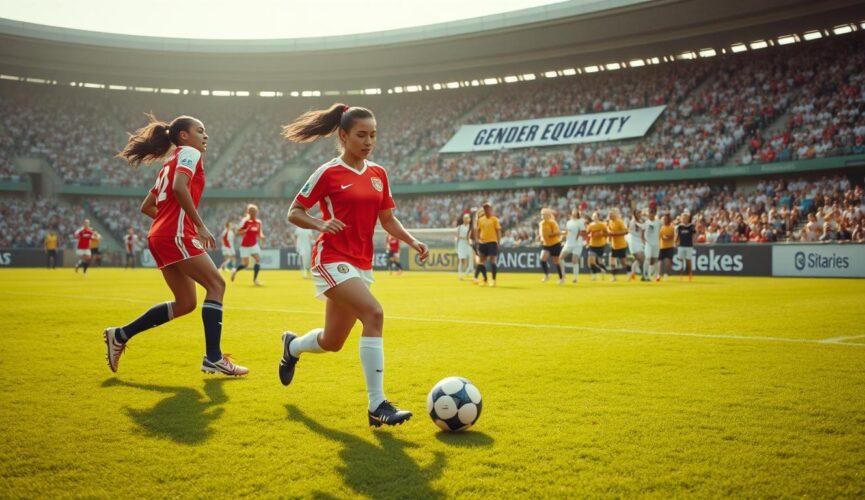
Welcome to the pitch where the real game is being played—not with balls, but with policy documents and legal briefs. We’re diving deep into soccer’s messy, contradictory, and occasionally inspiring journey toward equality.
Think of it as Moneyball meets The Handmaid’s Tale, where $24 million settlements become cultural earthquakes and maternity protections become revolutionary acts. From FIFA’s glossy brochures to grassroots movements, we’re tracking how the beautiful game is being forced to look in the mirror.
This isn’t just about equal pay—it’s about rewriting the entire playbook of power, privilege, and who gets to define what constitutes “real” football. The latest developments show progress, but the road remains long and winding.
Will the world’s most popular sport truly embrace half its talent? Let’s find out.
Why Gender Policy in Soccer Matters
Soccer isn’t just about the game. It’s about fairness in pay, leadership, and culture. The sport shows us who we value and why.
From Locker Rooms to Boardrooms
Title IX changed sports in America and inspired global soccer policies. It made universities invest in women’s sports, leading to the USWNT’s success.
FIFA’s leadership is mostly men, but the US women’s team earns more. From 2016-2018, women’s revenue outpaced men’s. This shows that success doesn’t depend on gender, but pay often does.
This issue isn’t just about fairness. It’s about smart business. Investing in successful products is basic. Yet, women’s soccer often faces underinvestment.
The Ripple Effect Beyond the Pitch
The World Cup prize money gap is more than a number. It shows whose achievements we value. Men’s 2022 World Cup prizes totaled $440 million, while women’s 2023 prizes were $110 million.
This issue affects more than soccer. It impacts corporate sponsorships, media, and young girls’ career dreams. It also pressures countries to update their policies.
- Corporate sponsorship models evolve when women’s teams demonstrate market value
- Media coverage shifts from focusing on athletes’ appearances to their actual achievements
- Young girls see career paths beyond traditional roles
- Countries face international pressure to update archaic policies
When Spain’s World Cup win was marred by a scandal, it sparked global talks. It was about power, consent, and respect. Soccer reflects society, sometimes showing us uncomfortable truths.
Real change in soccer goes beyond who plays. It’s about who leads, who earns, and whose stories are told. The game becomes political when fairness off the field doesn’t match on-field excellence.
Key FIFA and Regional Changes
If FIFA’s push for gender equality were a Broadway show, it would feel like watching the same play for 20 years. Their efforts seem like corporate theater, always promising more than they deliver.
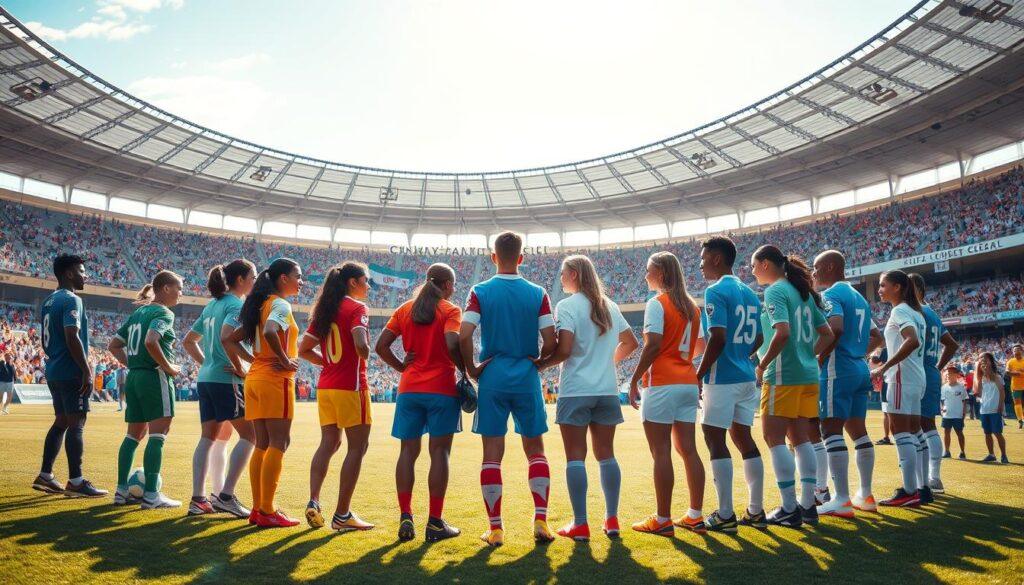
FIFA’s Gender Equality Playbook
The Women’s Football Strategy is like finding a fancy menu at a fast-food place. The promises are grand, but the delivery is lacking:
- Unprecedented investment that’s only 9% of their total budget
- Inclusive coaching programs led by committees that are 73% male
- Equal prize money by 2027 with more conditions than a prenuptial agreement
It’s like putting caviar on a cracker and calling it fine dining. The ambition is there, but the execution is like trying to parallel park a cruise ship.
Continental Counterattacks
While FIFA polishes its models, African federations are building Ferraris from spare parts. Nigeria’s Super Falcons stitch protest messages into their jerseys over unpaid bonuses. This is grassroots innovation that would make MacGyver proud.
Africa isn’t leading equality reform because they want to. They’re leading because they have to. Teams like South Africa’s Banyana Banyana survive on presidential pity funds while developing creative solutions.
This isn’t just about soccer. It’s about survival economics meeting sporting excellence. The continents facing the biggest challenges are producing the most inventive inclusion strategies.
Comparing Countries
If global soccer were a high school cafeteria, the gender equality table would feature some fascinating lunch groups. Norway’s sitting with the honor students, Spain’s at the drama table, Jamaica’s with the resourceful hustlers, and Iran’s… well, let’s just say they’re in detention.
Progressive Pioneers vs Traditional Holdouts
Norway is like the IKEA of soccer reform – they offer equality that’s both functional and stylish. Their national team has equal pay, great maternity policies, and listens to female players.
Jamaica’s Reggae Girlz have a bootstrap story in soccer. They’ve turned crowdfunding into an art form, funding everything from flights to cleats. Their success shows that passion can beat funding in inclusion.
Iran, on the other hand, has a long way to go. Women can’t attend men’s matches, and female players face religious dress codes. Their approach to gender equality is outdated.
Cultural Cross-Pressures
Spain is a fascinating case of cognitive dissonance. They’ve produced top talent and have good reform policies, but their coaching culture is stuck in machismo.
A recent coaching scandal showed this paradox. The federation promotes inclusion but tolerates behavior that’s unacceptable in many places.
Gen Z players, raised on TikTok activism and LGBTQ+ inclusion, are challenging old-school federations. This cultural clash is mind-bending for any anthropologist.
| Country | Policy Approach | Funding Model | Cultural Barriers |
|---|---|---|---|
| Norway | Proactive equality mandates | Government supported | Minimal resistance |
| Jamaica | Grassroots innovation | Crowdfunded survival | Economic limitations |
| Spain | Progressive on paper | Corporate sponsorship | Deep-seated machismo |
| Iran | Restrictive policies | State controlled | Religious doctrine |
This comparison shows that reform is more than policies or money. It’s about cultural readiness for change. Norway shows what’s possible with everyone on board. Jamaica proves what passion can achieve against all odds.
Spain shows how policies can lead culture. And Iran… they show how far we have to go.
The path to true inclusion varies in every federation. But the goal is the same: a world where talent, not gender, matters most.
Legal Cases and Reforms
Forget VAR reviews – the most important calls in soccer are in courtrooms. Legal briefs matter more than trophies. The fight for equality in soccer has moved from protests to lawsuits, making federations change their ways.

Landmark Litigation
The US Women’s National Team’s equal pay lawsuit was like a World Cup final. Their legal advocacy was smart: they started with EEOC complaints in 2016 and ended with a $24 million settlement in 2022. This shocked every federation.
Experts call this the “Guardiola Effect.” The team didn’t just ask for equal pay. They showed the world the inequality with detailed data, making federation executives look amateur.
Policy Penalty Kicks
In India, the Dindigul Agreement became soccer’s unexpected MVP. It demanded safe facilities and clear ways to report problems. This showed that the best plays can come from different places.
Federations need to treat basic rights as essential, not optional. These legal wins are about changing the game’s rules, not just money or facilities.
| Legal Case | Year | Impact | Financial Outcome |
|---|---|---|---|
| USWNT Equal Pay | 2016-2022 | Global pay equity standards | $24M settlement + policy changes |
| Dindigul Agreement | 2018 | Safety protocols & grievance systems | Structural reforms |
| Australian WNT Collective Bargaining | 2019 | Revenue sharing model | 40% pay increase + benefits |
| Norwegian Federation Agreement | 2017 | Equal pay implementation | Complete pay parity achieved |
These cases are more than wins. They’re changing soccer worldwide. Each settlement sets a precedent, each agreement a blueprint, and each federation is forced to consider gender equality.
The magic happens when legal advocacy meets public pressure. It’s the mix of courtroom strategy and stadium protests that’s making soccer fairer.
Grassroots Impact
The real change in soccer isn’t in fancy Zurich meetings. It’s happening in places that make luxury hotel staff worried. While FIFA talks about gender numbers, real change is happening on rough fields.
Changing the Game at Ground Level
Forget fancy diversity training. The real action is where cleats meet the ground. It’s about changing lives through sports, not just checking boxes.
Community programs are doing what big companies can’t: true inclusion. They’re not just following rules; they’re creating new ones.
Detroit’s Eastside United shows what big companies wish they could do. Muslim teens in hijabs manage their prayer times during drills. Halal pizza breaks help build community.
This program shows that true inclusion is about being together, not separate.
Rio’s Complexo do Alemão favela program shows what happens when everyone gets a chance. Girls outperform boys in soccer tactics by 22% using VR. This proves that with equal access, everyone can succeed.
Nebraska’s Cornbelt Kick Initiative is a big middle finger to stereotypes. Farm girls with dirty iPads are getting college scholarships, beating Ivy League rates.
This isn’t just coaching; it’s cultural judo. These programs turn obstacles into chances with the skill of a perfect Cruyff turn. They show that the best reform starts from the bottom.
Athlete Opinion
Today, footballers are using their time after games to talk about big issues. They turn press conferences into chances to make a difference. The game has become a place for social comments, where celebrating goals is also a form of protest.
Boots on the Ground Truth
Megan Rapinoe used her retirement to stand up for what she believes in. She used her fame to fight for equal pay and LGBTQ+ rights. Her actions showed that even athletes can be powerful voices for change.
Caster Semenya questioned FIFA’s rules on testosterone levels. Her fight for fairness in sports is a big step towards inclusion. It challenges what we think is fair in competition.
National teams are now using their voices to demand change. Norway’s women’s team fought for equal pay. Australia’s Matildas pushed for better maternity leave. The US Women’s National Team used their wins to fight for equality.
But, it’s scary to be open about who you are in sports. Being out is more courageous than taking a penalty in a World Cup final. Just wearing rainbow gear doesn’t always mean you’re safe or accepted.
Captain’s Armband Activism
The armband has become a powerful symbol in soccer. Germany’s “OneLove” campaign during the Qatar World Cup started big discussions. That simple band carried more meaning than many trophies.
This use of the armband shows a new era of athlete power. Players now see their influence goes beyond the game. They can shape policies. The NWSL’s policy on transgender athletes is a result of player pressure.
But, there’s a gap between show and action. Wearing rainbow logos is not the same as protecting queer players in contracts. True inclusion is shown in how we treat players all year, not just in June.
Today’s stars see being a captain as a political role. They use interviews to share important messages. They know that sometimes the most powerful action is challenging the system.
The Road Ahead
Imagine a teenage girl in Nairobi getting scouted on TikTok. Blockchain ensures equal pay in real-time. Virtual reality training makes distance irrelevant. Welcome to soccer’s digital revolution.
This isn’t science fiction anymore. The FIFA gender policy overhaul is getting exciting. It could either democratize the sport or just digitize old power structures. The big question is: will technology free athletes or just give admins more control?
Next-Gen Game Changers
FIFA’s $500 million tech fund could be a game-changer. It might give women’s games the production they deserve. Or it could be a tool for surveillance.
The UN Women partnership is shifting the game. We’re moving from secret talks to transparent smart contracts. From local talent pools to global digital academies. From old-school scouting to AI-driven talent finding.
Systemic Formation Shifts
Technology is changing how power is distributed. Blockchain could make equal pay automatic. Virtual reality training could make location irrelevant. Digital platforms could open new revenue streams.
But, technology alone doesn’t ensure equality. The same algorithms that find talent might also keep biases. Surveillance tools could become too controlling.
The most exciting part? Talent could become the only thing that matters. A girl from Rio could have the same training as one from Rotterdam. Pay gaps could become impossible to keep.
This technological reform is soccer’s biggest change in ages. It’s not just about how we play. It’s about who gets to play and on what terms. The FIFA gender policy of tomorrow might be a digital constitution.
Conclusion
We’re not just watching games anymore. We’re seeing a cultural shift on the green pitches. When Women’s World Cup finals draw more viewers than NBA games, something big has changed.
The numbers show us the journey is uneven. The NWSL’s value soared 780%, yet women hold only 18% of FIFA’s power seats. It’s like building a spaceship while arguing if the Earth is flat.
This change in soccer isn’t just about boardroom decisions. Legal fights have become key, pushing for change through court wins that affect the world.
The best sign isn’t in financial reports or meetings. It’s in a 12-year-old in Kansas City who expects her game to be on TV. That’s how real change happens – when equality is expected, not fought for.
The time for extra efforts for gender equality is over. The moment of victory has arrived, thanks to a generation that sees equal pay and representation as rights. The game is now beautiful for everyone.