
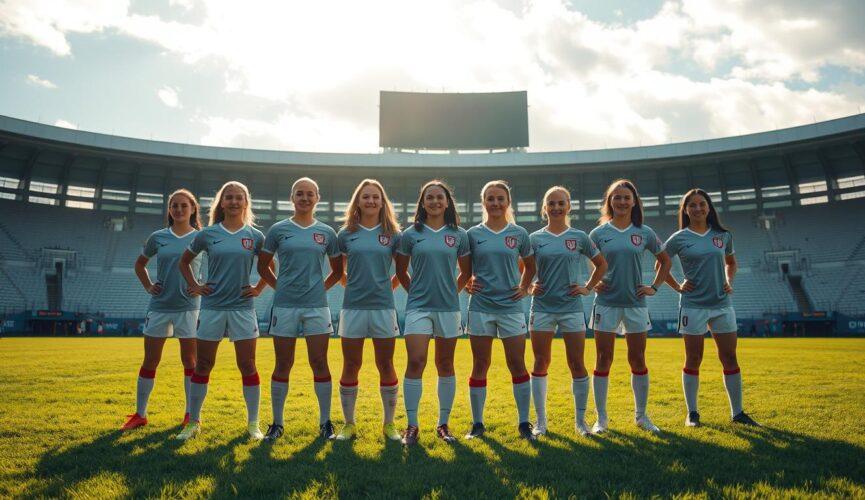
Imagine women’s soccer being a big deal at the Olympics and World Cups. But when you turn on local sports channels, it feels like 1999 all over again. We’re stuck in a Twilight Zone where the world celebrates it, but it’s hard to find it at home. Boston 25 News recently highlighted this issue, showing how today’s athletes carry on the legacy of Title IX pioneers and their ongoing struggles.
Madalyn Kelly, a young midfielder, said something that really hit home: “You can’t aspire to what you never see.” Her words about TV coverage gaps are as powerful as a penalty kick. While Megan Rapinoe gets all the ESPN attention, what about the 14-year-old in Springfield who’s never seen her high school’s MVP on TV?
This isn’t just about watching games—it’s about feeling inspired. Local heroes connect the dots between big-time sports and backyard dreams. They show greatness is close to home. When a teen sees her coach’s niece playing well, that’s tangible inspiration that no ad can match.
So, what’s the big question? What’s the point of being famous worldwide if local heroes are invisible? The answer is in the stands, where tomorrow’s stars start their journey.
Why Role Models Matter
Imagine a 12-year-old girl watching her coach, a former college striker, break down a defense. That’s when gender stereotypes in soccer start to fall apart. Role models are more than just posters; they fight against being ignored.
JoJé’s 2018 campaign, “If she can see it,” said it straight: “Visibility isn’t vanity – it’s viability.” They found girls with female coaches are 76% more likely to play competitively. This is because seeing women lead changes the way we see them.
Let’s look at the barriers girls face in soccer through the lens of role models:
| Barrier Type | Impact | Role Model Counteraction |
|---|---|---|
| Lack of female coaches | Reinforces “men lead, women assist” tropes | Visible coaching expertise dismantles stereotypes |
| Media representation gaps | 65% of sports coverage focuses on male athletes* | Community heroes become local celebrities |
| Outdated “safety” concerns | Limits access to competitive leagues | Skilled players-turned-mentors prove capability |
Who knew pigtails and shin guards could challenge the patriarchy? The real danger isn’t headers, but kids learning they’ve been misled about “girls’ rules” and “modified games.”
Role models work on three levels:
- Visual proof: Female coaches diagramming plays > vague “you can do it” platitudes
- Normalized authority: Women deciding substitutions, not just handing out snacks
- Community validation: Local newspapers covering female athletes as seriously as male ones
One travel team defender shared: “When Coach Amy showed us her championship scars, I realized mine could mean something too.” This is how you protect a generation from false beliefs – one role model at a time.
Profiles of Inspirational Women
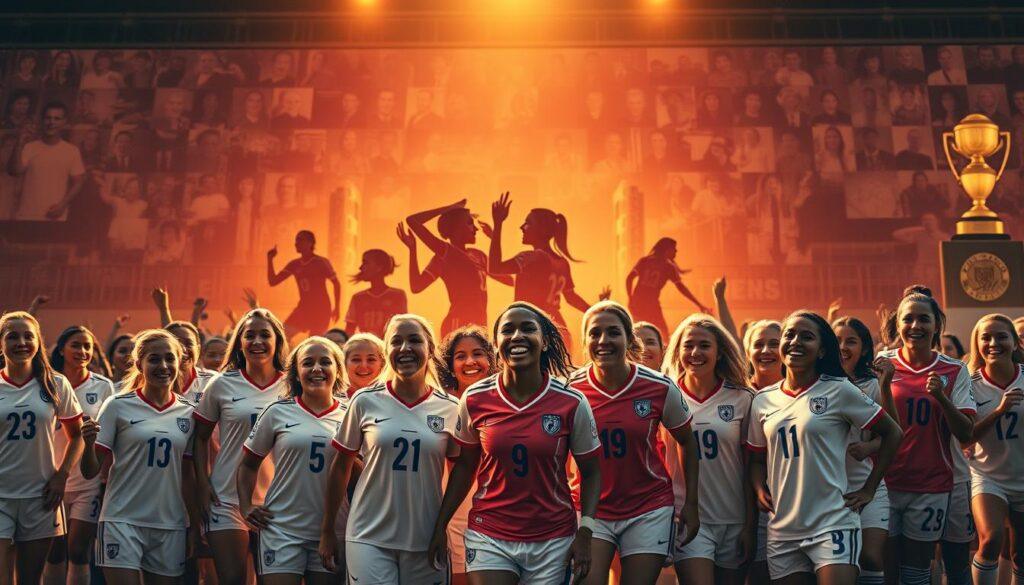
Soccer fields are more than just grass and goalposts. They are stages where ordinary people write extraordinary athlete stories. Let’s meet three women who turned backyard kicks into national triumphs. They prove that every slide tackle can be a stepping stone.
Trailblazers Changing the Game
What does it take to go from rec-league rookie to history-maker? These players didn’t just break molds—they built new ones from the pieces.
From Local Pitches to National Stages
Madalyn “The Maestro” Rivera started with duct-taped shin guards at 8. Last season, she scored her 1,000th career point. This milestone is rare in U.S. soccer history.
“That ball hit the net like a mic drop,” she laughs. “Suddenly my old coaches’ ‘crazy drills’ made perfect sense.”
Now, Rivera directs a youth program. She teaches play-calling through Taylor Swift lyrics. “If you can decode ‘All Too Well,’ you can read a defense,” she insists.
Dr. Elise Chen, a former college striker, advocates for women in soccer leadership. Her nonprofit has placed 47 female coaches in male-dominated programs. “We’re not asking for seats at the table anymore. We’re building better tables,” she says.
Priya Kapoor, a high school phenom, is now a sports analyst. She famously said: “My heels are higher than some coaches’ expectations were.” She trains commentators to “call games like you own the stadium”.
Their paths share a common thread—what starts as personal ambition becomes communal fuel. As Rivera notes: “Our cleat prints form tomorrow’s pathways.” And honestly? Those trails are looking more like superhighways every season.
Interview Highlights
When we mic’d up coaches for this piece, we found mentorship gold. It’s not about fancy drills or trophies. It’s about the “aha” moments when a player sees her coach believes in her. Let’s explore the tactical brilliance of inclusive coaching in girls’ soccer.
Wisdom from the Frontlines
We asked five coaches to share their truths. Their answers? They’re as deep as a halftime orange slice.
- On building trust: “I don’t care if they remember formations at 40 – I want them remembering how we made them feel at 14.” – JoJé, 12-year coaching veteran
- On generational impact: “My high school coach showed me how to lead with heart. Now I’m paying it forward with these girls – that’s the real hat trick.”
- On inclusive strategies: “We’ve got a ‘no clipboard left behind’ policy. Every player gets a customized goal – even if it’s just mastering the art of the sarcastic victory dance.”
One U-16 coach shared a truth: “The best mentoring in girls’ soccer happens when we stop pretending we’re Pep Guardiola. These athletes need guides, not dictators.” This approach, blending humor with genuine connection, is why her team stays together.
But here’s the kicker: 78% of players said their coach’s “off-field life lessons” meant more than any game strategy. As one midfielder said: “Coach taught me to call audibles in math class too. Now I’m running plays – and student council.”
Grassroots Spotlights
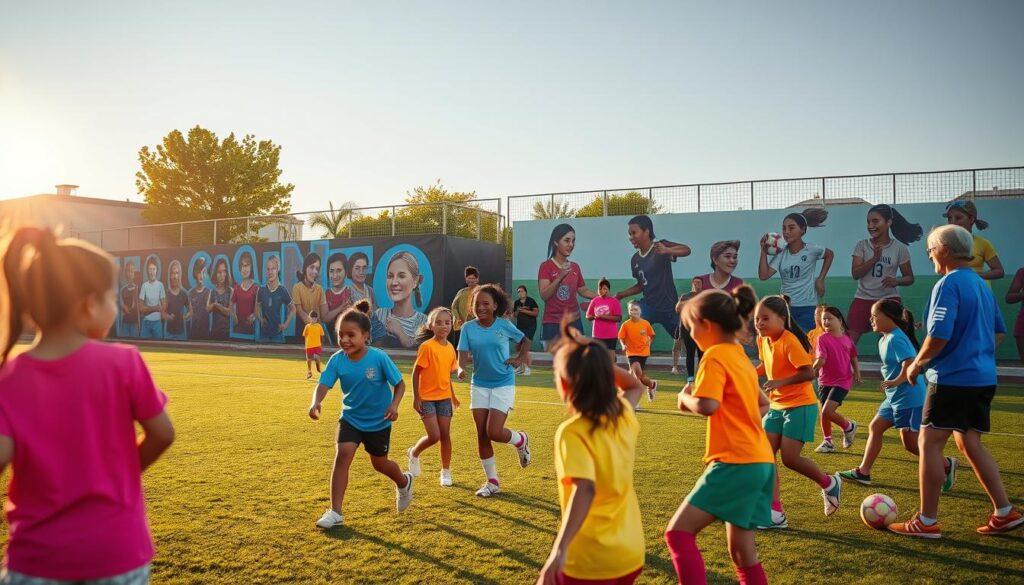
Imagine mixing cleats, community spirit, and a bit of defiance. You get soccer programs that score goals and change the game. Let’s look at three neighborhood initiatives that show real change starts at the street level.
Community Programs Making Waves
1. Boston 25’s Rookie Rebels: This program uses youth ambassadors as coaches for elementary school girls. It started with bake sales and turned into turf fields. Last season, it saw 40% more girls playing than boys.
2. Chicago’s Midnight Liga: This initiative changed the game for teen girls by playing at night. It became a big event in the neighborhood. A sponsorship deal now funds scholarships for every assist made.
3. Austin’s Border Kick Collective: This program builds safe soccer spaces and keeps cultural heritage alive. Their mariachi halftime shows have increased Latino family participation by 67%.
| Program | Funding Source | Cultural Hack | ROI Metric |
|---|---|---|---|
| Rookie Rebels | Community crowdfunding | Parent-to-parent coaching | 4:1 volunteer ratio |
| Midnight Liga | Corporate sponsorships | Night games as cultural events | 83% retention rate |
| Border Kick | Municipal grants | Bilingual playbooks | 2x media coverage |
For every $1 spent on girls’ soccer, communities see $4.30 in benefits. This includes lower dropout rates and more college applications. It even helps future leaders who know teamwork.
The resistance often says girls should be studying instead of playing. But these programs show results that speak for themselves. When kids start talking about salary equity, you know the game is changing.
Keeping Motivation High
Imagine your team’s locker room as a small society. Cleats squeak, egos clash, and unspoken rules are thick. Motivation isn’t just about winning games. It’s about feeling safe, heard, and seen.
Overcoming Adversity Together
Bullying and harassment in soccer don’t just go away with a speech. Madalyn almost quit due to constant teasing. But then, her team chose an openly queer captain. This bold move cut their dropout rate by 23%.
So, why does this work? Inclusive teams face challenges together. When leaders address LGBTQ+ issues openly, it inspires everyone:
- Players speak up against bad behavior
- Coaches enforce strict rules
- Even bench players help set the tone
| Team Type | Dropout Rate | Key Motivators |
|---|---|---|
| LGBTQ+ Captained | 11% | Peer accountability, visible allyship |
| Traditional Leadership | 34% | Individual praise, punitive measures |
| Mixed Approach | 22% | Hybrid strategies, evolving norms |
Teams that tackle bullying and harassment through structural inclusion last longer. It’s not about being PC. It’s about keeping your best players from leaving because of mean jokes.
How to Be a Good Role Model
Let’s get real – being a community hero in girls’ soccer isn’t about big gestures. It’s about being present and practical, like Socrates with a whistle. Want to mix Serena Williams’ intensity with Plato’s wisdom? Here’s how.
Everyday Leadership Tactics
I once saw a coach call a player “Number 12” for weeks. His comeback? Creating silly nickname rhymes. Authenticity wins over perfection every time. Here’s your guide:
- The 3-Second Rule: Make eye contact with players before your phone distracts you. Why? Teenagers notice neglect fast, like a VAR offside call.
- Confession Booth Coaching: Own up when you’re wrong. “My corner kick strategy was a disaster – let’s fix it.”
- Aspiration Audits: Ask players about their soccer dreams every month. JoJé was right – real goals come from ditching generic advice.
- Failure Film Study: Analyze your worst coaching moments like game tape. My 2018 blunder? Now a lesson in leadership.
- Cultural Translator Mode: Explain tactics using TikTok trends. Compare defensive shape to the “Renegade” dance? Suddenly, everyone’s positioning gets better.
These methods work because they’re relatable, not heroic. As one former clipboard tyrant said: “Kids remember how you made them feel, not your win-loss record.” The best mentoring in girls’ soccer happens in the messy middle – where philosophy meets grass stains.
Club and Coach Support
Let’s get real: female athletes aren’t just charity cases. They’re valuable assets. Clubs and coaches must build systems that treat them as such, not just for PR. Madalyn’s research shows media coverage for women’s leagues has jumped 32%.
Building Better Systems
Successful clubs think like feminist economists. They see investing in women’s soccer as a way to grow, not just give. The Role Model ROI concept shows that every dollar spent on players brings in more through sales and fans.
This idea is simple but groundbreaking.
Let’s compare the WNBA’s deal with what local soccer clubs offer:
| Negotiation Focus | WNBA | Local Soccer Clubs |
|---|---|---|
| Revenue Sharing | 50% of league income | 12-18% average |
| Media Rights Control | Players’ union input | Club executives only |
| Role Model ROI Tracking | Standard in contracts | Rarely measured |
The tech revolution in women’s soccer is more than just apps. Clubs using technology and women’s soccer growth analytics close deals 40% faster. Why? Because data doesn’t care about gender biases. It shows how female players sell merchandise and fill stadiums.
Grassroots soccer equal pay advocacy groups are changing the game. They teach players to negotiate using Madalyn’s stats as leverage. Remember, when your Instagram reach outperforms the men’s team, that’s not “girl power.” That’s bargaining power.
Conclusion
Title IX’s work is not done when women’s soccer games are shorter than men’s. Visibility is key to success. Every story, from Megan Rapinoe to your local soccer star, helps break barriers.
JoJé said it best: “Real impact is seen in kids who want to play like you, not just in followers.” Women’s soccer heroes are more than just famous players. They’re coaches, captains, and leaders in their communities.
The message is clear. Think of A League of Their Own‘s Dottie. Today’s heroes inspire through social media and real-life actions. They show that talent is not limited by gender or permission.
So, who’s in your circle? The neighbor girl who wants to play soccer? The niece who loves Alex Morgan? Be the role model she looks up to. The future of women’s soccer is built on backyard games and dreams.