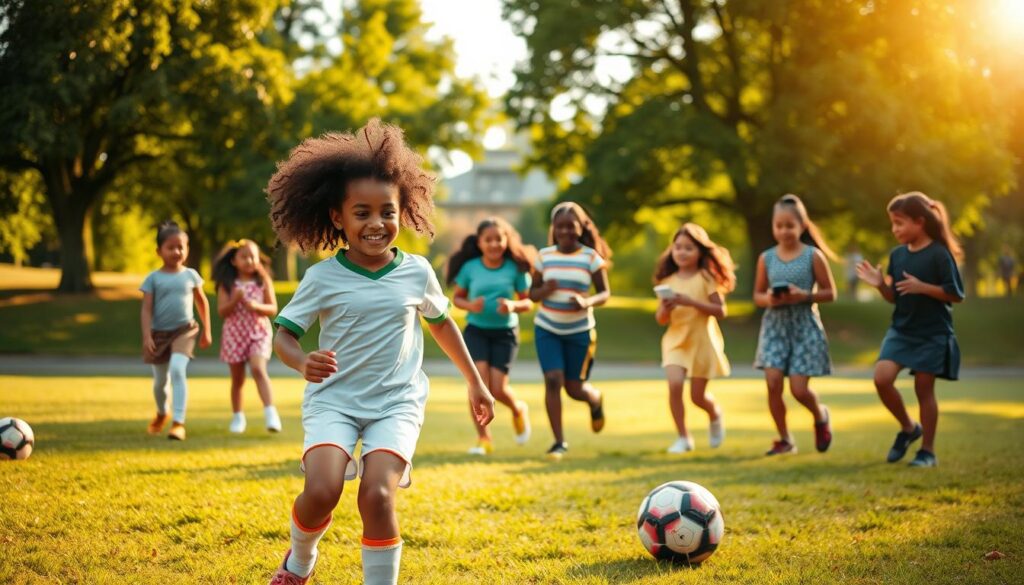
What do you think of when you hear “team captain”? Maybe you picture an armband or a star player. But true captains are more than that. They inspire, guide, and unite their teammates, creating a strong team both on and off the field.
Picture a soccer field, where chaos meets order. This is where female sports leadership really happens. Forget corporate retreats and trust falls; the real training ground is the muddy field. Here, the armband is not just a fashion statement; it’s a call to action.
Great captains set the bar high. They work hard in every drill, arrive early, and give their all. This builds trust, letting teammates feel safe to take risks. When players know their captain supports them, they push harder. This way, every player becomes a leader, navigating the game with the skill of a CEO.
To learn more about the value of these skills, check out this article on leadership and communication in college soccer. We’ll see how these qualities can change not just a game, but the very heart of teamwork.
Captain Characteristics: Traits of Successful Female Soccer Leaders
Being a captain in women’s soccer is more than just wearing an armband. It’s about leading by example. Great captains are not just vocal; they are the heart of their teams. They set the standard with their actions and commitment.
In high-pressure situations, a calm captain can make all the difference. Their calmness can turn a loss into a win.
The Armband Is Not a Crown: Accountability and Work Ethic
Accountability is key for a good captain. They don’t hide from mistakes. Instead, they own up to them and expect the same from others.
This honesty builds trust and respect. The best leaders lead by example, showing a strong work ethic. They say, “Follow me.”
Imagine a captain who criticizes teammates but doesn’t work hard themselves. This kind of leadership creates problems. It leads to cliques and resentment, breaking the team’s unity.
Successful captains lead through their actions, not just words. They show that influence comes from what you do, not just what you say.
Emotional Intelligence: The Bonus Trait That Separates Good from Great
Many overlook emotional intelligence, but it’s what makes great captains. A captain with high emotional intelligence can sense the team’s mood. They know when to encourage, when to be tough, and when to lighten the mood.
Consider a captain who, after a tough mistake, says, “Reset and focus.” This simple statement can change the team’s mood. It’s not about being nice; it’s about understanding the team’s emotions.
In a world that doubts female leadership, emotionally intelligent captains shine. They use empathy as a strategy, creating a supportive team environment. This encourages growth and unity.
Trait
Description
Impact on Team
Accountability
Owns mistakes and encourages teammates to do the same.
Builds trust and respect.
Work Ethic
Leads by example, demonstrating commitment in practice and games.
Inspires teammates to elevate their performance.
Emotional Intelligence
Understands teammates’ emotional needs and responds appropriately.
Creates a cohesive and supportive team environment.
The essence of successful women soccer captains is their mix of traits. They don’t just wear the armband; they lead by example. For more insights on leadership in sports, check out this resource on the 3 C’s of being a.
Communication Skills: Verbal and Non-Verbal Leadership in Soccer Settings
In soccer, communication is key, not just a tool. Captains lead by talking and listening. They make sure everyone feels heard and valued.
This creates a strong team. It’s vital for success on the field.
Clear communication reduces mistakes. Captains also connect players with coaches. They make sure everyone’s voice is heard.
This builds trust and teamwork. These are essential for leading a soccer team well.
The Dialogue of the Pitch: Why Listening Is a Captain’s Superpower
Forget the idea of a captain shouting to win. Real leadership is about talking and listening. It’s about having a conversation, not just shouting orders.
Good leaders ask for feedback. They listen to their team. This builds trust and teamwork.
On the field, captains use short, clear messages. They say things like “man on” or “time.” But they also use body language.
The Body Language Lexicon: Claps, Glares, and the Art of the Reset
Body language is just as important. A clap after a goal can stop the team from getting too down. Standing tall shows resilience.
A simple “We’ve got this. Next play” can change the team’s mindset. It’s not just words; it’s a message of confidence.
Remember, a memo can’t inspire a comeback. But a captain’s gestures can. They turn a worried team into a united force.
Motivating Others: Inspiring Teammates Through Training and Competition
Being a captain means more than just playing the game. It’s about making every player feel important. The hard work during mid-season shows true soccer leadership. It’s not just the big wins, but the daily effort that builds a team’s spirit.
When you show up ready to work, you set the example. Your enthusiasm can motivate others to push themselves, even when things seem tough.
The Grind as Gospel: Setting the Tone When No One Is Watching
On rainy Wednesday practices, your attitude sets the standard. Slacking off invites mediocrity. Being positive is a strategy to keep the team’s spirits high.
It’s about staying strong, even when things go wrong. This is when athletic leadership development really shows. Leading by example, even when no one is watching, is key.
The Care and Feeding of a Team: Individual Attention as Collective Fuel
Leadership is about connecting with your teammates. Noticing when someone is struggling shows you care. A simple question can turn a team into a family.
This isn’t about being soft; it’s about investing in your team. By supporting each other, you build a strong team culture. When teammates feel valued, they perform better.
Teaching others to lead is a lasting legacy. Share your knowledge and encourage your teammates to take on leadership roles. A team with many leaders is more resilient and stronger. For more on leadership in soccer, check out this resource.
In a world where female athletes often feel left out, the ThisGirlCan campaign changed the game. It started in 2015, based on Sport England’s research. The research showed that 75% of women wanted to be more active but felt judged.
The campaign’s first ad was different. It didn’t feature famous athletes or influencers. Instead, it showed everyday women doing various activities, including soccer, with joy and honesty. This was key because soccer is often seen as exclusive.
Why is this important for soccer? The sport’s culture can be scary. In the U.S., the cost of playing and the competition can make it seem like only a few can play. But the ThisGirlCan campaign says showing up is enough.
The campaign’s strength is in not focusing on changing people. There are no before-and-after photos or weight loss stories. It says that moving your body is valuable, no matter what. For women who haven’t played soccer in years, this message is groundbreaking.
Encourages women to embrace their bodies and abilities.
Promotes community and camaraderie among female athletes.
Challenges societal norms around female participation in sports.
The ThisGirlCan campaign is more than a marketing effort. It’s a movement that supports female sports participation. It invites women of all backgrounds to play soccer with confidence.
Breaking Down Barriers: Real Stories from Women Who Started Playing Soccer After the Campaign
In sports, personal stories can change the game. Stories of women starting soccer after seeing ThisGirlCan are truly inspiring. Sarah, a 34-year-old accountant from Manchester, hadn’t run in years. But after seeing the campaign, she joined a local soccer league.
She didn’t want to be a pro footballer. She just wanted to play because she wanted to. That’s a pretty simple yet powerful idea.
Priya from Birmingham also made a big change. She started a soccer group for South Asian women. She wanted to show that soccer spaces could be for everyone. It’s about more than just playing; it’s about making a point.
In the US, the impact is just as real. A 2022 study showed that girls are more likely to stay in sports if they see diverse athletes. ThisGirlCan showed women in all shapes and sizes, not just the perfect athletes.
These stories aren’t about becoming super athletes overnight. They’re about finding joy in playing, even if you’re not perfect. That’s the heart of women soccer inspiration. It shows how girls sports campaigns can inspire others to play.
Fitness Without Judgment: Creating Inclusive Soccer Training Environments for All Skill Levels
Imagine stepping onto a soccer field where every player feels welcome, no matter their skill level. This is not just a dream; it’s essential. The ThisGirlCan campaign shows us that making soccer training spaces inclusive is key to getting more women involved in sports. But how do we make these spaces welcoming?
First, let’s look at warm-ups. Traditionally, soccer training starts with laps, a practice so common it seems almost sacred. But for beginners, these first five minutes can feel like a punishment. Instead, programs likeSoccer Without Borders and Girls on the Ball use game-based movements to make fitness fun. Who wouldn’t want to chase after a ball instead of running laps?
Then there’s the language we use. Coaches trained in the ThisGirlCan way focus on encouraging players. They replace negative feedback with questions that encourage exploration. This change in how we talk about the game can make a huge difference. It helps players feel less anxious and more open to learning.
Equipment scaling is also important. Using smaller goals, futsal balls, and shorter fields makes the game more accessible. It’s not about making the game easy; it’s about making it fair and fun for everyone.
When a 45-year-old mom can miss a penalty kick and laugh about it with her teammates, you know you’ve created something special. It’s all about building a community where everyone can grow, learn, and have fun playing soccer.
Element
Traditional Approach
Inclusive Approach
Warm-Up
Laps
Game-Based Movements
Coaching Language
Corrective Feedback
Exploratory Prompts
Equipment
Standard Goals
Scaled Goals
The Ripple Effect: How One Campaign Inspired Thousands to Lace Up Soccer Boots
Picture this: one campaign leading to a surge of women lacing up their soccer boots. The ThisGirlCan campaign didn’t just encourage a few women; it sparked a movement. In its first year, it motivated 2.8 million women to get more active. By 2023, the gap in sports participation between men and women had shrunk a lot, with soccer seeing a big increase in female registrations.
But it’s not just about numbers. The real magic is in “social contagion.” It’s like a friendly virus of excitement spreading through social networks. One woman joins a league, shares her story, and soon three more friends are playing together.
I’ve seen this happen myself. A friend, who hadn’t played soccer in years, now organizes games in Brooklyn’s Prospect Park. These games attract 15 to 20 women, from former college players to beginners.
The ThisGirlCan campaign was brilliant because it made participation visible. It wasn’t just about ads; it inspired women to share their own stories. They posted sweaty, triumphant soccer selfies with the campaign’s hashtag. This created a loop of encouragement.
For every woman who joined a league after seeing a ThisGirlCan poster, there were likely three more who followed because their friend did. That friend was inspired by the campaign’s message. It’s like a positive feedback loop, where courage spreads.
Training Like You Mean It: Confidence-Building Soccer Workouts Inspired by
True confidence in soccer comes from tackling discomfort head-on and embracing the learning process. It’s not a personality trait; it’s a skill that develops through intentional practice. The ThisGirlCan approach to soccer training embodies this philosophy with precision. Each drill is a step toward building not just skills, but confidence.
We start with what I call “competence scaffolding.” This means creating drills where success feels almost inevitable. For instance, begin with a simple passing exercise. The ball is stationary, your partner is just three yards away, and the only goal is to make contact. Once that’s mastered, we add a rolling ball and increase the distance. Each step is small yet significant, ensuring players feel a sense of achievement.
Another key principle is to normalize mistakes. I’ve seen brilliant coaches deliberately miss a pass during demonstrations, shrugging it off and trying again. This models a lesson: errors are data, not a cause for shame. For women who have faced years of scrutiny over their athletic efforts, witnessing an authority figure fail gracefully can be a game-changer.
To keep the spirit alive, we introduce “joy anchors”—moments of pure, unstructured play. Picture a five-minute scrimmage where there are no corrections, just laughter and running. It may seem trivial, but these moments serve as a psychological counterweight to the skill-building segments. Remember, you’re not training for the World Cup; you’re training for a lifetime of showing up and enjoying the game.
ThisGirlCan Philosophy
The ThisGirlCan campaign shakes up old views on fitness and body image. It believes that moving your body is a basic right, not a special treat. This idea fights against the idea that you must look a certain way to be allowed to be active.
This idea comes from many places. It’s influenced by feminist views, the Health at Every Size movement, and knowing that guilt doesn’t motivate us well. When it comes to soccer, it means a few key things:
You don’t need to be “good” to play; all you need is to want to play.
The main goal of sports isn’t just to get better. It’s about growing as a person.
Community is infrastructure; being part of a group helps sports participation grow.
These ideas are more than just nice words. They show a deep understanding of how we behave, wrapped in a fun sports vibe. TheThisGirlCan campaign knows that staying motivated can be hard. But, being part of a community makes it easier, creating a sense of belonging and who we are.
For more tips on boosting confidence in young female soccer players, see this inspiring guide.
From Couch to Pitch: Beginner-Friendly Soccer Fitness Programs for New Female Players
Starting your soccer journey is a fun adventure. If you’ve thought about playing soccer but felt scared, don’t worry! Programs inspired by the ThisGirlCan campaign are here to help you begin.
Imagine a beginner’s program that lasts 8 to 12 weeks. The first week focuses on getting used to a ball at your feet. You’ll learn to dribble, stop the ball, and pass it gently against a wall. It’s all about having fun, with no sprints or defensive drills.
By week four, you’ll play short-sided games with easy rules. You won’t do slide tackles and can touch the ball as many times as you want. This way, fitness is part of the game, making it more enjoyable. Who wants to run lines when you want to play?
Groups like the American Outlaws’ women’s initiatives and local YMCA programs offer great programs. They focus on skills and the campaign’s message of not judging. Success isn’t just about mastering moves; it’s about keeping playing. Retention is the revolution.
Week
Focus
Activities
Goals
1
Getting Comfortable
Dribbling, Stopping, Passing
Familiarity with the ball
4
Short-Sided Games
Modified Rules, Team Play
Teamwork and enjoyment
8
Building Confidence
Full Games, Strategy
Understanding game dynamics
If you’re ready to be your own soccer star, every kick is important. The soccer world is waiting for you. With the right motivation and inspiration, you can go from couch potato to soccer pro!
Mental Health Benefits: How Soccer Participation Improved Lives of Campaign Participants
Soccer is more than a game for many women; it’s a lifeline to better mental health. Studies show a strong link between sports and mental well-being. Women, in particular, see a drop in depression and anxiety when playing soccer.
Women who joined the ThisGirlCan campaign have seen big changes. They talk about feeling free from constant self-criticism. When they’re playing, they’re too busy to worry about how they look. This creates a state of flow, where they’re fully in the moment.
Women have shared how soccer helped them through tough times. It’s helped them deal with divorce, job loss, and being a new mom. One said, “The pitch is the only place my brain shuts up.” It’s real; it’s science.
The campaign’s focus on fun is key. Enjoying the game leads to mental health benefits that are hard to find elsewhere. You can’t enjoy yourself if you’re constantly worried about doing well.
Benefit
Effect Size
Demographic
Reduced Anxiety
Large
Women
Lower Depression Rates
Moderate
Women
Improved Self-Efficacy
Large
All Participants
Community Impact: Local Soccer Clubs Embracing the
Local soccer clubs are changing the game for women’s sports with the ThisGirlCan campaign. It’s not just about adding a women’s team. They’re looking at everything, from facilities to training times, through an inclusivity lens.
For example, are evening training sessions good for women with kids? Or do they only show men’s teams on social media, ignoring women’s teams? Clubs must answer these questions to be truly inclusive.
In the UK, the FA uses ThisGirlCan in funding decisions. Clubs must show they’re inclusive to get grants. This ensures they’re not just pretending to be welcoming.
In the US, change often starts locally. A club in Portland might offer fees that change based on income and free childcare. In Austin, leagues make sure every team has beginners to protect them from being drafted.
These efforts are not just charity. They’re smart moves for clubs’ future. With more women playing soccer, clubs that don’t adapt will lose out.
The ThisGirlCan campaign gives clubs a moral and practical guide. By following these principles, clubs can inspire new players and fans. This way, soccer becomes a game for everyone.
ThisGirlCan Mentality
The ThisGirlCan mentality is more than a slogan; it’s a game-changer. It breaks down old rules that tell women they can’t play sports. Instead of asking if they can join, it says, “I’m here, deal with it.” This isn’t about being tough; it’s about feeling you belong.
When you adopt this mindset in soccer, you see things differently. You’re not just trying not to look bad. You’re part of a long tradition of movement that goes beyond just sports. It shows that sports are a way to express who we are.
ThisGirlCan also makes you question the fitness industry. This huge industry makes money off women’s doubts, selling them the idea of change. But what women really need is permission to be themselves. Every time you play without needing to prove yourself, you’re challenging the status quo.
The ThisGirlCan campaign has changed how we talk about fitness. Instead of saying, “I exercised,” we say, “I played.” This small change in words has a big impact on how women feel about sports. It gives them the courage to enjoy sports fully and without shame.
Workout Motivation: Using Campaign Principles to Stay Committed to Soccer Training
Staying motivated for soccer training can be tough. It’s like trying to catch smoke with your hands. It seems exciting at first, but then it disappears when things get busy. Luckily, the ThisGirlCan approach offers a simple way to keep going.
Instead of just using willpower, which runs out fast, the campaign suggests using commitment devices. Think of it like this: make it harder to quit than to start. For example, paying for a league season upfront can make you want to keep going. You’ve already paid, so why not play?
Having someone to hold you accountable can also make a big difference. Imagine having a friend who texts you if you miss practice. They’re not trying to guilt you, but they promise you’ll get to enjoy some tasty tacos afterwards. Who can resist that?
Being part of a community is key too. Pick a team that values being together. The desire to hang out with friends can be stronger than staying home. This friendship can push you to keep showing up.
When a full training session seems too much, try the minimum viable participation approach. Just put on your gear and touch the ball for five minutes. Often, you’ll end up doing more than you thought. And if you don’t? You’ve at least done something, which helps break the all-or-nothing mindset.
The goal isn’t to become a soccer star. It’s about embracing who you are as a soccer player. Building identity-based habits, like thinking, “I’m the kind of person who shows up,” is stronger than just focusing on winning.
Strategy
Description
Benefits
Commitment Devices
Prepay for leagues or classes
Encourages attendance through financial investment
Accountability Partners
Find a friend to train with
Provides motivation and social interaction
Minimum Viable Participation
Commit to short practice sessions
Reduces pressure and encourages consistency
Your Soccer Story: How to Start Your Own Fitness Journey Inspired by
Starting your soccer journey can seem scary, but it begins with one kick. The biggest challenge isn’t the first touch. It’s facing the stories that say you’re not athletic enough. Let’s make it simple.
Step One: Find a ball. Any ball will do—a $15 size 5 from Target is perfect. It’s not about the brand; it’s about the spirit of play.
Step Two: Locate a wall. Walls are great training partners. They always return the ball, never judge you, and don’t need scheduling. Spend ten minutes passing against that wall. Focus on rhythm over technique. This is your moment to connect with the game.
Step Three: Find your people. This could mean searching for “women’s recreational soccer [your city]” or exploring Meetup groups. Or, if you’re feeling bold, start something yourself. A simple Facebook post saying, “Anyone want to kick a ball around on Saturday mornings? Zero experience required, coffee provided after,” can be the seed of a vibrant community.
Step Four: Manage your expectations. Your first game might involve a lot of whiffed kicks and confused positioning. Remember, this isn’t failure; it’s evidence that you’re trying something new. Embrace the chaos!
The final gift of this campaign is narrative reframing. Your soccer story isn’t just about becoming an athlete; it’s about becoming someone who refuses to let fear of judgment dictate her life. The pitch is waiting for you. Are you ready to step onto it?
ThisGirlCan
ThisGirlCan is more than just words; it’s a movement. It changes how we see women in sports. The campaign shows that every woman, no matter her age or skill, belongs on the field.
Those days when only top athletes like Mia Hamm or Megan Rapinoe were seen are gone. Now, a 40-year-old mom can play soccer too. She can kick a ball and laugh with friends. This campaign celebrates the everyday player, showing that you don’t need permission to play.
The ThisGirlCan campaign is simple. You don’t have to be fit or skilled to play. Just show up and enjoy the game. It’s for everyone, not just the talented.
If you’re an American woman thinking about playing soccer again, now’s the time. Put on your cleats, grab a ball, and join the women changing the game. The field is waiting for you.
Welcome to your essential guide for playing with confidence! We’re here to teach you a key part of the game. When learned right, it can empower you on the field. It’s a skill that adds a lot of value to your play.
This skill is a learnable technique. It mixes smart decision-making with physical readiness. You’re in charge, making good choices before the ball comes.
Experts like Bakhos and Tator have shown concussion risks in youth sports. This isn’t to scare you, but to highlight the importance of proper training. The risk is real, but it’s manageable with the right approach.
Our aim is to help you master this skill safely. With the right foundation, it becomes a powerful tool. Let’s start building that confidence together!
Technique pillars: eyes open, mouth closed, attack the ball, use the forehead, core/neck brace, land balanced
Mastering the art of heading involves six key elements. These are like the foundation of a strong house. If any part is weak, the whole thing can fall apart. Learning these pillars turns heading into a powerful, controlled, and safe skill.
Let’s explore each part of a proper heading technique:
Eyes Open: You must see what you’re hitting. It sounds simple, but fear makes us flinch. Keeping your eyes on the ball from its flight to the moment of contact is your first act of courage and control.
Mouth Closed: Clamp your jaw shut! An open mouth is a direct path for force to rattle your teeth and jolt your skull. A clenched jaw helps stabilize your entire head and neck.
Attack the Ball: This is the mindset shift. Don’t wait for the ball to hit you. Move toward it with purpose. This proactive movement allows you to meet the ball at its highest point and generate your own power.
Use the Forehead: The hard, flat bone of your forehead is the “sweet spot.” Hitting with the hairline or temple is dangerous and ineffective. Aim to connect the ball right between your eyebrows and hairline.
Core/Neck Brace: This is your body’s natural shock absorber. Just before impact, tighten your stomach, back, and neck muscles. This rigid brace transfers force through your solid frame instead of letting your head snap back.
Land Balanced: The move isn’t over at contact. A graceful, balanced landing on two feet means you were in control throughout. If you’re falling over, the technique leading up to it was likely off.
Now, let’s dive a little deeper into why these pillars work together. Attacking the ball isn’t about being reckless. It’s about confident movement that lets you use the strongest part of your forehead with precision. When you move forward, you meet the ball, not the other way around.
Using your forehead correctly is like using the sweet spot on a baseball bat. Hit it there, and the transfer of energy is clean and powerful. Hit it elsewhere, and the impact feels jarring and weak. Your forehead is designed to handle this force when the rest of your technique supports it.
That’s where the core and neck brace comes in. Imagine your body as a coiled spring. The brace turns your torso and neck into a single, stable unit. When the ball makes contact, the force travels down this solid column into your legs and the ground, instead of isolating in your head. It’s the difference between a brick wall and a swinging gate during impact.
Lastly, landing balanced is the tell-tale sign of a good header. It proves you were strong, braced, and in control from take-off to touchdown. It’s the graceful finish to a powerful move, and it keeps you ready for the next play instantly.
By treating these six elements as one complete system, you build a heading technique that is both effective and far safer. You’re not just heading the ball; you’re commanding it with your entire body’s strength and intelligence.
Drills: wall work, ball toss, timing off crosses, jump‑and‑head with safe landing; rep counts by age
It’s time to get the ball moving with exercises that focus on timing and control. Think of this as your personal training blueprint, designed to build confidence from the ground up.
We start simple. The goal is quality movement, not power. Perfect practice makes perfect performance.
Wall Work: Your Foundation. Stand a few feet from a wall. Gently toss the ball against it and meet the rebound with your forehead. This isn’t about force! It’s about learning to see the ball and brace your neck and core just before contact. Do this until the motion feels smooth and automatic.
Partner Toss: Adding a Target. Have a partner softly toss the ball to you from 5-10 feet away. Your job is to focus on the ball’s arc, move your feet to get in line, and make clean contact. This drill sharpens your timing without the pressure of a jump.
Timing Off Crosses: The Game Changer. This is where it gets exciting! Start with gentle, lofted crosses from the side. Your focus shifts entirely to the timing of your run and jump. Judge the ball’s flight, attack it at its highest point, and use your forehead. The safe landing—on two feet, knees bent—is just as important as the header itself.
Jump-and-Head with Safe Landing: Putting It All Together. Combine everything. Jump vertically to meet a crossed ball, execute a controlled header, and stick the landing. This drill builds the athletic coordination needed for real games. Remember, a good header is a quiet one—no crashing sounds!
How many repetitions should you do? Quality always beats quantity. Fatigue leads to sloppy form, which increases risk. Here’s a sensible guide for a single practice session:
Age Group
Recommended Drill Reps*
Key Focus
Under 10
5-10 gentle headers
Technique introduction, no jumping
10-12
10-15 controlled headers
Basic form, light jumping
13-15
15-20 varied headers
Timing off crosses, landing
16+
20-30 game-like headers
Advanced timing, contested scenarios
*These are total headers across all drills in a session. Spread them out with plenty of rest. If your timing or form breaks down, stop immediately. You’ve built the muscle memory you need for that day.
Mastering these drills creates a safe, effective path to heading proficiency. Let’s move on to building the physical strength that supports this skill.
Neck and trunk strength: isometrics, resisted bands, plank/antirotation; 2x/week plan
Your neck and torso muscles act as shock absorbers when you head the ball. They don’t just move your head; they also stabilize it. Building neck strength isn’t about getting big. It’s about making your body strong enough to handle the ball safely.
A study by Le Flao and colleagues found that simple training works. Young athletes did a 16-week program, twice a week. They used resistance bands and bodyweight exercises. The results showed better neck strength and less head movement when hitting the ball.
Let’s make training simple. You can use your hands and a resistance band. We focus on three main areas:
Isometrics: Push your head against your palm in all directions. Hold for 5-10 seconds. This builds stability without moving.
Resisted Bands: Use a band around your head and anchor it. Slowly nod and turn your head against the pull. This strengthens your neck through motion.
Plank & Anti-Rotation: Your core is key! Hold a forearm plank and do anti-rotation exercises. This keeps your trunk strong.
Here’s a simple 2x/week routine for non-consecutive days:
Warm-up: 5 minutes of light neck circles and shoulder rolls.
Isometric Holds: 3 sets of 10-second holds in each direction (front, back, left, right).
Band Resisted Nods/Turns: 2 sets of 12 controlled repetitions.
Core Brace: Finish with a 30-second plank and 10 anti-rotation reps per side.
Consistency is key, not how hard you do it. Start light, focus on form, and increase slowly. This strength work, along with technical drills, makes heading safer. Your neck strength is your silent guardian on the field!
Equipment and environment: ball size/psi, wet ball risks, practice caps; communication on contested headers
Before you jump for a header, think about the ball’s size and pressure. Your gear and field conditions are like silent teammates. They can help you play smart or increase your risk. Let’s look at these details that make a big difference.
Ball Size and Pressure Matter More Than You Think
Choosing the right ball is key for safety. Studies show that changing ball mass and ball pressure can lower concussion risk. A lighter, properly inflated ball is safer for your head and neck.
Make sure the ball size matches the player’s age. Young players should not use adult-sized balls. The correct ball pressure (measured in PSI) is also important. Too much pressure makes the ball hard, while too little makes it hard to control.
Age Group
Official Ball Size
Recommended PSI Range
Safety Notes
U-8 to U-10
Size 3
6.0 – 8.5 PSI
Lighter mass is critical for skill introduction.
U-11 to U-13
Size 4
7.0 – 9.0 PSI
Standard pressure supports technique development.
U-14 & Older
Size 5
8.5 – 11.0 PSI
Never exceed max PSI; check pressure weekly.
The Hidden Danger of a Wet Ball
A wet soccer ball is very dangerous. It can become much heavier when wet. This extra weight increases the impact if you head it. Always use a dry ball for heading drills. If it’s raining, limit heading or practice without the ball.
Use “Practice Caps” to Protect Your Brain
Set limits on repetitive heading in your training. For example, youth players might do 10-15 headers per session. This rule helps your brain and neck while building skill. It’s a smart step for long-term safety.
Communication: Your Best Tool for Contested Headers
Being smart on the field is key to safety. Many injuries come from collisions, not the ball itself. Learn to communicate clearly. Call “Mine!” or “Keeper!” to avoid collisions.
Also, be aware of your surroundings before heading. If someone else is in a better position, let them take it. Courage in soccer means making safe, smart plays for everyone.
By managing your equipment, respecting risks, and talking on the field, you create a safety system. Every header becomes a moment of confident skill.
Youth policies: age‑based limits, when to introduce skill, alternatives in sessions
Understanding youth heading limits is key to safe skill development in soccer. These rules protect kids, letting them enjoy the game while growing. They’re not about holding players back.
In 2015, the US Soccer introduced new guidelines for young players. Here’s what changed:
Players under 10: No heading in practice or games.
Players aged 11–13: Limited heading in practice; coaches should introduce the technique gradually with light repetition.
Other big organizations, like U.S. Youth Soccer, also have similar rules. These not as restrictions but as a smart plan. They help kids learn other important skills while their brains and bodies grow.
So, when is the right time to introduce heading? It’s when it’s age-appropriate and built on strength and technique. For 11-13 year olds, it should be gentle and focus on perfect form, not power.
The key is progression. Kids shouldn’t do too much too soon. They need to master basic techniques first.
What do coaches do with under-10 players or on “no-heading” days? They get creative! There are many fun drills that build soccer skills without head-to-ball contact.
Here are some great session alternatives:
Juggling with the Thighs and Chest: Boosts ball feel and coordination.
Footwork and Agility Ladders: Develops balance and foot speed for jumping and landing safely.
Target Practice with Throws: Players use an underhand toss to hit a target on the wall, learning about trajectory and accuracy.
Shadow Jumping: Practice the jumping and landing motion without a ball, focusing on a stable, balanced finish.
These activities keep players fully involved, improving their athleticism and soccer IQ. They turn downtime into skill-building fun.
Remember, youth heading limits are your ally. They provide a clear, science-backed timeline that puts safety first. By following them and using smart alternatives, you’re not avoiding a skill—you’re building a smarter, stronger, and more confident player for the long run. Let’s use this framework to coach with confidence and care!
Progressive Exposure Ladder: From Seated Headers to Aerial Challenges
A progressive exposure approach makes the scary header into easy steps. It’s like a ladder. You start at the bottom and climb up, step by step. This way, you build skills and confidence slowly.
Our ladder has four levels. Each level adds a new challenge while you practice the basics you’ve learned.
Seated Headers: This is your starting point. Sitting on the ground makes it easier. You focus on the key techniques: eyes open, mouth closed, and using your forehead. It’s all about learning the right moves safely.
Standing Headers: Now, you add balance. Standing up, you learn to move your weight forward. This step teaches you to land on both feet. Start with a toss from a friend or a self-toss from a few feet away.
Jumping Headers (with a Safe Landing): Here, you jump a little. The goal is to jump and land softly. The ball should be easy to reach. Remember to bend your knees to absorb the impact.
Aerial Challenges: The last step. You face a ball thrown through the air, like in a game. The serve is more challenging. You need to judge the ball’s path. Success depends on mastering the first three steps.
Don’t rush up the ladder. Take your time on each step until it feels natural. This gradual progression helps you develop safe and effective habits for life.
Smart Decision-Making: Head or Chest?
Great players know when to head the ball. It’s as important as being strong in the neck. We teach you to make quick decisions based on simple cues.
When a ball comes, ask yourself these questions:
Is the ball above shoulder height? If yes, heading is usually the best option for control and power.
Can I get my body behind the ball? If the ball is below your collarbone and you have time, controlling it with your chest or thigh is often safer and gives you better possession.
The key is to always choose the safer option. Using your chest on a borderline ball is safer than a bad header. Start practicing this during drills.
By combining physical training with mental cues, you develop a complete heading skill set. You learn to attack the ball when it’s right and choose wisely when it’s not.
Tracking and safety: symptom checks after impacts, when to stop; pairing with concussion education
Being brave means sometimes stopping and listening to your body. This part is your safety guide. It teaches you to protect your health by knowing when to stop.
After a big hit, your body sends signals. It’s important to understand these signals. Always do symptom checks to stay safe.
Think of symptoms as your body’s alarm. They might show up right away or later. Here’s a guide to help you and your teammates know what to do.
Common Symptom
Immediate Action
Headache or “pressure” in head
Tell your coach or a parent right away. Don’t try to play through it.
Dizziness, balance problems, or nausea
Sit down in a safe spot. Stay away from bright lights and loud noises.
Feeling foggy, sluggish, or confused
Stop playing. You can’t judge your own condition.
Sensitivity to light or noise
Go to a quiet, shaded area and report it.
Just “not feeling right”
Trust your feeling. It’s a good reason to stop and get checked.
The key to sports safety is: “When in doubt, sit it out.” There’s no game worth risking your brain. Stepping off the field shows strength, not weakness.
Knowing about concussions is also key. Experts like Dr. Charles Tator say knowledge helps prevent injuries. You don’t need to be a doctor, but knowing the warning signs is important.
Your job is simple: Monitor, Communicate, and Educate.
Monitor yourself and teammates after hard hits.
Communicate any symptoms to an adult quickly.
Educate yourself on concussion basics with your coach or school.
By making symptom checks a routine, you control your safety. You become a smarter, more resilient athlete, playing with courage and wisdom.
Role-model stories: defenders/forwards known for smart technique, highlighting courage and safety
Legendary defenders and clinical forwards all have one thing in common: perfect forehead contact. Their stories teach us a lot. They show how technique, not just bravery, is key.
So, why do they excel? It’s because they meet the ball with the flat part of their forehead. This gives them control and power. They also brace their body, keeping their neck strong and core tight. And they time their jump perfectly.
Here are some amazing role models from women’s and men’s soccer. They show how safety and success go hand in hand.
Player
Position
Key Technique Strength
Safety Highlight
Abby Wambach
Forward (USWNT)
Unmatched aerial timing and power
Famous for her disciplined approach: always attacked the ball with her forehead, never ducked or turned away.
Julie Ertz
Defender/Midfielder (USWNT)
Fearless in the air with perfect body shape
Her strength training focused on neck and core stability, making her tackles and headers both safe and effective.
Sergio Ramos
Defender (Real Madrid, Spain)
Clinical precision on set-pieces
Studies show he almost exclusively uses clean forehead contact, minimizing risk by avoiding glancing blows.
Cristiano Ronaldo
Forward (Al-Nassr, Portugal)
Incredible hang time and directional control
His legendary jumping ability lets him meet the ball at its highest point, away from opponents, reducing collision risk.
These stars all share a key trait: a clean, solid connection with the ball. They don’t just jump and hope. They train their bodies and minds to be strong.
This changes what we think of courage. Courage isn’t about blindly throwing your head at the ball. True courage is the confidence you get from being well-trained. When you know your technique is sound, you can go up for that header without fear.
You can build that same confidence. Start by focusing on your own forehead contact in every drill. Watch videos of these players. See how they position their bodies. Notice their eyes are always open, and their mouths are closed. They are the ultimate teachers.
Their stories prove a vital point. At the highest level, the most effective headers are also the safest. By emulating their smart habits, you’re not just playing like a pro. You’re playing smart for a long, healthy soccer career.
Coach checklist, parent FAQ, glossary
Inspired by Becky Sauerbrunn? Let’s turn that into your game plan. This toolkit makes everything clear and easy to do.
Your Quick-Reference Coaching Checklist
Before any session, check this list. Make sure players have eyes open, mouth closed, and head the ball with their forehead. They should have a strong core and neck.
Practice safe landings and focus on controlled jump mechanics. Use power to jump up and softness to land. Follow the progressive exposure ladder. Also, check the field safety checklist for hydration, equipment, and environment.
Parent FAQ: Your Questions Answered
“Is heading safe for my child?” Yes, with the right start, technique, and training. We focus on neck and trunk strength first. “What about concussions?” Teaching correct form lowers risk. We also teach smart decisions, like using the chest.
Constant communication and tracking symptoms are key.
Helpful Glossary
Attack the Ball: Be proactive. Move towards the ball to head it, not wait for it.
Core Brace: Tighten your stomach and back before contact. It stabilizes your neck and head.
Jump Mechanics: How you jump and land. Use arms for lift, control in the air, and land with bent knees.
You now have the knowledge. Use these tools to build confidence and safety for every player. Athletes preparing for higher competitive pathways, including international soccer talent scouting, benefit greatly from mastering these safe heading fundamentals early in their development.
Let’s be honest – when was the last time you saw girls’ soccer news get the attention it deserves? We live in a time where networks are starting to focus on women’s sports. Yet, we’re fighting for basic respect.
Media attention is more than just a nice touch. It’s the key to building strong sports communities. If we can make male athletes famous, why not women?
This summer, Fox Sports is showing 130 hours of live soccer matches. Their risk is already paying off with more viewers. This is more than just ratings; it’s a cultural shift happening right now.
When young athletes see themselves on TV, they see their dreams come alive. They see futures and possibilities. They realize their dreams are not just fantasies but real chances waiting for the spotlight.
Current State of Coverage
The 2023 Women’s World Cup drew nearly 2 million fans, a 292% jump from 1991. Yet, finding consistent coverage is like searching for a vegan at a Texas barbecue.
Fox Sports has made some progress. Their viewership has doubled, showing people will watch women’s soccer if it’s televised. But we shouldn’t celebrate too soon.
The financial gap is huge. Women play for a US$110 million prize pool, while men aim for US$440 million. It’s like serving filet mignon to one team and microwave dinners to the other.
The coverage crisis hits hard at local tournaments. These events are key to women’s soccer, but they get less airtime than my cat’s TikTok.
We’re caught between old media waking up and social media trying to make women’s football go viral. This creates a strange world where 63% of teenage girls can’t name England’s women’s team, despite huge stadium crowds.
Progress is happening, but it’s not even. It’s like watching a soccer match where one team has proper cleats and the other has flip-flops.
Until we improve coverage at the local tournaments level, we’re building a skyscraper on shaky ground.
Case Studies
Let’s play a game of “What’s the Difference?” On one side, we have thoughtful investment in women’s soccer. On the other, desperate attempts at relevance that fail miserably. The contrast is striking.
Case study number one: Fox Sports airs 130 hours of women’s soccer this summer. Viewership doubles. This shows that quality content gets more viewers.
Case study number two: The WSL League Cup draw. A social media influencer holds draw balls, admitting she’d “rig” the draw if she knew the teams. The reaction from fans was loud.
What makes Fox’s approach work? They treat women’s soccer seriously. They focus on quality production, knowledgeable commentators, and good broadcasting times. The message is clear: This is important.
The failed approach treats fans like they’re just happy to be included. We want respect and competence, not gimmicks. Remember the Sky Sports Halo debacle? It’s the same.
These case studies show two extremes of media exposure. One builds legitimacy through real investment. The other fails with gimmicks. The question is: Are you serving fans, or just checking a box?
The successful model shows that real investment pays off. It’s not charity; it’s smart business. As Forbes documented, the US Women’s National Team’s success is a result of good media coverage and investment.
The failed approach treats women’s sports like a trend, not a real competition. It’s like building a house of cards. One stands; the other falls.
The lesson for media companies? Be authentic, not just “relevant.” Women sports fans can spot condescension. We want real analysis, not awkward attempts at going viral.
Quality media exposure means treating women’s sports with the same professionalism as men’s. When networks do this, everyone benefits. When they fail, the internet remembers.
Media’s Role in Development
Media coverage does more than show games. It turns athletes into icons and matches into movements. When FIFA picks three women referees for the men’s World Cup, it’s big news. When Marta beats Miroslav Klose’s scoring record, it’s history that needs to be shared.
Good coverage is key in sports development. It changes what we think women can do. It gives girls role models who inspire, not just get likes on TikTok.
Media coverage makes women’s sports worth investing in. It shows girls they can be like Mia Hamm, not just cheer for Lionel Messi.
Studies show that coverage changes how we see things. It creates role models that get more people involved. It’s the difference between being seen as a novelty and being a real athlete.
This isn’t just about fairness—it’s about making sports development work for the long term. The media isn’t just reporting games; it’s creating lasting legacies.
Athlete Experiences
Imagine scoring the winning goal in a big match, then seeing racist slurs on your phone instead of celebration gifs. This is the reality for women’s soccer. Here, amazing skills and online abuse often come together in one notification.
Jess Carter faced this during the European championships. She played against top strikers while facing hate speech online. It seemed like racist comments got more attention than her game-winning plays.
This situation is called “the visibility paradox.” Athletes want to be seen but hate the abuse that comes with it. They dream of being on SportsCenter, not dealing with hate on Instagram.
The stress is huge. Players talk about:
Feeling anxious before games because of what might happen online
Being under pressure to perform because of fear of online abuse
Feeling exposed and yet not recognized at the same time
Here’s something weird: athletes get more attention for viral TikTok moments than for their big plays. A fun dance might get millions of views, but a game-winning assist might not even make local news. It’s like being famous for your mistakes while your best work is ignored.
The issue isn’t just about how much coverage they get. It’s about the quality of that coverage. When girls’ soccer news focuses on looks over skills, players are seen as entertainment, not as athletes. They become part of someone else’s story, not their own.
This creates a strange media world. An athlete’s TikTok mistake might get national attention, but their big win might be hidden in section D. The focus is on controversy, not on how well they play, and everyone loses but the website’s traffic.
Good girls’ soccer news coverage is about fairness and respect. Players shouldn’t have to choose between being seen and being safe. They deserve to be celebrated for their skills, not judged for their social media.
The answer isn’t less coverage, but better coverage. Media should show the same excitement for athletic achievements as they do for viral moments. They should also work hard to keep comments sections safe and respectful.
Until then, athletes will live a split life. They’ll be celebrated on the field but attacked online, and mostly ignored by big sports unless something goes wrong. It’s time to change the game, both on and off the field.
Community Stories
While the world chases viral highlights, the real revolution happens on muddy fields. Dreams take root here. Local tournaments are more than games; they’re where future stars first learn to dance with the ball.
Think about it: every NWSL superstar once played where parents doubled as referees. Orange slices were the ultimate halftime reward. These community pitches serve as soccer’s most reliable talent pipeline. They’re where grit meets grace and where character gets forged in the crucible of competition.
The magic happens in the details. That volunteer coach working her day job then drills fundamentals under stadium lights. The town baker who sponsors jerseys for kids who can’t afford them. These unsung heroes build foundations that flashy influencer campaigns can’t replicate.
Consider the Virginia girls’ state tournament – a perfect case study. What began as local competition now draws scouts from top colleges. Why? Because community investment creates sustainable growth, not just temporary buzz.
When we prioritize glamour over grassroots, we’re building skyscrapers on quicksand. The most powerful stories aren’t always on national television. Sometimes they’re happening right now on a field near you, where the next generation is writing her first chapter.
These community stories form women’s soccer’s backbone. They’re where passion meets purpose and where the sport’s future gets shaped one local tournament at a time.
Advocacy for More Coverage
Let’s stop asking for crumbs and start baking our own cake. The fight for better girls’ soccer coverage isn’t about begging networks for attention. It’s about building our own table.
Successful advocacy campaigns share three key ingredients:
Economic arguments that make executives listen (hello, 200% viewership growth)
Strategic partnerships with brands that actually get it
Content that respects athletes as professionals, not props
The numbers don’t lie. When networks invest in proper media exposure, audiences show up. But here’s the secret sauce: quality over quantity.
We’re not fighting for more airtime – we’re fighting for better airtime. Coverage that understands the sport, celebrates the athletes, and doesn’t try to “make women’s soccer sexy” for mass consumption.
Because true advocacy means growing the game without selling its soul. It means creating coverage that young athletes can watch and think: “That’s exactly who I want to become.”
What You Can Do
Enough analysis. Let’s talk action. You’re probably wondering how one person can actually move the needle on girls’ soccer coverage. The answer is simpler than you think – and more powerful.
Change happens when we stop being passive consumers and start being active advocates. Here’s your playbook, from casual supporter to full-blown activist.
Your social media accounts are weapons of mass amplification. Every time you share a girls’ tournament highlight, you’re telling algorithms what matters.
Follow players, teams, and leagues. Engage with their content. Comment meaningfully. These metrics matter more than you realize in sports development conversations.
Your Viewing Habits Matter
Networks follow ratings like hawks. Watch games on official platforms instead of sketchy streams. DVR it if you can’t watch live.
Better yet – organize viewing parties. Nothing says “we’re a demographic that matters” like group watch events that spike local ratings.
The Art of Strategic Complaining
When coverage sucks, say something. But do it smartly. Tag networks and sponsors in your critiques. Be specific about what better coverage looks like.
Instead of “your coverage is terrible,” try “I’d love to see more tactical analysis of midfield play in next week’s tournament.” Constructive criticism gets results.
Action Level
Time Commitment
Impact Potentia
Who Should Do It
Social Media Engagement
5 min/day
Medium
Everyone
Email Networks
15 min/week
High
Dedicated Fans
Sponsor Pressure
30 min/month
Very High
Community Leaders
Local Media Outreach
1 hour/month
Game Changing
Coaches/Parents
Money Talks (Louder Than Everything)
Support brands that invest in women’s sports. Buy their products. Tag them in your posts about games. Thank them publicly for their support.
When companies see direct ROI from supporting girls’ tournaments, they become allies. It’s capitalism with a conscience.
Become the Media
No local coverage? Start a blog, podcast, or social account dedicated to your community’s teams. You don’t need permission to tell important stories.
Some of the best coverage comes from passionate fans who understand the game deeply. Your perspective might be exactly what’s missing.
Remember: consistent, strategic action beats occasional outrage. Pick one thing from this list and do it today. Then do it again tomorrow.
That’s how real change happens in sports development – not through grand gestures, but through daily commitments to making girls’ soccer impossible to ignore.
Conclusion
Here we are at soccer’s most exciting spot. Women’s football is growing fast, like a tech startup. But, the fight for respect is ongoing, like an extra time that never ends.
Good coverage of girls’ soccer tournaments is key. It changes how people see women in sports. When young athletes see themselves on TV, they dream big. When communities see these stories, they invest in the future.
We’re not just asking for charity here. We’re seeing a cultural shift. The numbers show growth, and the excitement around these tournaments is growing every day.
The game becomes more beautiful when everyone plays. And everyone watches. It’s time to treat women’s sports as main events, not just extras.
Next time you look for sports news, find girls’ soccer tournaments. Watch their skill, feel their passion, and see history being made. The future of football is changing, and it’s looking better than ever.
Imagine this: by age 14, girls drop out of sports at twice the rate of boys. This isn’t just a number; it’s a big problem on soccer fields everywhere.
There are 1.3 million fewer chances for young women in high school sports. It’s not just about losing games. It’s about losing confidence, health, and future career chances.
The stats are shocking. The Women’s Sports Foundation says we’re missing out on a whole generation’s growth through sports.
So, why can’t more girls play soccer? Let’s explore the reasons and find ways to change it.
Identifying Barriers: Access, Cost, Culture
The playing field is not just uneven—it’s almost vertical for girls in soccer. We face a triple threat of failures that would make even the most optimistic coach want to take aspirin.
First, access issues make it hard to find safe places to practice. Imagine trying to play soccer when the nearest field is far away. Many places don’t have facilities for girls’ sports.
Getting to practice can be like an Olympic event. Without school buses and late-working parents, teens face big challenges. It’s like starting a chess game without half the pieces.
Money is another big barrier. Programs cost as much as college textbooks, with hidden fees popping up everywhere:
Uniforms that cost as much as fashion week
Travel expenses that feel like a national tour
Equipment prices that assume every child needs top-quality gear
Tournament fees that could fund a small space program
Budget cuts hit girls’ programs hard, creating a quality gap. Boys get new equipment, while girls use hand-me-downs.
Culture is also a big barrier. We fight stereotypes that see female athletes as novelties, not serious competitors. Some coaches use outdated playbooks.
Girls face many challenges, from bad facilities to discrimination. They play on poor fields, deal with bad scheduling, and face outdated attitudes.
It’s not just about playing soccer. It’s about overcoming obstacles designed by those who forgot girls wanted to play too. The access issues, cost, and cultural attitudes create a perfect storm that keeps talented players out.
Yet, every barrier has solutions. But that’s for another section—after we’ve fully understood the challenges.
Local Success Stories
Forget about viral tweets on empowerment. The real change in girls’ sports is happening in local communities. These places focus on action, not just awareness. They’re changing the game of girls soccer participation with real investment, not empty promises.
Kosovo’s basketball program is like a sports fairy tale come true. They didn’t just start girls’ teams. They built a whole system with good coaches, facilities, and equal funding. In just three years, girls’ participation soared by 300%.
Brazil’s football culture has woken up to the fact that women want to play too. Clubs now have programs for girls that rival European academies. This has led to a surge in girls playing football.
Turkish volleyball star Eda Erdem didn’t wait for change. She created her own programs to make sports accessible to all. Her approach is simple: sports as a right, not a privilege. The results speak for themselves.
Marta Vieira da Silva’s foundation in Brazil shows that real change starts at the ground level. They partner with schools, provide equipment, and train coaches for girls. Their success is inspiring, making traditional sports organizations look bad.
UN Women initiatives in developing nations prove that sports equality is about changing minds. They replaced negative attitudes with positive ones through dialogues and success stories. The results are staggering.
These local success stories all share a key idea: treating girls’ sports as investments, not charity. The outcome? More girls playing, healthier communities, and world-class athletes.
The most radical idea in sports isn’t fancy tech or huge facilities. It’s simple: quality coaching, accessible places, and real opportunities. The data from these community programs shows girls will not only participate but excel.
Community Initiatives
Let’s talk about the difference between performative allyship and actual sports inclusion. Many programs just check a box saying they have girls’ teams. But they ignore the big barriers that keep girls from playing.
Real community initiatives know that getting girls to play requires solving big problems. They help with things like transportation, which is a huge issue for many families.
The UN Women’s Generation Equality campaign shows how sports can change lives. It’s not just about photos with athletes. It’s about real programs that fix big problems like access to facilities and coaching quality.
Effective initiatives create actual safe spaces for girls. These are places where girls feel safe and supported. They have:
Coaches who prevent gender-based discrimination
Facilities that are basic but dignified
Mentorship programs with female athletes
Curriculum that values competition without toxic masculinity
These programs know that sports inclusion means breaking down invisible barriers. It’s not enough to say “girls can play too” if they don’t get the same opportunities as boys.
Initiative Type
Traditional Approach
Progressive Model
Impact Level
Transportation
“Carpool sign-up sheet”
Sponsored shuttle services
25% increase in attendance
Facility Access
Shared spaces, unequal time
Dedicated girls’ hours + upgrades
40% better retention
Coaching Quality
Volunteer parents
Certified gender-sensitive training
60% higher satisfaction
Community Building
Season-end pizza party
Ongoing mentorship programs
3x more repeat participants
The data shows that real support and cultural shift lead to more girls playing sports. It’s not about special treatment. It’s about equal treatment with equal resources.
These initiatives prove that when you remove real barriers, girls will play sports. They just need someone to clear the path first.
Financial Aid Options
Soccer costs a lot more than most college funds today. School sports budgets are cut down fast. Families end up paying for private programs that could buy a small European trip.
The financial hurdles for girls’ soccer are big. Coaches charge more than therapists, and equipment is pricey. Travel costs are high, like a touring band’s expenses.
But, there’s a way to solve this. When we remove financial barriers, more girls play soccer. It’s like a well-placed corner kick.
Effective financial aid programs have found the answer. They make sure soccer doesn’t cost a second mortgage. Here’s what works:
Sliding scale fees that are easy to understand
Equipment recycling that shows cleats last longer than one season
Club-sponsored scholarships that help talent shine, not bank accounts
Travel cost sharing that makes away games affordable for all
These solutions are real and have helped many communities. The best programs work like financial ninjas. They remove obstacles so quietly, girls just notice they’re playing more.
Think about it: a $200 pair of cleats might stop a talented player from playing. But that $200 can outfit five players in a recycling program. It’s simple and smart.
The financial barriers in youth soccer won’t disappear on their own. But the solutions are here and working. When we make soccer accessible, everyone benefits.
Family and Friend Support
While we focus on coaching and field conditions, we overlook the most important factor. Family support is key, turning soccer into a lifelong passion. It’s not just about attending games.
Studies show girls with supportive families are 80% more likely to stay in sports. It’s not just about getting to games. It’s about making soccer a family affair.
What does real family support look like beyond the sideline cheers?
Modeling active lifestyles instead of just talking about them
Creating communication channels that last through tough times
Building trust through regular involvement
Creating support systems with other soccer families
Research shows athletic girls have happier families. Sports help us talk more, making family time valuable. The car becomes a mobile therapy session, and dinner a strategy meeting.
Parental modeling is a powerful tool. Kids learn by what we do, not what we say. Seeing us value physical activity and emotional strength teaches them more than any pep talk.
Peer support is important too. Good soccer friends help us stay accountable and build skills. As Sarah Nurse noted, these friendships last long after sports.
This support system benefits everyone. Parents find community, siblings learn patience, and families share goals. It’s not just about soccer.
We’re not just making soccer players. We’re raising resilient people through family support. The question is, can you afford not to be involved?
Building Confidence
Let’s talk about the confidence crisis in girls’ sports. It’s like trying to fill a swimming pool with a teaspoon while society keeps drilling holes in the bottom. The numbers show that 70% of girls feel they don’t belong in sports. One in three report feeling very unsure, even more than many adults.
Here’s where we need to get analytical about cultural attitudes. We’re not just fighting against individual doubts. We’re battling centuries of programming that tells girls they should be graceful, not gritty. The Victorian era might be over, but its ghost is alive in our sports.
Traditional confidence-building approaches haven’t worked well. We’ve been praising the wrong things – winning over growth, outcomes over effort. Only 40-57% of girls report positive sports experiences. This is a big failure.
Real confidence isn’t built through empty compliments. It’s built through authentic achievement and environments where mistakes are seen as learning. Coaches who understand this become confidence architects, not just cheerleaders.
The solution requires changing outdated cultural attitudes and building new ones. We need to:
Praise effort over outcomes – the struggle is where growth happens
Create environments where competence can be demonstrated, not just declared
Treat errors as learning opportunities, not character flaws
Build communities where girls see themselves as athletes first
This isn’t about making girls feel good – it’s about making them actually good. When we focus on real skill development, we’re not just building confidence. We’re building athletes who can face and overcome outdated cultural attitudes and succeed.
How Clubs Can Help
Ever wonder why some PE programs feel like they’re auditioning for America’s Got Talent? The truth is harsh: many clubs and schools run talent shows under the guise of athletic development. Teachers often focus on the already-skilled, leaving girls’ teams with less time. Coaching quality is often laughable, like something you’d see in a rec league.
But here’s the twist: sports clubs could solve the participation crisis if they changed. They need to shift from focusing on excellence to developing all players. When clubs take girls’ programs seriously, amazing things happen.
Equal facility access – No more treating girls’ teams like inconvenient tenants
Development-focused coaching – Valuing growth over wins
Qualified female mentors – Because representation matters as much as skill
Imagine PE programs where every player gets attention, not just the naturally gifted. Picture coaching that celebrates progress, not punishing mistakes. Envision facilities where girls’ teams aren’t bumped for “more important” games.
The data is clear: when clubs adopt these strategies, participation and quality soar. You get competitive teams, not just token offerings. It’s not rocket science – it’s giving girls the same chances we’ve always given boys.
Clubs have a choice: keep being part of the problem or become the solution. The field is waiting.
Conclusion
So, what’s the final score on girls’ soccer participation? The barriers aren’t unsolvable mysteries. They’re just a result of neglect with a fancy name. But here’s the kicker: the solutions are right in front of us, like an open goal waiting for a tap-in.
We’ve seen how tackling access, cost, and cultural attitudes can change things. It’s like coaching for society—every action counts. The data shows: investing in girls’ sports builds future leaders, not just athletes.
This isn’t just about soccer; it’s about equality. The momentum in women’s sports is real. It’s time we all join in. Let’s keep the ball rolling—because every girl deserves a chance at glory.