
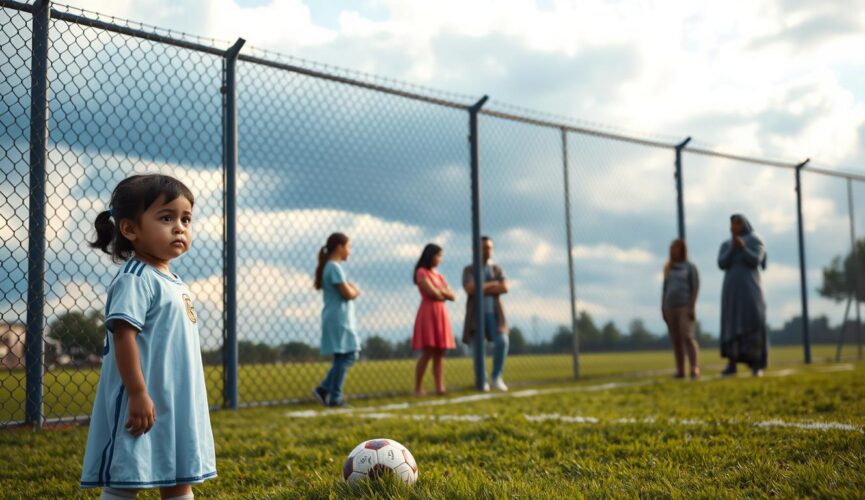
Imagine this: by age 14, girls drop out of sports at twice the rate of boys. This isn’t just a number; it’s a big problem on soccer fields everywhere.
There are 1.3 million fewer chances for young women in high school sports. It’s not just about losing games. It’s about losing confidence, health, and future career chances.
The stats are shocking. The Women’s Sports Foundation says we’re missing out on a whole generation’s growth through sports.
So, why can’t more girls play soccer? Let’s explore the reasons and find ways to change it.
Identifying Barriers: Access, Cost, Culture
The playing field is not just uneven—it’s almost vertical for girls in soccer. We face a triple threat of failures that would make even the most optimistic coach want to take aspirin.
First, access issues make it hard to find safe places to practice. Imagine trying to play soccer when the nearest field is far away. Many places don’t have facilities for girls’ sports.
Getting to practice can be like an Olympic event. Without school buses and late-working parents, teens face big challenges. It’s like starting a chess game without half the pieces.
Money is another big barrier. Programs cost as much as college textbooks, with hidden fees popping up everywhere:
- Uniforms that cost as much as fashion week
- Travel expenses that feel like a national tour
- Equipment prices that assume every child needs top-quality gear
- Tournament fees that could fund a small space program
Budget cuts hit girls’ programs hard, creating a quality gap. Boys get new equipment, while girls use hand-me-downs.
Culture is also a big barrier. We fight stereotypes that see female athletes as novelties, not serious competitors. Some coaches use outdated playbooks.
Girls face many challenges, from bad facilities to discrimination. They play on poor fields, deal with bad scheduling, and face outdated attitudes.
It’s not just about playing soccer. It’s about overcoming obstacles designed by those who forgot girls wanted to play too. The access issues, cost, and cultural attitudes create a perfect storm that keeps talented players out.
Yet, every barrier has solutions. But that’s for another section—after we’ve fully understood the challenges.
Local Success Stories
Forget about viral tweets on empowerment. The real change in girls’ sports is happening in local communities. These places focus on action, not just awareness. They’re changing the game of girls soccer participation with real investment, not empty promises.
Kosovo’s basketball program is like a sports fairy tale come true. They didn’t just start girls’ teams. They built a whole system with good coaches, facilities, and equal funding. In just three years, girls’ participation soared by 300%.
Brazil’s football culture has woken up to the fact that women want to play too. Clubs now have programs for girls that rival European academies. This has led to a surge in girls playing football.
Turkish volleyball star Eda Erdem didn’t wait for change. She created her own programs to make sports accessible to all. Her approach is simple: sports as a right, not a privilege. The results speak for themselves.
Marta Vieira da Silva’s foundation in Brazil shows that real change starts at the ground level. They partner with schools, provide equipment, and train coaches for girls. Their success is inspiring, making traditional sports organizations look bad.
UN Women initiatives in developing nations prove that sports equality is about changing minds. They replaced negative attitudes with positive ones through dialogues and success stories. The results are staggering.
These local success stories all share a key idea: treating girls’ sports as investments, not charity. The outcome? More girls playing, healthier communities, and world-class athletes.
The most radical idea in sports isn’t fancy tech or huge facilities. It’s simple: quality coaching, accessible places, and real opportunities. The data from these community programs shows girls will not only participate but excel.
Community Initiatives
Let’s talk about the difference between performative allyship and actual sports inclusion. Many programs just check a box saying they have girls’ teams. But they ignore the big barriers that keep girls from playing.
Real community initiatives know that getting girls to play requires solving big problems. They help with things like transportation, which is a huge issue for many families.
The UN Women’s Generation Equality campaign shows how sports can change lives. It’s not just about photos with athletes. It’s about real programs that fix big problems like access to facilities and coaching quality.
Effective initiatives create actual safe spaces for girls. These are places where girls feel safe and supported. They have:
- Coaches who prevent gender-based discrimination
- Facilities that are basic but dignified
- Mentorship programs with female athletes
- Curriculum that values competition without toxic masculinity
These programs know that sports inclusion means breaking down invisible barriers. It’s not enough to say “girls can play too” if they don’t get the same opportunities as boys.
| Initiative Type | Traditional Approach | Progressive Model | Impact Level |
|---|---|---|---|
| Transportation | “Carpool sign-up sheet” | Sponsored shuttle services | 25% increase in attendance |
| Facility Access | Shared spaces, unequal time | Dedicated girls’ hours + upgrades | 40% better retention |
| Coaching Quality | Volunteer parents | Certified gender-sensitive training | 60% higher satisfaction |
| Community Building | Season-end pizza party | Ongoing mentorship programs | 3x more repeat participants |
The data shows that real support and cultural shift lead to more girls playing sports. It’s not about special treatment. It’s about equal treatment with equal resources.
These initiatives prove that when you remove real barriers, girls will play sports. They just need someone to clear the path first.
Financial Aid Options
Soccer costs a lot more than most college funds today. School sports budgets are cut down fast. Families end up paying for private programs that could buy a small European trip.
The financial hurdles for girls’ soccer are big. Coaches charge more than therapists, and equipment is pricey. Travel costs are high, like a touring band’s expenses.

But, there’s a way to solve this. When we remove financial barriers, more girls play soccer. It’s like a well-placed corner kick.
Effective financial aid programs have found the answer. They make sure soccer doesn’t cost a second mortgage. Here’s what works:
- Sliding scale fees that are easy to understand
- Equipment recycling that shows cleats last longer than one season
- Club-sponsored scholarships that help talent shine, not bank accounts
- Travel cost sharing that makes away games affordable for all
These solutions are real and have helped many communities. The best programs work like financial ninjas. They remove obstacles so quietly, girls just notice they’re playing more.
Think about it: a $200 pair of cleats might stop a talented player from playing. But that $200 can outfit five players in a recycling program. It’s simple and smart.
The financial barriers in youth soccer won’t disappear on their own. But the solutions are here and working. When we make soccer accessible, everyone benefits.
Family and Friend Support
While we focus on coaching and field conditions, we overlook the most important factor. Family support is key, turning soccer into a lifelong passion. It’s not just about attending games.
Studies show girls with supportive families are 80% more likely to stay in sports. It’s not just about getting to games. It’s about making soccer a family affair.
What does real family support look like beyond the sideline cheers?
- Modeling active lifestyles instead of just talking about them
- Creating communication channels that last through tough times
- Building trust through regular involvement
- Creating support systems with other soccer families
Research shows athletic girls have happier families. Sports help us talk more, making family time valuable. The car becomes a mobile therapy session, and dinner a strategy meeting.
Parental modeling is a powerful tool. Kids learn by what we do, not what we say. Seeing us value physical activity and emotional strength teaches them more than any pep talk.
Peer support is important too. Good soccer friends help us stay accountable and build skills. As Sarah Nurse noted, these friendships last long after sports.
This support system benefits everyone. Parents find community, siblings learn patience, and families share goals. It’s not just about soccer.
We’re not just making soccer players. We’re raising resilient people through family support. The question is, can you afford not to be involved?
Building Confidence
Let’s talk about the confidence crisis in girls’ sports. It’s like trying to fill a swimming pool with a teaspoon while society keeps drilling holes in the bottom. The numbers show that 70% of girls feel they don’t belong in sports. One in three report feeling very unsure, even more than many adults.
Here’s where we need to get analytical about cultural attitudes. We’re not just fighting against individual doubts. We’re battling centuries of programming that tells girls they should be graceful, not gritty. The Victorian era might be over, but its ghost is alive in our sports.
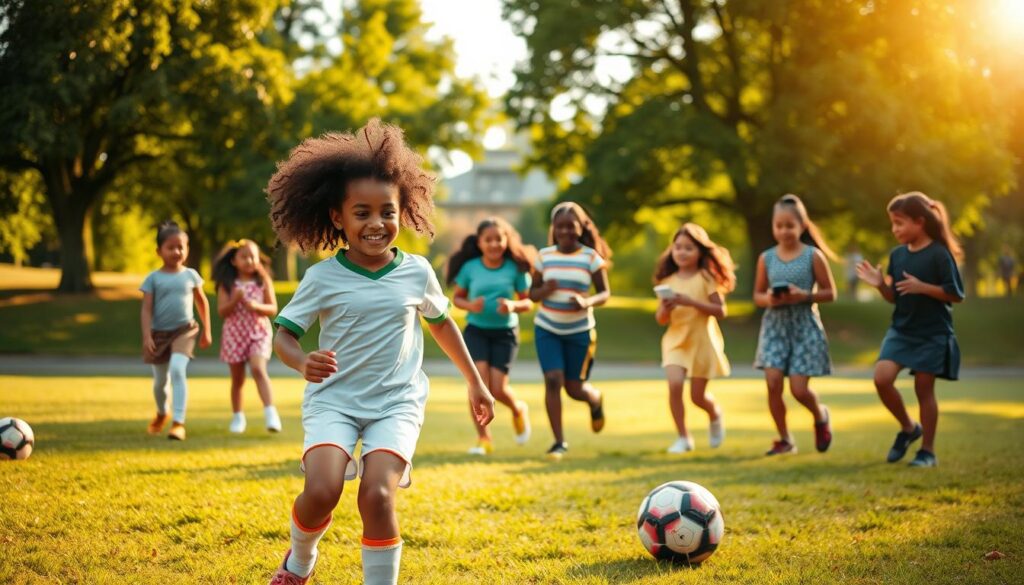
Traditional confidence-building approaches haven’t worked well. We’ve been praising the wrong things – winning over growth, outcomes over effort. Only 40-57% of girls report positive sports experiences. This is a big failure.
Real confidence isn’t built through empty compliments. It’s built through authentic achievement and environments where mistakes are seen as learning. Coaches who understand this become confidence architects, not just cheerleaders.
The solution requires changing outdated cultural attitudes and building new ones. We need to:
- Praise effort over outcomes – the struggle is where growth happens
- Create environments where competence can be demonstrated, not just declared
- Treat errors as learning opportunities, not character flaws
- Build communities where girls see themselves as athletes first
This isn’t about making girls feel good – it’s about making them actually good. When we focus on real skill development, we’re not just building confidence. We’re building athletes who can face and overcome outdated cultural attitudes and succeed.
How Clubs Can Help
Ever wonder why some PE programs feel like they’re auditioning for America’s Got Talent? The truth is harsh: many clubs and schools run talent shows under the guise of athletic development. Teachers often focus on the already-skilled, leaving girls’ teams with less time. Coaching quality is often laughable, like something you’d see in a rec league.
But here’s the twist: sports clubs could solve the participation crisis if they changed. They need to shift from focusing on excellence to developing all players. When clubs take girls’ programs seriously, amazing things happen.
- Equal facility access – No more treating girls’ teams like inconvenient tenants
- Development-focused coaching – Valuing growth over wins
- Qualified female mentors – Because representation matters as much as skill
Imagine PE programs where every player gets attention, not just the naturally gifted. Picture coaching that celebrates progress, not punishing mistakes. Envision facilities where girls’ teams aren’t bumped for “more important” games.
The data is clear: when clubs adopt these strategies, participation and quality soar. You get competitive teams, not just token offerings. It’s not rocket science – it’s giving girls the same chances we’ve always given boys.
Clubs have a choice: keep being part of the problem or become the solution. The field is waiting.
Conclusion
So, what’s the final score on girls’ soccer participation? The barriers aren’t unsolvable mysteries. They’re just a result of neglect with a fancy name. But here’s the kicker: the solutions are right in front of us, like an open goal waiting for a tap-in.
We’ve seen how tackling access, cost, and cultural attitudes can change things. It’s like coaching for society—every action counts. The data shows: investing in girls’ sports builds future leaders, not just athletes.
This isn’t just about soccer; it’s about equality. The momentum in women’s sports is real. It’s time we all join in. Let’s keep the ball rolling—because every girl deserves a chance at glory.