
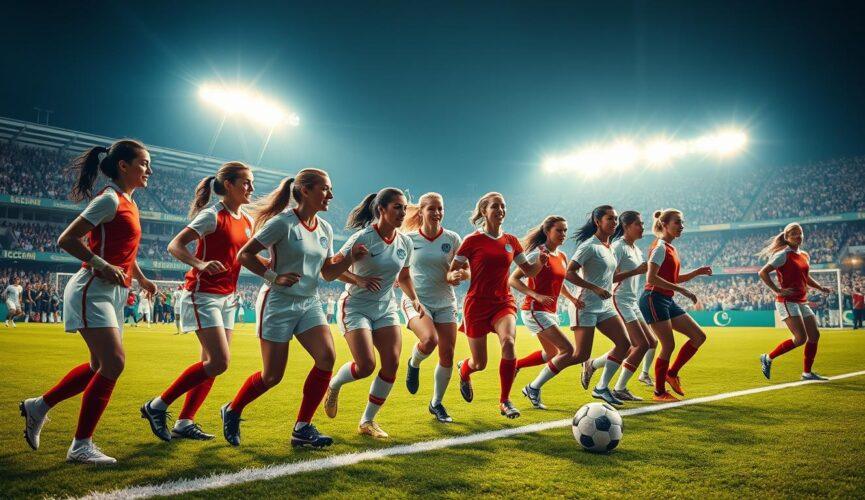
Let’s be honest – most underdog stories can’t compare to women’s football. I’ve seen this sport grow from secret whispers to huge stadiums. It’s a change that would amaze even Charles Darwin.
This story is a mix of athletic talent and social commentary. It goes from women being told football wasn’t “ladylike” to today’s big wins. It’s more than just a game.
It’s about fighting against a system that was as tough as a Premier League defense. The pioneers weren’t just playing. They were breaking down old ways of thinking, one goal at a time.
The world cup achievements are like answers to every doubt about women’s sports. And the answer is clear: they were wrong.
Early History
Imagine Victorian England, where corsets were tight but societal constraints were tighter. In 1894, a woman named Nettie Honeyball started the British Ladies’ Football Club. It was more than just playing soccer; it was a fight against gender norms.
Women took over factories while men were at war. The Dick Kerr’s Ladies team became stars, drawing huge crowds. Their games were a huge hit, with 53,000 fans attending.
But then, the English Football Association banned women from playing. They said football was “unsuitable for females.” This move was a huge setback.
Lily Parr, a player, broke records and smoked on the field. She showed that women could do anything men could.
These women were not just making history; they were showing incredible determination. They played despite many obstacles.
| Year | Event | Impact | Crowd Size |
|---|---|---|---|
| 1894 | British Ladies’ FC founded | First organized women’s team | ~10,000 |
| 1917-1921 | Dick Kerr’s Ladies peak | Proved women’s soccer viability | 53,000 (record) |
| 1921 | FA ban implemented | 50-year setback for women’s game | N/A |
| 1920s-1930s | Lily Parr’s scoring era | Demonstrated elite skill level | 5,000-10,000 |
The early days of women’s soccer were marked by struggle. Women played for the right to play, not fame. They raised money for war victims while facing prejudice.
These famous players were not just about goals. They refused to accept “no” and created their own leagues. They wore skirts that might have hindered their game.
This era paved the way for future world cup achievements. The pioneers played without expecting recognition. Their victory was in proving soccer belongs to everyone.
Birth of Women’s Leagues
In the 1970s, women’s soccer got its own place. England’s Women’s Football Association started in 1971. This was a big step for a sport that had been ignored for years.
Early leagues were passionate but rough. They had makeshift fields and small crowds. But they were a start, giving women’s soccer a place to call home.
The 1995 World Cup was a turning point. Women showed the world their amazing skills. They were paid for their talent, changing the game.
Professional leagues followed, like the NWSL and FA Women’s Super League. These leagues helped women’s soccer grow. They provided a place for players to develop their skills.
Women’s sports made a big leap from informal games to professional leagues. This change was a major milestone. It showed how far women’s sports have come.
| Era | League Status | Player Compensation | Global Impact |
|---|---|---|---|
| Pre-1971 | Unofficial matches | None | Local communities only |
| 1971-1994 | Semi-organized leagues | Expenses covered | National recognition |
| 1995-Present | Professional leagues | Salaried contracts | Worldwide talent development |
Women’s leagues were fought for by many athletes. They wanted to be recognized for their talent. The birth of these leagues was a turning point.
Today, famous players owe their success to those who came before. The NWSL and WSL are more than games. They are a testament to the power of hard work and determination.
World Cups and Olympians
Women’s soccer didn’t just show up at the global stage. It kicked down the door and demanded a seat. The World Cup and Olympics became the ultimate proving grounds. Here, legends were forged and cultural moments were born.
Remember 1991? That’s when FIFA hosted the first Women’s World Cup in China. The US victory was more than a game. It was a statement that started a sports revolution.
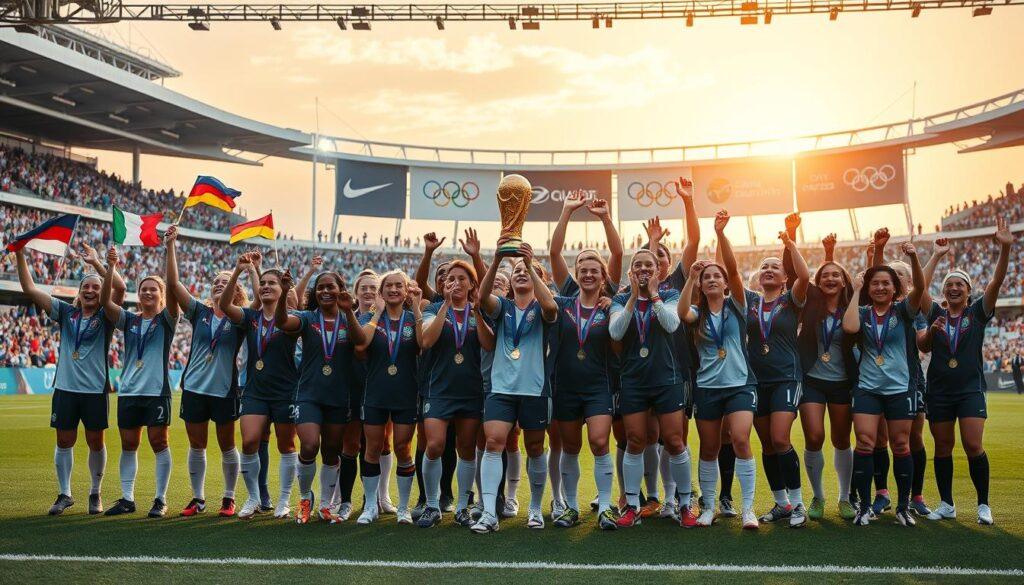
Then came 1999, a year that changed everything. Brandi Chastain’s sports-bra moment was more than celebration. It was a declaration that women’s athleticism could be powerful and marketable. That penalty kick became an iconic moment in women’s sports milestones.
Fast forward to Carli Lloyd’s 2015 hat-trick. In just 16 minutes, she delivered a masterclass. It was one of the most spectacular world cup achievements in soccer history.
The Olympic stage also saw American dominance. From 1996 to 2024, the USWNT collected gold medals like trading cards. These famous players didn’t just win tournaments. They transformed women’s soccer into a must-watch event.
What made these moments revolutionary? They showed that when given the platform, women redefine the game. Each goal, each medal, each iconic celebration added to the story of athletic equality.
The World Cups and Olympics didn’t just showcase talent. They created cultural touchstones that resonated far beyond the pitch. They showed that women’s soccer could generate the same drama, excitement, and national pride as any men’s sporting event.
These tournaments became the accelerant that propelled women’s soccer into the mainstream. They proved that athletic excellence knows no gender. It’s all about opportunity and determination.
Regional Milestones
If women’s soccer were a global quilt, each region would have its own unique pattern. Some areas built strong professional structures, while others made do with what they had.
Take Burundi’s Lydia Nsekera, who started her country’s first women’s team. She faced many challenges, but her determination changed the game in her country.
In Brazil, football is more than a sport; it’s a religion. But Marta changed that. She became a symbol of change, showing that women can be stars in football too.
In Germany, Bibiana Steinhaus broke barriers as a referee. She showed that women can do the job just as well as men. It was a big step for equality in sports.
The story of women’s soccer around the world is complex. Some places moved fast, while others faced more obstacles. But the drive to succeed is always there.
Australia’s recent success in women’s football is a great example. Their achievements show what happens when talent meets the right chance.
The journey of women’s soccer is full of ups and downs. But it’s always moving forward, one breakthrough at a time.
Legendary Players
Some athletes play the game. Others become the game itself. The true legends of women’s soccer didn’t just score goals—they scored cultural touchdowns that reverberated far beyond the pitch.
Mia Hamm was called the Michael Jordan of soccer for a reason. She showed greatness knows no gender. Her records lasted for years, but her real impact was inspiring girls everywhere to become athletes.
Abby Wambach didn’t just score headers—she headed discrimination right out of the stadium. Her advocacy work became as legendary as her 184 international goals. She played with the awareness that every touch of the ball was writing soccer history.
Brazil’s Marta redefined dominance with five consecutive World Player awards. That’s not just winning—that’s claiming territorial rights on excellence. Her world cup achievements became the standard by which all other famous players are measured.
Megan Rapinoe transformed from athlete to archetype—part footballer, part social justice warrior, all icon. Her equal pay fight became as discussed as her game-winning goals. She proved that legendary status isn’t just about goals scored but barriers broken.
Ada Hegerberg’s masterclass in principle was unforgettable. She basically told Norway “I won’t play until you treat women properly” while collecting the first Women’s Ballon d’Or. Talk about having your cake and eating it too—while making the recipe better for everyone else.
These women didn’t just achieve women’s sports milestones. They created a new playbook where athletic excellence and social impact share equal billing. They wrote one hell of a story—and the best part? They’re stil writing it.
Grassroots Revolution
To understand women’s soccer’s rise, look beyond the World Cup. It’s in school gymnasiums where Title IX changed everything. It wasn’t just about the World Cup; it was about the small fields where girls could play.
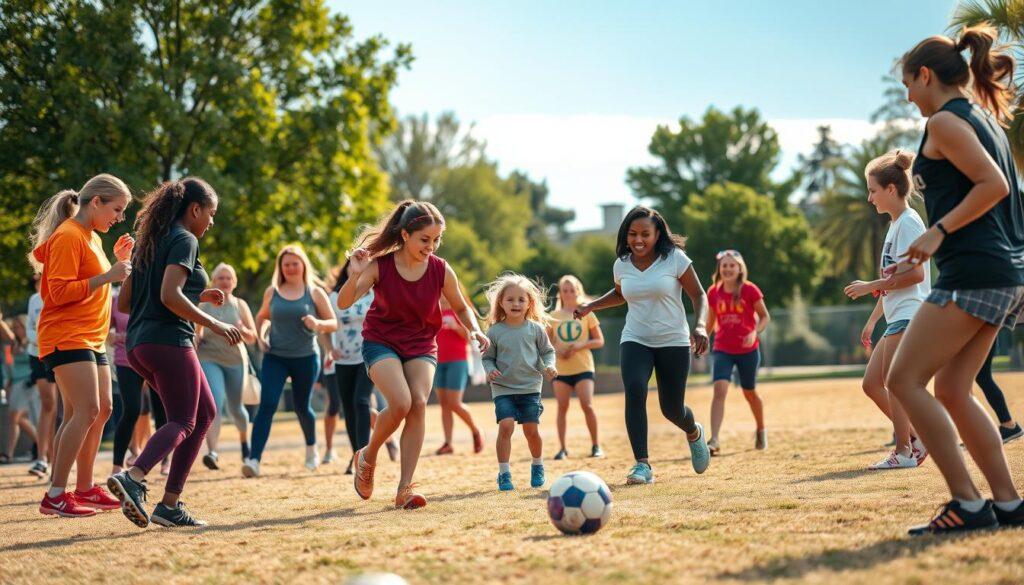
Title IX in 1972 was a game-changer. It made schools fund girls’ sports equally. This created a path for future famous players. Girls could now dream big on soccer fields.
Bend It Like Beckham was a turning point. It showed girls with soccer dreams as heroes, not oddities. This film made playing soccer cool and empowering.
Local leagues grew talent naturally. Volunteer coaches, often parents, helped develop skills. These efforts fueled world cup achievements.
The numbers show the revolution’s impact:
| Year | US Girls Soccer Participants | High Schools With Programs | Notable Outcome |
|---|---|---|---|
| 1972 (Title IX) | ~10,000 | Fewer than 100 | Regulatory foundation |
| 1990 | 120,000 | ~2,500 | Infrastructure growth |
| 2002 (Beckham release) | 300,000 | ~7,000 | Cultural catalyst |
| 2022 | 450,000+ | 11,000+ | Mainstream normalization |
This movement made excellence accessible. The next Mia Hamm is playing in local leagues. She knows her dreams are valid.
These efforts laid the groundwork for today’s women’s sports milestones. World Cup wins, Olympic medals, and professional leagues all started here. We decided girls’ dreams deserved fields too.
Key Recent Achievements
The recent era in women’s soccer has seen huge changes. It’s not just small steps forward; it’s giant leaps. These changes are so big, even the most optimistic people from the 1990s would be amazed.
The 2022 equal pay settlement was a game-changer. It wasn’t just about paying women the same as men. It was about fixing a long-standing mistake from the past.
The 2024 Olympics were a highlight for the USWNT. They didn’t just win gold; they showed off a new generation of players. The young players were confident and ready to take on the world.
Viewership numbers have skyrocketed. The World Cup is now attracting huge audiences. It’s so popular, organizers are worried if they can handle the crowds.
The rise of players like Trinity Rodman and Sophia Smith is key. They were raised in an era where women’s soccer is expected, not unusual. Their confidence is natural, not learned.
These women’s sports milestones are more than just records. They show that the revolution is here, playing in the spotlight. They’re breaking records and demanding equal pay.
The soccer history books are being rewritten. And the new version is much more exciting.
The Road Ahead
If women’s soccer were a stock, I’d invest all my money. The game is leveling up, becoming a strategic battle. Every country now sees the value of investing in their teams.
The 2027 World Cup will be a big test. We’re moving beyond just being fast to being smart. Coaches like Emma Hayes are bringing new tactics that make old ways seem simple.
This change is a big milestone for women’s sports. The NWSL’s growth creates a cycle of success. Better leagues attract top players, raising the game’s standard.
But there are challenges ahead. The US can’t get too comfortable with its past success. Spain and England are changing the game with their skills and strategies.
Yet, the opportunities are huge. Women’s soccer is at the crossroads of sport and social change. It’s a chance to build something lasting or just enjoy a moment.
I believe the future of soccer is bright and female. It’s smart, competitive, and here to stay. The world has recognized women’s soccer as the main event.
Conclusion
Women’s soccer is more than a game; it’s a story of social progress. From Lily Parr’s goals to Megan Rapinoe’s courtroom wins, it’s a journey of breaking barriers. This path has changed the game and the world.
The achievements in the World Cup are not just numbers. They are part of a story that continues to grow. Every girl who plays soccer today adds to this narrative. These milestones show how hard work can change society.
Famous players have done more than just play soccer. They’ve shown what’s possible. Looking back at soccer history, it’s clear that women are not just playing a man’s game. They are playing a game of humanity, and they deserve respect.
The game is far from over. We are just in the final minutes, with everything at stake.