
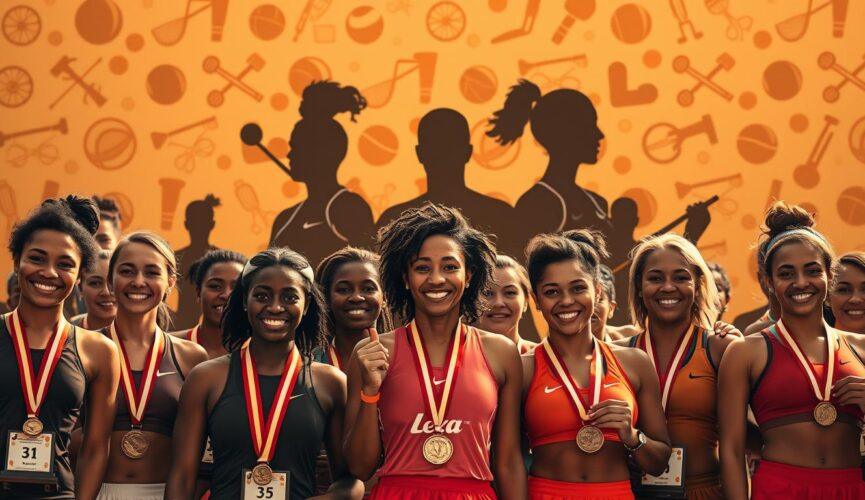
Imagine a factory worker in 1920s England scoring her 900th goal. She dodged flying machinery and faced societal scorn. Meet Lily Parr, a chain-smoking trailblazer who showed grit before “women’s sports” got its first newspaper column.
Fast-forward eight decades, and Megan Rapinoe’s pink-haired World Cup protests would make Parr’s efforts look like a warm-up. This shows how far we’ve come.
How did we move from hidden newspaper snippets to Prime Video documentaries? It’s all about the hard work and sponsorship deals. Mia Hamm’s 1999 World Cup victory sparked a cultural shift. It wasn’t just about goals; it was about breaking barriers.
Media coverage of women’s sports exploded. The same decade saw Brazil’s secret “banana league” tournaments and federal gender equity laws. These changes are connected, showing how each step forward helped pave the way.
This isn’t just soccer history; it’s a lesson in changing society. From Parr’s factory pitches to Rapinoe’s fight for equal pay, we see how role models have shaped the game. Are you ready to explore the journey of progress?
Early History
Imagine Victorian women playing soccer in whalebone corsets. They faced warnings that heading balls could harm their uterus. Today, we debate cultural attitudes toward women in soccer, but our ancestors had it worse. Nettie Honeyball, soccer’s first rebel queen, founded the British Ladies’ Football Club in 1894. She boldly said: “We shall prove women aren’t the useless creatures men think.”
The barriers to girls soccer participation were not just social. They were also physical. Athletes played on men’s fields with:
- Dress codes requiring high collars and floor-length skirts
- Goals 20% narrower than men’s “to suit feminine frames”
- Matches limited to 60 minutes (doctors warned against overexertion)
In 1920, 53,000 fans packed Everton’s stadium, setting a record. The Football Association panicked and banned women from FA grounds in 1921. They claimed soccer caused “chronic pelvic inflammation.” Female players moved to rugby fields and parks, keeping the game alive.
Medical journals of the time warned that not exercising made women “hysterical.” They were damned if they played soccer, damned if they didn’t. This thinking shaped soccer history for years, influencing how we view women’s sports today.
Birth of Women’s Leagues
In the 1980s, women’s soccer started to shine. Title IX, passed in 1972, was a key moment. It was meant for education, but activists used it to fight for sports equality.
Early leagues had little money. They used duct-taped balls and volunteers. But in 1985, Norway started a national women’s soccer committee. This was a big step forward.
In 2013, the Portland Thorns changed the game. Over 16,000 fans showed up, more than many MLS teams. This was a big win for women’s soccer.
| Era | Funding Reality | Leadership Milestone | Cultural Impact |
|---|---|---|---|
| 1970s | Car wash fundraisers | 0 women in FIFA roles | Local newspaper blurbs |
| 2020s | $50M NWSL expansion fees | UEFA’s first female president (thanks, Iceland!) | Prime-time ESPN slots |
Iceland played a big role in women’s soccer. In the 1970s, players planned leagues while doing laundry. Today, they lead soccer worldwide.
The history of women’s soccer is full of ups and downs. It’s about lawsuits, pioneers, and hard work. Today’s stars owe a lot to those who fought for them.
World Cups and Olympians
FIFA’s relationship with women’s soccer is like a friend who’s always late but wants avocado toast. The 1991 Women’s World Cup showed the difference. Winners got handbags, while men got golden trophies. Reluctant feminism is what football bureaucracy is all about.
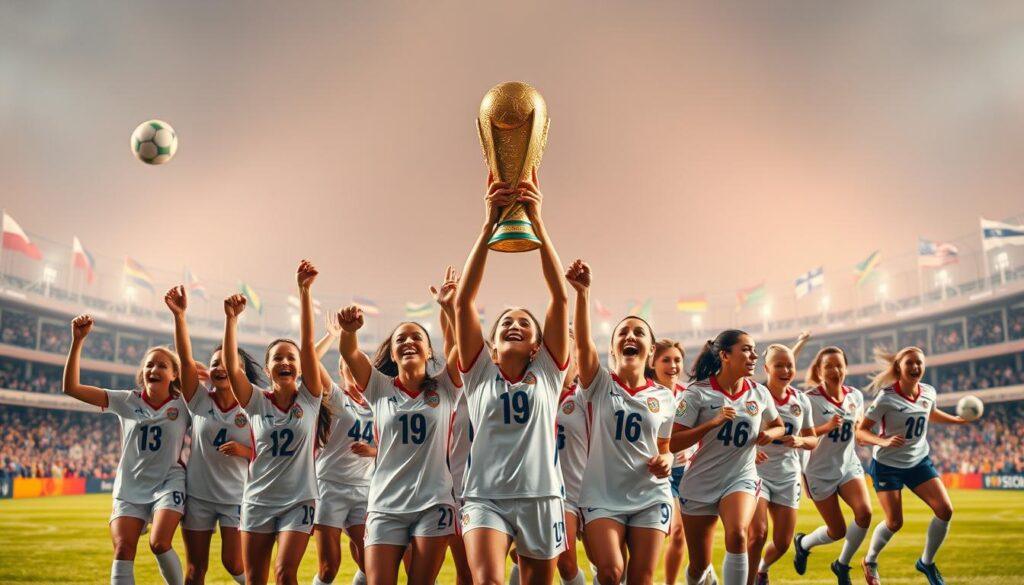
Marta has played in six World Cups, a feat as impressive as Sisyphus pushing his boulder. But FIFA’s slow to catch on. The IOC, on the other hand, aims for full gender parity at Paris 2024. Why does Olympic soccer get equality faster than FIFA?
Brandi Chastain’s 1999 sports bra moment was a big deal. It made FIFA notice women’s soccer. But it’s not the same as real change. Here’s a comparison:
| Milestone | Men’s Equivalent | FIFA Response Time |
|---|---|---|
| First WWC (1991) | First men’s WC (1930) | 61-year delay |
| Equal World Cup prize money | N/A | Stil waiting |
The 2024 Olympic pledge shows FIFA’s scheduling is unfair. Women’s finals are after men’s preseason games. When will FIFA get that equality is more than a trophy? We celebrate icons like Marta but want better than handbags.
Women’s World Cup viewership is now as good as men’s in some markets. The real win is making FIFA see its old ways are outdated. Now, we need to get the final dates out of preseason.
Regional Milestones
When did a bronze medal become revolutionary? Ask Zambia’s Copper Queens. Their 2022 Women’s AFCON third-place finish was a big deal. They showed that soccer history isn’t just made by big teams.
Asia also made big changes. Thailand introduced a trans-inclusive policy in 2021. Iranian players used their jerseys to protest against hijab laws. Soccer became their way to speak out.
Here are three key moments:
- Brazil’s Série A1 introduced menstrual leave. It showed that even top athletes need breaks.
- Nigeria’s Falcons went on strike in 2004 for better pay. It was a bold move.
- Spain’s 2023 World Cup was marred by a kiss scandal. It highlighted issues of consent and respect.
Let’s look at some numbers:
| Region | Milestone | Cultural Impact |
|---|---|---|
| Africa | Zambia’s AFCON bronze | Elevated working-class women’s visibility |
| Asia | Thai trans-inclusive policy | Redefined gender norms in sports |
| Europe | Spain’s federation overhaul | Exposed systemic sexism in leadership |
These stories are more than just about soccer. They show how attitudes towards women are changing. Nigeria’s boycott and Spain’s kiss scandal were big moments.
LGBTQ+ inclusion is also making strides. Thailand’s policy has pushed other countries to rethink their views. It’s a big win for equality.
From Iran’s jersey protests to Brazil’s menstrual policy, women’s soccer is changing the world. It’s not just a game anymore. It’s a way to challenge the status quo.
Legendary Players
What makes a famous player a cultural icon? It’s not just their skills on the field. It’s what they do off it too. Let’s look at four game-changers who used their fame to push for change.
Marta’s 17 World Cup goals are impressive. But her tears after Brazil’s loss in 2019 were priceless. That moment highlighted generations of wage theft in a way that shocked many.
Lily Parr played soccer in the 1930s to avoid factory work. She earned just enough for tea and scones, not enough for retirement. Her story shows how far women’s soccer has come.
| Player | Era | Annual Earnings (Adj. for Inflation) | Legacy Metric |
|---|---|---|---|
| Lily Parr | 1920s-1950s | $3,200 | 900+ goals |
| Mia Hamm | 1990s-2000s | $240,000 | 158 international goals |
| Sam Kerr | 2020s | $2.1 million | Chelsea FC captaincy |
| Ada Hegerberg | 2010s-present | N/A* | 2018 Ballon d’Or boycott |
*Hegerberg refused salary disclosures during Norway’s equal pay negotiations
Mia Hamm’s 158 goals set the stage. Megan Rapinoe’s 2019 ESPYs speech ignited a fire. Her call for soccer equal pay advocacy was a powerful moment.
Ada Hegerberg’s 2018 Ballon d’Or was a statement. She boycotted her national team until they agreed to equal pay. This move led to Norway’s commitment to equal financial investment in men’s and women’s soccer.
These role models in women’s soccer have made a big impact. They’ve fought for fair pay and recognition. Their stories show how far we’ve come, but also how much work is left to do.
Grassroots Revolution
Move over tech bros – today’s real innovation labs are soccer fields. Here, 12-year-olds work on fixing inequality between penalty kicks. Detroit City FC’s youth program showed a big change: period-positive kits. Who knew menstrual equity could outscore Messi in retention stats?
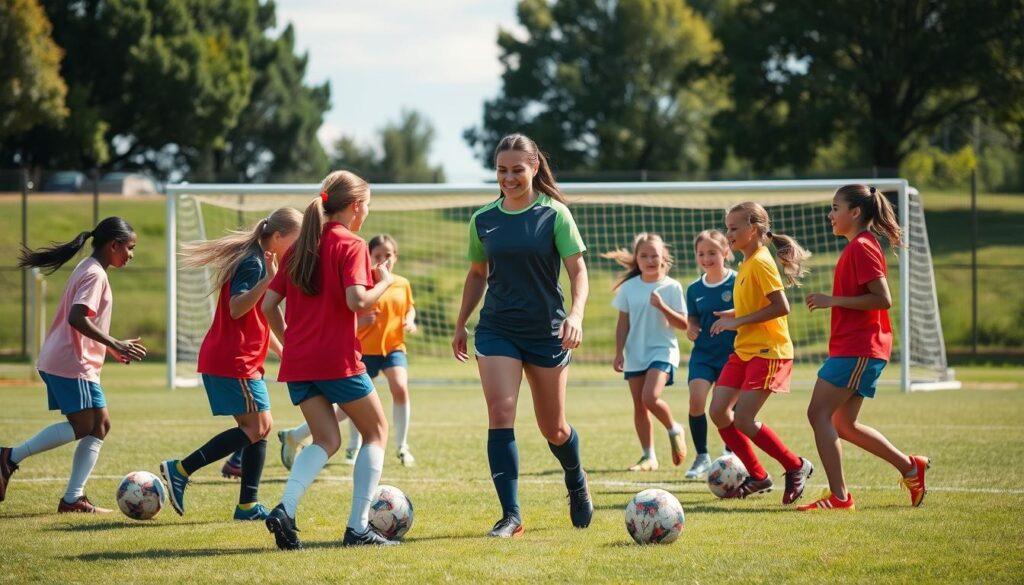
The game’s true power plays now happen off-pitch. US Soccer’s 2022 Safe Soccer program changed how we protect players. Morocco’s 2023 school league expansion turned classrooms into places to find new players. Let’s look at the numbers:
| Initiative | Country | Year | Impact |
|---|---|---|---|
| Safe Soccer Certification | USA | 2022 | 78% safer reporting |
| School League Expansion | Morocco | 2023 | 112 new teams |
| Period Kit Program | USA | 2021-2023 | 40% retention boost |
| Genocide-Survivor Coaching | Rwanda | 2022 | 89% player resilience |
| Trans-Inclusive Tournaments | USA | 2023 | 2,300+ participants |
FIFA’s 2030 Vision is coming true in Rwanda. Women who survived genocide are now teaching soccer and conflict resolution. In Seattle, the QTIBIPOC Soccer Collective hosts tournaments where everyone’s pronouns are respected.
These aren’t just side projects. When Morocco’s school leagues tripled female participation in 18 months, they showed change is possible. The real milestones in women’s sports are being made by teen girls who choose soccer over STEM.
Key Recent Achievements
The 2023 Women’s World Cup final outdrew the NBA Finals by 22 million viewers. This was a wake-up call for advertisers. They realized women’s soccer is a huge hit, not just a small indie film.
Women’s sports got the spotlight they deserved. DAZN’s broadcasts in 11 languages made games global events. Fans showed they care if they’re treated as equals.
Technology is a big player in sports now. StatSports’ GPS vests helped Australia’s team avoid burnout. VAR in the UWCL added drama, making games feel like reality TV.
- Ad revenue for women’s soccer up 317% from 2019
- 63% more girls joining leagues after the 2023 WWC
- 83% of UWCL viewers stream games on mobile, a “Netflix generation” trend
Brands investing in quality content for female athletes caught the world’s eye. Now, let’s fix that ball weight issue…
The Road Ahead
Imagine a 2030 World Cup final where Zambia’s Barbra Banda scores the winning goal. She does it without proving she’s woman enough to play. Saudi Arabia’s new Women’s Premier League is more than PR; it’s real progress.
VAR reviews offside calls, not players’ chromosomes. We’re at a turning point in soccer. Will we overcome old barriers or reach new women’s sports milestones?
Let’s look at how we can change:
| Initiative | Current Impact | 2030 Outlook |
|---|---|---|
| FIFA’s 2027 WWC Bid Requirements | Mandates youth programs & anti-discrimination policies | Could become the new Title IX for global soccer |
| Common Goal’s Gender Equity Pledge | 1% club revenue toward women’s programs | Potential $100M+ fund by 2028 |
| NWSL Pregnancy Protections | Guaranteed paid leave & medical coverage | Blueprint for global league policies |
Social campaigns are changing soccer’s DNA. Afghanistan’s underground women’s leagues defy the Taliban. Nike’s “Daughters of the Soil” campaign in Brazil turns backyard futsal into scouting grounds.
But, we must not confuse social media with real change. The barriers to girls soccer participation are huge:
- 23 countries ban women from stadiums
- 60% of young female players quit by age 14
- Only 12% of FIFA development funds go to women’s programs
Saudi Arabia’s new Women’s Premier League is a mix of progress and politics. It raises questions about using sport as a tool for influence. But if it gets more girls playing, does it matter why?
The goal is a world where talent, not gender, decides who plays. Where pregnancy policies are as important as penalty kicks. Where a girl in Kabul can dream of winning the World Cup without fear. We’re not there yet, but for the first time, soccer is moving toward change.
Conclusion
Nettie Honeyball started England’s first women’s football team in 1895. Her players wore corsets under their kits. Today, stars like Trinity Rodman wear nose rings and break records. This shows women’s soccer’s ability to change and stay true to itself.
The sport has come a long way from being banned to having sold-out crowds. It’s a story of turning “can’ts” into “can dos.” This journey is not just about milestones. It’s about overcoming obstacles.
US Soccer’s 2023 mentorship program pairs NWSL veterans with young players in tough areas. UEFA aims to certify 20,000 female coaches by 2025. These efforts show women’s soccer’s growth beyond just equal pay.
It’s about finding the next big thing in soccer. Look to a Detroit rec coach who teaches slide tackles and salary talks. This coach is a game-changer.
The future of soccer is full of contrasts. It needs more Sam Kerrs and more smart business minds. It needs more mentors and more diverse fans.
Women’s soccer has moved beyond asking for a seat at the table. It’s creating its own table with better snacks. The real question is, are we ready to keep up with its growth?