
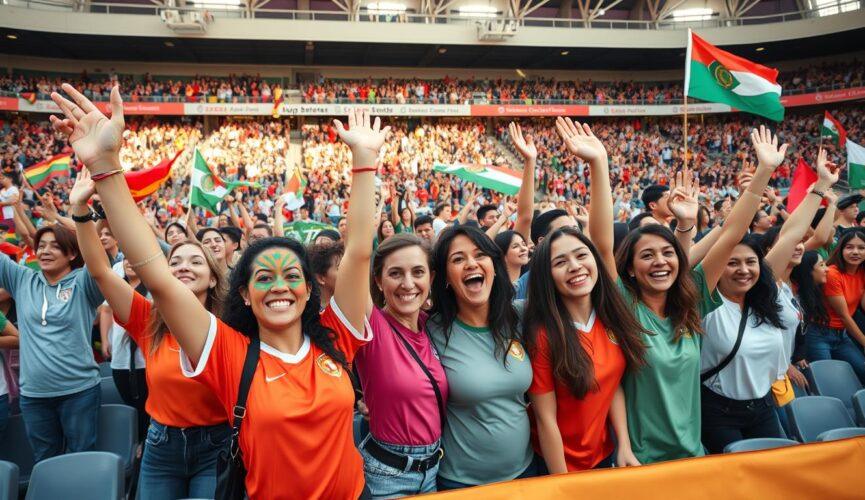
When did stadiums turn into fashion shows? Taylor Swift’s #87 jersey sold more than any NFL player’s gear. At the same time, Portland Thorns fans showed off a 100-foot tifo for Sophia Smith. This is more than just fans following celebrities. It’s a big change in sports culture.
Those days when women were just called “soccer moms” are over. Now, nearly three-quarters of women say they are sports fans, according to Wasserman’s report. Gen Z women are even more into sports, with 79% of them being fans. They’re not just watching games; they’re shaping the fan culture.
So, why do we see pink jerseys everywhere? It’s not about if women should be in the stands. It’s about if sports can keep up with the changes women are bringing. Fans, both men and women, are now discussing tactics and stats at watch parties.
This isn’t just about jerseys in pink. It’s about seeing women as more than just fans. They are strategists, trendsetters, and critics of their team’s plays.
History of Women’s Support
Did you know women were banned from English soccer fields in 1921 for being “unsuitable”? A century later, we’re trying to untangle that sexist knot. The FA’s decree erased women players and ghosted fans, starting today’s debate on who’s a “real” supporter.
Here’s a twist: Women built modern soccer fandom through unpaid work. They’ve been the league’s backbone, from organizing youth leagues to leading ultras. But, stadium announcers rarely acknowledge them.
The gender stereotypes soccer world is full of contradictions. Momentum FC’s youth tournaments are marketed as “babysitting with benefits.” In 2023, 87% of coaches were dads, and 0% were moms. The message? Women should be in minivans, not megaphones.
| Era | Women’s Role | Official Narrative |
|---|---|---|
| 1920s | Banned spectators | “Protecting feminine delicacy” |
| 1980s | Snack bar volunteers | “Community service” |
| 2020s | Ultras organizers | “#Girlboss exceptions” |
Modern supporter culture has its roots in church choirs and quilting bees. The #WatchMe movement’s success shows 100 years of pent-up fandom. But, when women create traditions, they’re seen as “cute.” When men do it, it’s “authentic passion.”
Next time someone says soccer fandom started in pubs, remind them: It was perfected in minivans. The real Champions League? Getting 12 kids to a 7 AM game and creating protest banners against sexist merch. That’s a legacy.
Fan Groups for Women
Imagine a soccer supporters’ group where chants sound like “Dracarys!” instead of “Defense!”. Welcome to Orlando Pride’s Crown Legion. It’s a group of female fans who use Game of Thrones-inspired tifos to spice up games. Their latest creation is a 30-foot tapestry of Megan Rapinoe as Daenerys Targaryen, with the slogan: “A Queen Needs No Prince Charming.”
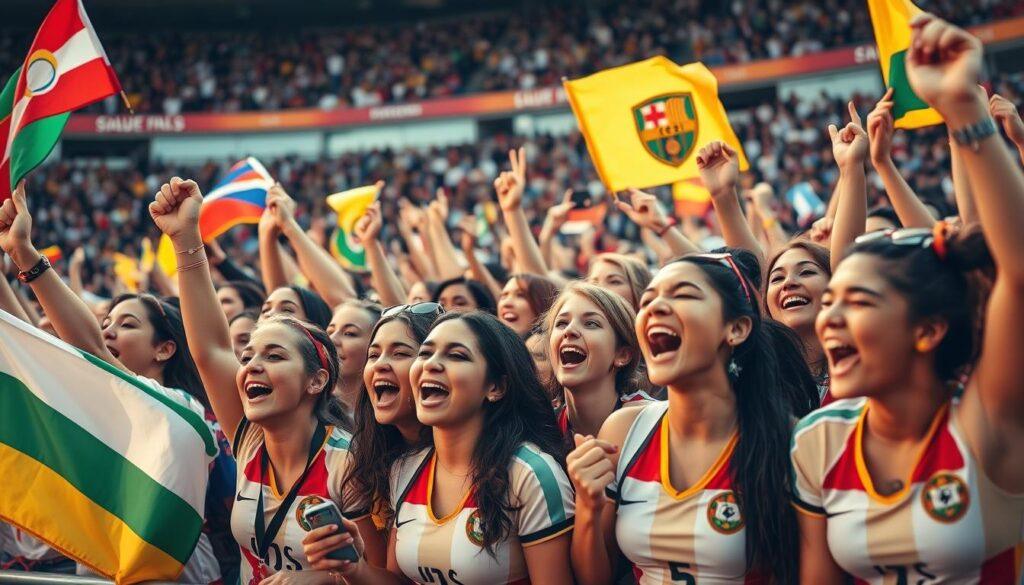
But not all fan activism stories are empowering. Jared from Source 2 is like a “swimming upstream salmon” in MLS fandom. When his group complained about Pride Night rainbow scarves, he seemed to want a White Cloak jersey and a throne.
This raises a big question: Can women’s fan groups create safe spaces without making stadiums feel like gender-segregated kingdoms? Let’s explore:
| Traditional Supporters | Women-Led Groups | Impact |
|---|---|---|
| Beer showers at 10 AM | Period product stations | 20% ↑ female attendance |
| Chants about opponents’ mothers | Fundraisers for women’s shelters | $1.2M raised league-wide |
| Generic team scarves | Abortion rights banners | 37% increase in political engagement |
The Crown Legion’s secret is treating fan activism like a choose-your-own-adventure. Members can join:
- Matchday sign-making workshops (glitter provided)
- Voter registration drives during halftime
- Self-defense classes taught by retired players
But when a men’s group tried to join their “Dragon Strategy Session” last season, things got interesting. They agreed to co-ed watch parties with gender studies crash courses. Attendance tripled. Beer sales stayed the same. Progress is mysterious.
How Clubs Engage Female Fans
When soccer clubs throw “girls’ nights” with free lip gloss, you’ve got to ask: Are we building match attendance stats or actual fans? Let’s look at the tactics – from cringe-worthy cosmetics to game-changing community programs.
Portland Thorns’ STEM nights are a hit. They partner with local schools for robotics workshops before the game. This shows women belong in tech and sports.
On the other hand, Chelsea FC’s 2022 “Matchday Makeover Packages” were a disaster. They included eyelash extensions and champagne flutes. The internet quickly called it out.
The real issue is the pay-to-play system. Youth tournaments with $3,000 entry fees block working-class talent. But Barcelona Femení offers free skills clinics in immigrant areas. This inclusive coaching for girls builds lifelong fans.
| Club | Initiative | Focus | Accessibility |
|---|---|---|---|
| Portland Thorns | STEM Nights | Education + Sport | Free with ticket |
| Chelsea FC | Matchday Makeovers | Cosmetics | $150+ upgrade |
| Barcelona Femení | Community Clinics | Skill Development | Completely free |
Momentum’s study shows clubs investing in girls’ programs see 23% more female match attendance in five years. But when the LA Galaxy charged $89 for rainbow jerseys, supporters boycotted. Authenticity wins.
So, are we creating spaces for girls to see themselves as future soccer stars or just consumers? The answer is in the stands. Portland’s STEM night alumnae dominate youth leagues. Barcelona’s clinic graduates are half certified in inclusive coaching. That’s legacy, not loyalty programs.
Media Representation of Fans
If a tree falls in a forest and no one’s around to air it at 2am, does it make a sound? Welcome to media representation in women’s sports, where 95% of coverage is for men’s leagues. Networks say they have “low interest” but ignore women’s games.
Take NBC’s Lionesses: Breaking Boundaries versus ESPN’s Body Issue. One shows the game’s strategy and team spirit. The other focuses on athletes’ looks. It’s a big difference.
Let’s apply the Messi Test: If male stars’ spouses were filmed as much as their skills, would it be journalism? When cameras focus on Alexia Putellas’ hair instead of her skills, it’s not interesting. It’s dehumanizing.
| Network | Program | Focus | Prime Time Slot? |
|---|---|---|---|
| NBC | Lionesses Documentary | Tactical analysis & leadership | Yes (8pm EST) |
| ESPN | Body Issue Special | Athletes’ physiques | No (10pm EST) |
| Sky Sports | Premier League Tonight | Male players’ technical skills | Yes (7pm GMT) |
The table shows a harsh truth: Women’s sports get airtime but focus on looks, not skills. Men’s games get real analysis, not just looks.
Here’s the kicker: Women’s sports events get as many viewers as men’s. The 2023 NWSL final got more viewers than 30% of MLB games. But where do you find these stats?
Until networks treat women’s sports seriously, coverage will stay low. The key is to show the game, not the gender.
Social Media Movements
When was the last time a policy meeting trended on TikTok? The #NoMorePage3Girls campaign made Instagram stories count. FIFA quickly agreed to stop sexist media after 30,000 retweets during the 2023 Women’s World Cup. That’s fan activism with a digital punch.
OL Reign’s partnership with Deloitte shows corporate America values women’s soccer fans. They found 68% of female fans want brands that support gender equity. But, we must remember, real change is slow. There are 10 times more turf fields than equal pay deals in NWSL stadiums.
1 viral campaign equals 3 policy meetings. Social media amplifies marginalized voices, but who listens? Barclays made a real change by investing in the Champions League, not just talking about it.
But, we shouldn’t get too excited too fast. Will brands keep supporting women’s soccer after the World Cup? The answer is in making social campaigns in women’s soccer count in the boardroom. Until then, every retweet is just a celebration of a fight for real change.
Stories of Change
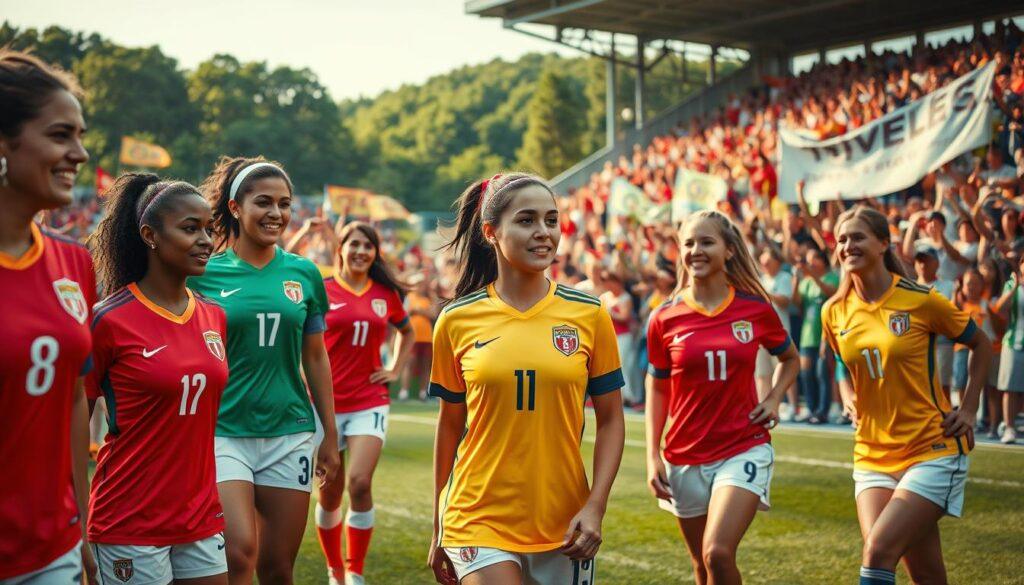
The roar of the crowd tells two stories: one of triumph, another of quiet defiance. Abby Wambach’s 2018 Barnard College speech is a prime example. She turned failure into “the highest octane fuel” for success. On the other hand, a gray-haired superfan at OL Reign matches once shared, “I bring my granddaughter so people don’t think I’m creepy.” This shows how soccer fans are both celebrated and scrutinized.
Bethany Balcer, OL Reign’s forward, breaks this paradox. She started using ASL in goal celebrations to honor her Deaf brother. This wasn’t just a gesture; it became tactical storytelling. Suddenly, 15,000 fans learned signs for “goal” and “celebrate.” The stadium became a classroom where accessibility wasn’t just a rule, but a natural part of the game.
But there’s a catch: individual brilliance versus institutional inertia. Wambach’s TED Talk has 5 million views, yet U.S. Soccer offered female players inferior travel conditions in 2022. Balcer’s advocacy shines brighter than her club’s marketing budget. The 72-year-old superfan? She’s buying two tickets to avoid side-eye.
| Storyteller | Platform | Cultural Ripple |
|---|---|---|
| Abby Wambach | Keynote Speeches | Redefined failure narratives |
| Gray-Haired Fan | Stadium Seats | Challenged age/gender stereotypes |
| Bethany Balcer | Goal Celebrations | Mainstreamed disability inclusion |
These stories are soccer’s new Trojan Horse strategy. No boardroom approvals needed – just raw authenticity that slips past defenses. When Balcer signs “pride” to Deaf fans, or Wambach mocks the “good girl” myth, they’re not asking permission to reshape culture. They’re demonstrating it.
Yet for every Balcer, there’s a fan buying cover-story tickets. The question isn’t whether personal stories matter, but whether they can outpace bureaucratic molasses. When institutions catch up, will they find the revolution already televised – TikToks signed, TED Talks memorized, and stadiums full of granddads who no longer apologize?
Growing the Next Generation
Angel City FC’s $100M valuation comes from a simple idea: elementary school playgrounds. Unlike other clubs, they focus on what 10-year-old girls want in soccer. This approach has created a Gen Z fanbase that’s changing the game – no need for juice boxes.
Wasserman’s research shows 68% of Gen Z fans want real engagement, not just gimmicks. Yet, many clubs treat young female fans like toddlers, not future leaders. This is the difference between:
| Strategy | Target Demographic | Fan Retention Rate |
|---|---|---|
| Princess Party Packages | Casual Attendees | 12% return rate |
| Youth Advisory Boards | Future Season Ticket Holders | 89% return rate |
| Skills Clinics with Pros | Aspiring Players | 64% join academy programs |
Angel City’s success comes from their mentoring in girls’ soccer approach. It’s like Barbie Dreamhouse, not a plastic castle. They make fandom aspirational (meet-and-greets with national team stars) and accessible (pay-what-you-can youth tickets). It’s about building ladders, not lowering standards.
Three clubs are getting it right:
- Portland Thorns’ “Future Captains” program lets teens shadow front-office executives
- Kansas City Current’s stadium features locker rooms designed by local girl soccer teams
- San Diego Wave’s TikTok strategy? Let their U-12 focus group veto cringe content
The math is simple: Treat girls as decision-makers today, and they’ll become lifelong supporters tomorrow. Or as my niece’s U-11 squad would say: “We’re not here for the snacks – we’re here to take over.”
Conclusion
The stadium lights are now more than just lighting up the field. They’re highlighting a big change in gender in sports fandom. Imagine a world where Alex Morgan’s goal gets more attention than Marvel’s latest. Where NWSL jerseys sell more than Premier League ones. We’re getting closer, but we’re not there yet.
30% of male viewers now watch women’s sports more than they did last year. This shows it’s not just about women—it’s a cultural shift. It’s not just a “women’s issue,” it’s a change in how we see sports.
But there are challenges too. While 88% see female athletes as role models, 42% of women can’t watch games because of time. We need better broadcast times and more visible merchandise. We need to see Sam Kerr’s highlights as much as Messi’s.
Megan Rapinoe said, “You’re either at the table or on the menu.” For brands and leagues, the table is getting full. Daily viewers are 3.5x more likely to buy products endorsed by athletes like Naomi Osaka than generic influencers. This should make corporate sponsors think twice about their budgets.
For fans, it’s simple: Watch a Liga F match instead of *Ted Lasso*. Support clubs owned by fans. Tweet #EqualPlay during sports coverage dominated by men.
The future of gender in sports fandom is about making it normal. When your niece picks a Catarina Macario jersey without hesitation, we’ll know we’ve made progress. Until then, keep watching the stands. The most exciting things are happening off the field.