
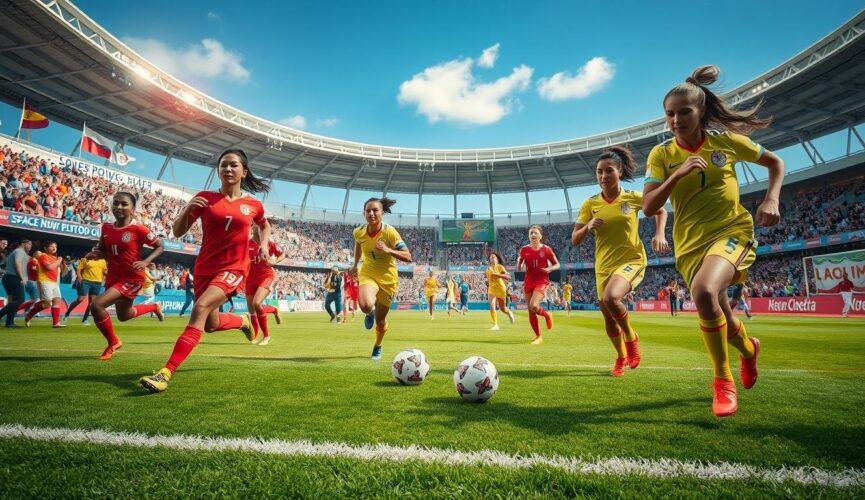
When we hear “fitness philosophy,” we often think of trendy yoga or expensive green juices. But the USA Women’s National Team is different. They use a unique mix of science and confidence in their training.
This section will explore the key ideas that made the USA a soccer giant. They use advanced technology like GPS to track every detail of their training. It’s like something out of a sci-fi movie.
But the real secret is their mindset. They see fitness as a must, not just something to do. This approach is debated, but it clearly works. Just look at their four stars.
We’ll look at how the USWNT’s approach has changed over time. From Mia Hamm’s era to today, they’ve added strength and strategy. We’ll also see how they compare to the rest of the world, where women’s soccer is getting more respect.
European Powerhouses: Training Methods from England, Germany, and Netherlands
Looking into the World Cup training of England, Germany, and the Netherlands shows a deep focus on athlete growth. These countries have built training spots that take the game beyond just physical skills. They use a tactic-focused approach in their training plans.
The English Football Association has put a lot into the Women’s Super League. This has created a special place where sports science meets traditional English toughness. This mix helps players grow their skills and physical strength. It makes them well-rounded for international games.
Germany is all about being efficient in training. Every drill, from rondo to small-sided games, is planned with a specific goal in mind. This careful planning makes sure players are not just fit but also smart tactically.
The Netherlands keeps spreading its Total Football idea. Their training mixes skill work with conditioning. This way, players learn to blend their skills with fitness, showing that *fitness comes from football*. This fresh view challenges old ideas and pushes what athletes can do.
What ties these European giants together is their focus on periodization. They know the tight schedules can be tough, even for well-prepared teams. By mixing fitness into football, they make sure players are ready both physically and mentally for big games.
Physical Preparation: Strength and Conditioning Programs from World Cup Teams
Rangers FC’s training shows the secret to elite soccer fitness. They play 65 matches a season and keep up with strength training. It’s not just lifting weights; it’s managing fatigue, avoiding injuries, and boosting performance.
In the 2021/22 season, Rangers FC showed how top teams handle soccer’s demands. They played many games, including eight in April, with two going into extra time. Their strength and conditioning programs are carefully planned for each player, whether they start or not.
They check players’ physical performance four times a year. This helps tailor training to each athlete’s needs. For example, they use isometric exercises before games to prepare the muscles.
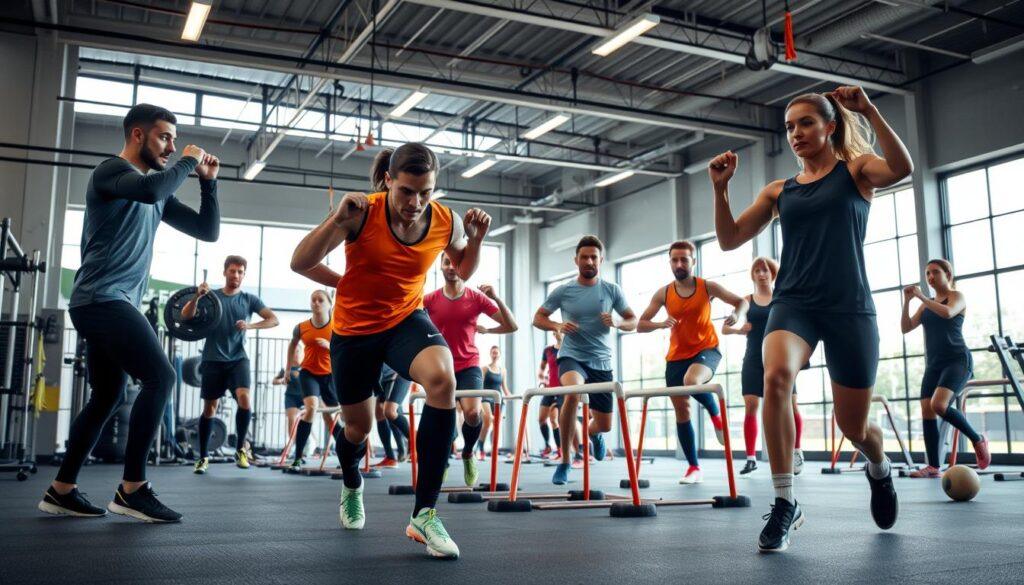
The French Contrast method is also used to improve power. After games, players who played over 45 minutes do strength training. This includes exercises like squats and calf raises to build strength.
These methods have paid off. Rangers FC saw a big drop in soft-tissue injuries, like hamstring strains. This shows the effectiveness of their training methods, which combine science and practice.
In conclusion, the training methods used by World Cup teams are essential. They’re not just trends; they’re a must for teams to stay competitive. The real question is, will you dare to try these methods in your training?
| Training Method | Description | Benefits |
|---|---|---|
| Isometric Work | Static muscle contractions to enhance strength | Improves muscle and tendon quality |
| French Contrast Method | Combines heavy lifting with explosive movements | Boosts power development |
| Eccentric Loading | Focus on lengthening muscles under tension | Builds resilience and reduces injury risk |
Technical Skills: Daily Practice Routines That Separate Elite from Average Players
In soccer, the gap between top players and others is mainly about practice. It’s not just any practice. It’s a constant effort to get better, often in ways that feel like playing a game.
World Cup clubs don’t do boring drills like you might remember from youth soccer. Their training is all about detailed exercises. Every move is planned with the care of a top choreographer who knows a lot about how the body works.
What makes elite players stand out? It’s not just how much they practice. It’s the quality of attention they bring to their training. They focus intensely, processing information and reacting quickly, all while doing technical skills under pressure.
Here are some daily routines used by World Cup teams:
- Passing Patterns: They practice precise passes to improve their accuracy.
- Receiving Exercises: They work on their first touches to set up the next play.
- First-Touch Progressions: These drills help them control the ball better, even when it’s hard.
The lesson is clear: there are no shortcuts to championship training. Anyone promising a quick fix is just trying to make money off your eagerness. The path to becoming a great player is long and requires a lot of focused practice. And remember, every top player was once just as good as you, but they worked harder.
If you want to improve your game, learn more about skill-building secrets here.
Mental Preparation: Psychological Training Techniques from World Cup Champions
Did you know the secret to World Cup success might not be physical training alone? The mental game has evolved into a complex strategy. It’s like an optimization algorithm for human performance under pressure.
Today’s top teams have sports psychologists who are like performance engineers. They create mental training programs as detailed as physical ones. This is where the magic begins:
- Simulated Pressure Environments: Teams practice penalty shootouts with real stakes, getting used to high-pressure situations.
- Communication Drills: Players learn to communicate well, even in chaotic moments, through special exercises.
- Decision-Making Exercises: They face cognitive fatigue tests to ensure they can make quick decisions when it matters most.
The blend of mental and physical training is intriguing. Now, teams design sessions that mimic real games under mental stress. Picture practicing penalty kicks with your heart racing and the crowd cheering—this is the new standard.
This method isn’t just about getting pumped up; it’s about building mental toughness. By facing discomfort, players become more resilient. The techniques used are diverse and effective:
- Breathing Protocols: Inspired by special forces, these help players stay calm in tough situations.
- Attention-Control Training: Based on fighter pilots’ training, it improves focus and mental clarity during key moments.
World Cup preparation now focuses on the brain’s role in performance. This ensures players stay focused when the stakes are high. It’s not just about physical strength; it’s about mental strength that can win or lose a championship.
Recovery Protocols: How Elite Teams Maintain Peak Performance Throughout Tournaments
Recovery isn’t just an afterthought; it’s the backbone of elite performance. In the high-stakes world of soccer, recovery is key to success. It’s not just about resting. Elite teams see recovery as a critical part of their training.
Rangers FC is a great example. They carefully plan their recovery into their weekly schedule. Starters do recovery exercises on Match Day +1 and +2. These include isometric exercises to get ready for the next training.
Non-starters focus on full isometric and activation work. This helps them stay strong while managing fatigue.
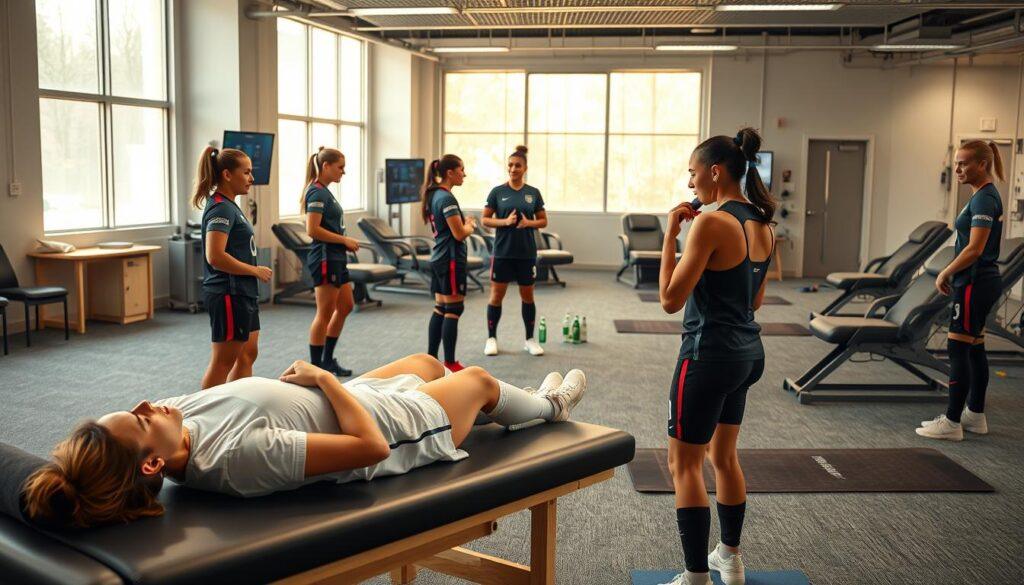
Recovery sessions happen right after home games, within 15-20 minutes. Players do short strength sessions. This keeps their lower body strength up. It’s simple yet effective.
The 2021/22 season showed Rangers FC’s recovery efforts paid off. They had the lowest soft-tissue injury rate in four years. This proves proactive recovery strategies work.
Recovery is often overlooked for flashy training. But top teams know recovery is just as important. They do light isometric work and mobility right after games. It’s an unusual approach but it works.
In conclusion, recovery is a vital part of training. It’s not just what you do when you’re not training. For more on recovery strategies for female athletes, check out this insightful article. Effective recovery is key to success in the women soccer World Cup.
Tactical Fitness: Position-Specific Training That Improves Game Intelligence
Imagine a training plan that boosts your body and mind. Welcome to tactical fitness. It’s changing how top teams train, blending physical work with game strategy. It’s not just about getting faster or stronger; it’s about mastering each field position.
Rangers FC shows how it’s done. They use gym workouts that focus on each player’s role. They use the French Contrast method for lower body power. This method changes based on the player’s role, improving strength for each position.
The sled push and trap bar deadlifts are adjusted for each player. This ensures they’re strong and can move like their role demands.
Isometric running exercises target the hip, knee, and ankle. They help players perform better in games. These exercises strengthen the weakest parts of movement, helping players move more efficiently.
Tactical fitness combines physical and tactical training. It makes players stronger and smarter. For example, a center back gets stronger while learning defensive moves. This training makes players more than just athletes; they become strategic thinkers.
Teams that use this approach win championships. They become better at outsmarting opponents. Tactical fitness turns players into game-changers.
| Training Method | Focus Area | Position Example |
|---|---|---|
| French Contrast Method | Power Development | Fullback |
| Sled Push | Strength & Endurance | Defender |
| Isometric Running | Joint Stability | Midfielder |
Nutrition Strategies: World Cup-Level Meal Planning and Hydration Techniques
World Cup nutrition is not just about eating well. It’s a science that elite athletes follow. They plan their meals and hydration with precision, unlike the average gym-goer. No longer is it just about eating veggies; it’s about timing and individual plans.
World Cup teams analyze athletes’ needs with great detail. They focus on macronutrient timing to match training. It’s not just about protein; it’s when to eat it.
The pre-match meal is not pasta and chicken anymore. Athletes follow a carbohydrate loading protocol for energy. It’s a meal designed to boost energy levels.
Post-match nutrition is key. Athletes refuel within 30 minutes to recover. This is called the “metabolic window.” It’s vital for recovery, important for elite athletes.
Tournament play demands careful planning. Athletes use carbohydrate periodization to stay energized. This method helps them avoid energy overload.
Hydration is not just about drinking water. World Cup teams use individualized electrolyte protocols. They also plan caffeine and fluid intake for performance.
The difference between healthy eating and World Cup nutrition is huge. It’s like the difference between a casual jog and an Olympic marathon. So, if you want to improve your training, think about changing your diet.
Adaptation Training: How to Modify Elite Programs for Recreational Players
You’re not in the World Cup, and that’s a blessing. You have a job, family, and maybe friends to hang out with. Trying to follow a pro athlete’s training plan? That’s a recipe for burnout or injury.
Rangers FC shows us that success comes from more than just exercises. It’s about getting everyone on board. Players saw the value in gym work for football, thanks to their coaches. These coaches listened, fixed doubts, and made programs fit each player’s needs.
Your training should match your life, not the other way around. The idea of minimum effective volume is key here. It helps elite teams deal with busy schedules, and it can help you too.
Think about this: doing two sets of a movement with full effort is better than six half-hearted sets. It’s about quality over quantity, not how many you do.
Stick to the basics: focus on eccentric movements, isometric exercises, and training for your specific position. This approach is easier on your body and helps you improve without overdoing it. It’s about being smarter, not trying to be someone you’re not.
Tournament Mentality: Applying World Cup Mindset to Personal Fitness Goals
World Cup prep isn’t just about drills and diets. It’s about seeing training as a journey, not just a goal. Elite teams show a calm, consistent approach that many miss. They don’t freak out over missed workouts or celebrate small wins.
They see each session as data, valuable info for future training. This mindset builds resilience. When setbacks happen, they’re seen as chances to learn, not failures.
The World Cup mindset expects challenges, not as pessimism but as strategic realism. You plan for low energy days or sudden life changes. You adapt, not give up on your goals.
Think of your fitness journey as a long-term experiment. Each workout adds to your understanding of your body and limits. You’re both the scientist and the subject, gathering data over time. This new view can change everything.
Adopting this tournament mentality means valuing the process over quick wins. The true value of fitness isn’t avoiding obstacles but navigating them with grace and determination. This is the heart of World Cup preparation.