
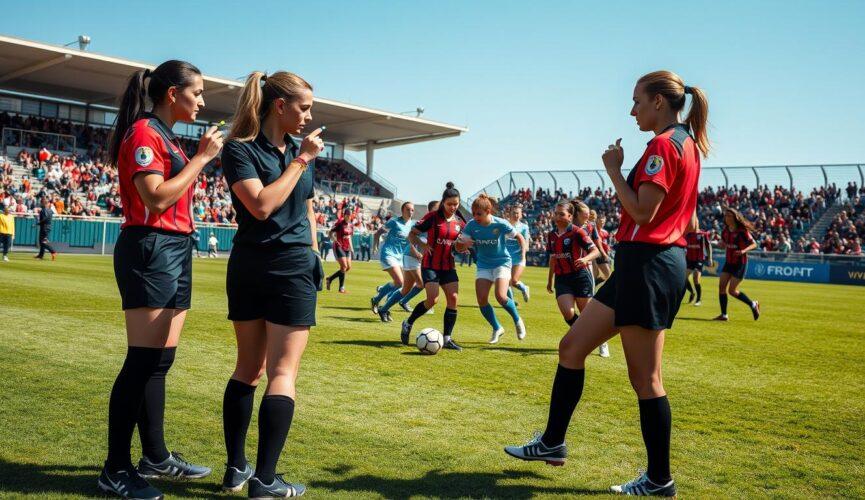
Every Sunday, I see a show that rivals reality TV: how match officials are treated. It’s not just about following rules; it’s about who has the whistle. The stats are shocking. In basketball, illegal head contacts are punished only 3% of the time. Rugby? A high tackle gets a slap on the wrist just 6% of the time. Is this really a game, or are we just signing away our rights?
Talking about female match officials is more than just checking a diversity box. It’s about a big failure in sports leadership. Representation isn’t charity; it’s key for keeping players safe. Women bring a fresh view to the chaos of officiating, facing doubts about their authority.
Imagine a world where following the rules really cuts down on injuries. Maybe the solution isn’t more tech, but who’s making the calls. It’s time for a change, one that puts safety and respect first, not old norms.
Pathway Grassroots to Pro: Badges, Assessments, and Camps
Starting as a woman referee is like finding your way through a tricky maze. It starts with the grassroots badge. This might sound simple, but it’s not. You’ll face parents who think the offside rule is a government plot.
Then, there are the assessments. These are formal tests where every call is checked by an expert. It’s not just about knowing the rules. It’s about making tough decisions under pressure.
Camps are like boot camps with a twist. They teach you to manage the game, not just follow the rules. You learn to handle the people involved, which is harder than the rules themselves.
The journey is tough, testing your body and mind. Women often face doubts about their place. But those who make it through change what it means to be in charge, one call at a time.
| Stage | Description | Challenges |
|---|---|---|
| Grassroots Badge | Initial certification for local officiating. | Dealing with parental criticism. |
| Assessments | Formal evaluations of decision-making. | High-pressure scrutiny. |
| Camps | Intensive training and psychological management. | Balancing knowledge and interpersonal skills. |
Day in the Life: Fitness Test Prep, Travel Kit, and Mental Focus
Referees start their day with a test that’s as tough as the games they watch. The referee fitness test is fair to all, focusing on your fitness level and endurance. I’ve seen top women officials beat men in sprints, only to face doubts about their ability to keep up.
Now, let’s talk about the basics. My travel kit is all about keeping it simple. It has:
- Two whistles (one backup, because fate has a funny way of testing us)
- Cards that feel heavier than they look
- A snack that won’t stage a rebellion mid-sprint
Each item is chosen for a reason, making sure I’m ready for anything. But the real challenge is mental focus. It’s about ignoring the crowd’s doubts and staying sharp during the game.
Being a referee isn’t just about physical strength; it’s a mental battle too. It’s about keeping calm in the chaos of the game. Here’s how I manage:
| Aspect | Description | Importance |
|---|---|---|
| Fitness Test | A rigorous assessment of physical endurance | Ensures readiness for high-pressure situations |
| Travel Kit | Essential gear for officiating | Prepares for unexpected challenges |
| Mental Focus | Ability to concentrate amidst distractions | Crucial for making accurate decisions |
Being a referee means embracing the chaos and staying in control. It’s a tough job that needs both physical strength and mental sharpness. That’s what a day in the life of a referee is all about.
VAR, Tough Calls, and Captain Communication Tips
VAR was meant to change the game for referees, but has it really made a difference? Many thought it would end disputes and pub arguments. But, it often seems like a Rorschach test for our own biases. Even referees can’t agree on some calls, even after reviewing slow-motion replays.
Women officials face extra challenges. They get a lot of attention and must make tough calls with confidence. The key is to communicate well with team captains. This is an art that needs both authority and diplomacy.
When making a tough call, staying calm and firm is key. Saying “I saw it differently” can help ease tensions and show respect. Treat captains as respected colleagues, not just opponents. This way, you can have clear talks without getting defensive.
Referees do more than just enforce rules; they also help prevent injuries. As the pressure grows, being able to communicate well becomes even more important. If you want to learn more about female footballers’ rights, check out this guide for young athletes.

How Rec Players Can Help: Respect, Language, and Self-Officiating
Imagine if every recreational player became a champion of respect. It’s a bold idea, but the respect campaign should be more than just a poster. It should be a rule that players enforce themselves. In the wild world of recreational leagues, players need to take charge.
Many leagues have only one referee and little support. This can lead to a lot of arguing. Women referees often face extra disrespect, hidden as helpful advice. Players can change this by being mindful of their words and actions.
By calling their own fouls, players can help fix the low penalization problem. It’s not just about being kind; it’s a real solution. When players show they’re accountable, it makes the game safer. Without strict rules, injuries can happen more often.
| Action | Description | Impact |
|---|---|---|
| Audit Language | Be mindful of how you speak to referees. | Promotes a respectful atmosphere. |
| Self-Officiate | Call your own fouls during play. | Reduces pressure on referees. |
| Encourage Peers | Foster a culture of respect among teammates. | Creates a unified front against dissent. |
Your attitude in Sunday league games matters a lot. It’s not just about playing; it’s about public health. For more tips on creating a respectful game environment, check out this resource.
Fitness for Refs: Interval Protocol and Agility Set with Cues
Think a referee’s fitness test is just a casual jog? Think again. These tests are tough, simulating the intense demands of a real match. The referee fitness test isn’t just a walk around the pitch. It’s high-intensity sprints, agility drills, and quick recovery periods.
The interval protocol is where the magic happens. Imagine sprinting at full speed, then resting for a short time. This mimics the stop-start nature of a game, where referees must stay sharp and responsive. It’s a carefully calibrated form of torture, ensuring that when the whistle blows, the official is ready for anything.
For women officials, the standards are no different from their male counterparts. Why? Because physiology doesn’t discriminate, and neither should we. The training is intense, and the expectations are high. A fatigued referee can lead to leniency in decision-making, which can have serious consequences on the field.
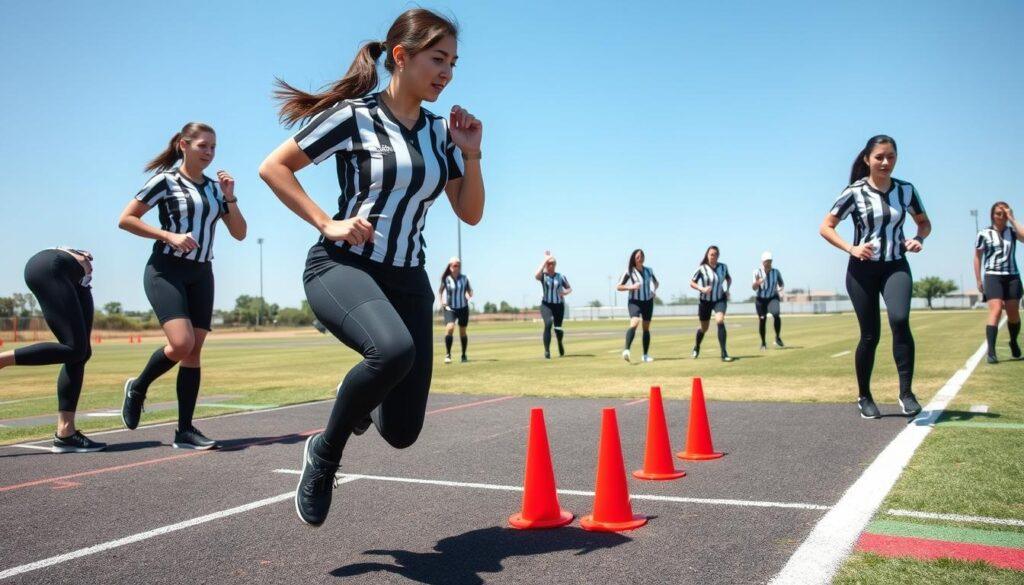
Now, let’s talk about agility sets with cues. This isn’t just about fancy ladder drills for social media clout. It’s about training your body to react to visual triggers. Picture a sudden change of direction or a flailing arm from a player. Your brain must be three steps ahead, anticipating the next move while your body responds instinctively.
- Interval Training: Short bursts of high-intensity running.
- Agility Drills: Focus on quick footwork and reaction time.
- Mental Resilience: Decision-making under physical strain.
Ultimately, these fitness tests are not just gatekeeping exercises; they serve as vital safety mechanisms. Studies show that decision-making degrades under physical load. A fatigued referee is a lenient referee, and that leniency can result in illegal plays going unpenalized. So, yes, those shuttle runs are saving someone’s frontal lobe.
Breaking Barriers: Stories of Firsts and New Prospects
Every whistle tells a story of courage and the fight for equality. Women referees today are not just officials but trailblazers in a field once seen as male-only. They carry the legacy of those who fought to be seen on the field.
The documentary Whistleblowers sheds light on these women’s experiences at the 2023 Rugby World Cup. It shows the challenges they face, where every decision is scrutinized, not just for its correctness but also for how they look or act. This is their everyday reality.

The first woman to referee a men’s professional game faced incredible challenges. She had to be incredibly fit and composed. The focus on her gender was often more than her skills as a referee. These moments are not just trivia; they show the deep-seated resistance to change.
We celebrate these pioneers, but the fight is far from over. The next step is not just getting more women involved but ensuring they are judged fairly. The true victory will come when a woman referee’s mistake is seen as just that, not a reflection of her gender.
Newcomers now have role models who have faced the initial shock of being a woman in the game. They prove that the sport is changing. For more inspiring stories, check out Desiree Abrams’ journey or see how former women soccer players are making a difference off the field.
Getting Certified: Steps, Costs, Time Commitment, and Benefits
So, you want to become a referee? It’s a journey that requires patience and dedication. First, you’ll take a course that teaches you the laws of the game over a weekend. It’s like cramming for exams, but with more focus on rules and less on sleep.
The cost can vary a lot, from a few dollars to a few hundred. It depends on the sport and where you are. You’ll also spend time on ongoing education and attending clinics. It’s not just about officiating games; it’s about learning and growing.
Women in this field face extra challenges. They often have to prove themselves in a male-dominated world. It can be emotionally draining to assert your authority.
But the rewards are worth it. You get to see sports in a new light, learn from others, and develop strong decision-making skills. It changes how you watch games forever.
Getting certified is more than just a badge. It’s a way to see the world differently. It’s a journey that can be rewarding in many ways.
Spectator Guide: What to Shout and What to Skip
Spectators often think they can judge referees, but do they really get the game? Let’s be honest, most fans can’t pass a simple quiz on the game’s rules. Yet, they feel they can give real-time reviews at top volume, like they’re trying out for a foghorn.
The respect campaign is for everyone, not just players. So, what should you shout? Here’s a hint: skip anything that starts with “Hey ref” and ends with a bad word. And skip sentences with “always” or “never.” If you’re thinking in absolutes, you’re missing the point.
Women officials often face sexist heckling. Comments that would get you fired in any workplace are okay from the stands. Remember, if you wouldn’t say it to a male ref, don’t say it to a female one. That’s pretty basic.
Referees already face a lot of physical and mental strain. Your jokes about their eyesight aren’t helping. They just add to the noise that makes it harder for them to make fair calls.
So, be like a Stoic. Cheer for the good calls and groan at the bad ones. And remember, the person in the middle is doing a tough job you’d fail at in five minutes.
| What to Shout | What to Skip | Why It Matters |
|---|---|---|
| “Great call!” | “You never get it right!” | Encouragement boosts referee confidence. |
| “Keep it up!” | “Hey ref, are you blind?” | Positive feedback fosters respect. |
| “Let’s go, team!” | “You always miss that!” | Support your team, not the negativity. |
Resource List: LOTG Updates, Video Libraries, and Quizzes
Knowing the laws of the game is key for any referee. The official LOTG app is a must-have. It may not be the easiest to use, but it has the official text.
Understanding these laws is critical. With updates from IFAB coming often, it’s like trying to catch a bus that never stops.
Video libraries are a goldmine. FIFA’s training clips and World Rugby’s decision-making breakdowns offer valuable insights. For a deeper dive, check out the *Whistleblowers* documentary on rugbypass.tv.
It gives a raw, human look at the pressures of elite officiating. It’s not just about rules; it’s about the heart behind the whistle.
Quizzes are often overlooked but are very important. Platforms like AreYouReadyRef test your knowledge in real-world scenarios. They challenge your understanding and make you rethink the rules.
For women referees, these resources act as armor against stereotypes. Knowing the laws of the game cold is your best defense against any doubters.
Education and resources are vital. The editorial on injury prevention emphasizes the need for training opportunities. This helps bridge the gap between policy and enforcement.
Use this resource list as your toolkit. In a world where a single misinterpretation can spark outrage, being well-informed is not just beneficial; it’s necessary.