
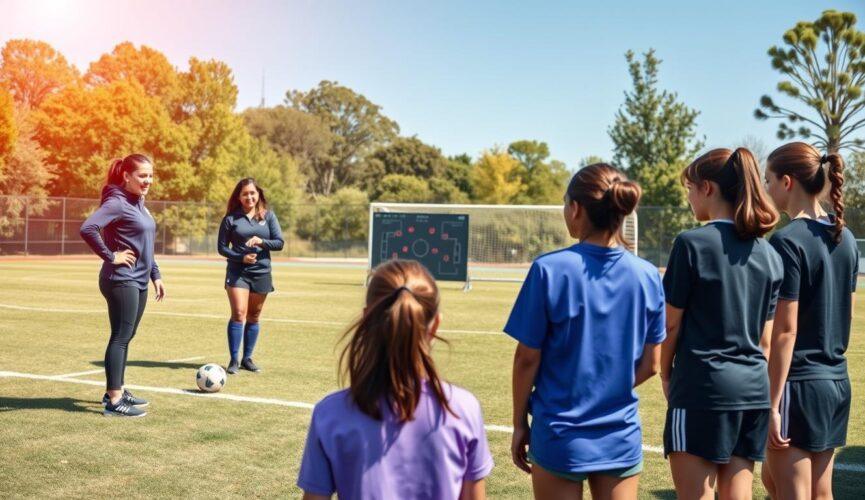
There’s a special magic on the soccer field, more so in women’s soccer. It’s not just about drills or tactics. It’s about the people guiding us. I remember Coach Alvarez’s whistle—two short blasts that meant, “reset your brain, not just your feet.”
It’s common to say a coach changes your life. And it’s true in women’s soccer. The mentor effect goes beyond teaching better plays. It’s about seeing you as a whole person, not just a player.
Research shows one caring adult can change a kid’s life. But what’s the secret? It’s high expectations, specific feedback, and really paying attention. A great coach doesn’t just teach to scan the field. She teaches to scan your own possibilities.
Think about the cultural impact. Imagine Mr. Miyagi with more tactics and less bonsai trees. For women’s soccer, mentors play a huge role. They counter society’s lack of investment in female athletes. A coach who demands professionalism builds a team and a society where leadership is learned through action, not words.
Four Coach Profiles: Pathways, Philosophies, Signature Sessions
Welcome to the coaching jungle, where four distinct profiles reign supreme in women’s soccer. Each coach has a unique pathway, philosophy, and signature session. These shape their approach to leadership and practice design.
| Coach Profile | Pathway | Philosophy | Signature Session |
|---|---|---|---|
| Academic | Sport Psychology Master’s | Learning through dialogue | Rondel as group therapy |
| Old-School Tactician | Traditional Coaching | The ball doesn’t get tired | 4v4+3 pressing drill |
| Player-Turned-Coach | Professional Player | Empathy and understanding | Game day minus one walkthrough |
| Innovator | Modern Coaching Techniques | Democratic leadership | Positional play grids |
The Academic coach is a master of sport psychology. She crafts practice sessions that feel like TED Talks. Her warm-ups often turn into Socratic dialogues about spatial awareness.
Her signature session—a rondel morphing into a group therapy exercise—ensures that players not only develop skills but also connect on a deeper level.
In contrast, the Old-School Tactician embraces a no-nonsense approach. With a philosophy that the ball doesn’t tire, he designs grueling drills that push players to their limits. His 4v4+3 pressing drill is notorious for turning athletes into strategic thinkers, akin to chess grandmasters on the field.
Then we have the Player-Turned-Coach, who brings a fresh perspective to leadership. With her cool demeanor and deep understanding of modern athletes, she leads sessions that feel more like jazz improvisation than rigid drills. Her game day minus one walkthrough is a blend of strategy and creativity, allowing players to visualize success.
Lastly, the Innovator challenges the status quo. Known for her democratic leadership style, she encourages every player to voice their thoughts during debriefs. Her practice design, featuring complex positional play grids, could baffle even a NASA engineer, yet it fosters a collaborative environment where creativity thrives.
Understanding these coaching pathways isn’t merely an exercise in observation; it’s a blueprint for effective leadership in women’s soccer. By dissecting these profiles, we can appreciate the diverse approaches that contribute to the growth of the game.
Practice Architecture: Warm Up, Technical, Tactical, Competitive, Cool Down
Imagine a practice session as structured as a Broadway show. It should be both a science and an art. But often, it feels like a buffet with too many drills. Let’s make it precise and engaging.
The warm-up is key. It’s not just jogging and stretching. In 2024, we need dynamic movements. A good warm-up gets players ready physically and mentally.
The technical block is where coaches can really make a difference. Skill work is important, but it must relate to the game. This keeps players engaged and learning.
The tactical phase is all about strategy. It involves games with rules and small teams. This is where players learn to read the game and make decisions.
The competitive segment should be intense. But often, it’s just a free-for-all. Coaches need to provide feedback and ensure players apply what they’ve learned.
The cool down is vital for reflection and recovery. It’s a chance for players to discuss what they’ve learned. But sometimes, it’s overlooked.
For more insights on effective drills, check out 10 Must-Try Soccer Drills for Beginner.
Fitness Blocks for Amateurs: 2-Day Week Plan, Load Management
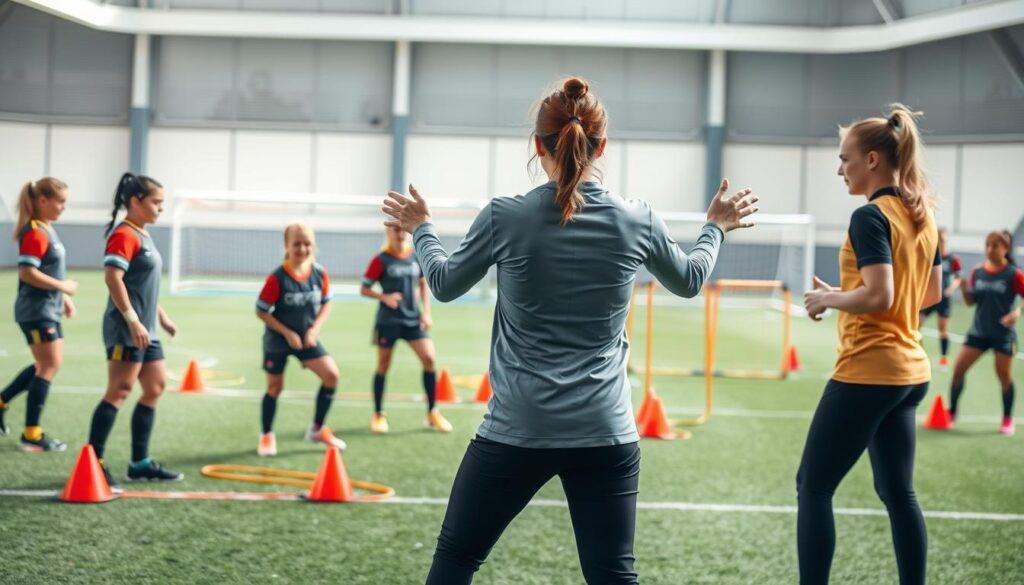
For weekend warriors, balancing work, family, and soccer is key. It’s a tightrope walk to stay fit for soccer and avoid injuries. Amateur women’s soccer teams often train just two days a week. This means they need a practice design that’s super efficient.
Coaches sometimes try to pack a pro preseason into just two hours. This leaves players hobbling for days, feeling sore and defeated. Load management is more than just a term for top athletes. It’s vital for keeping a season going without a flood of injuries.
So, what’s a winning 2-day plan? Day One is all about high-intensity interval runs, disguised as small-sided games. No one likes a beep test! Day Two focuses on building endurance through tactical drills. Each drill is carefully planned to maximize every minute.
Think of it like meal prepping for the week. You need the right mix, not just a bunch of kale. Here’s a sample week that sports scientists would approve of:
| Day | Focus | Activities | Duration |
|---|---|---|---|
| Day 1 | High-Intensity | Small-sided games | 60 minutes |
| Day 2 | Aerobic Capacity | Tactical drills | 60 minutes |
And yes, there’s that teammate who always forgets her running shoes. Balancing fitness with life is tough. But with the right strategy, we can make it work.
Culture Builders: Feedback Language, Inclusion, Role Clarity
Imagine culture as the air we breathe on the field—essential yet often overlooked. It’s not just a catchy phrase on a poster; it’s the invisible force that binds a team together. In women’s soccer, establishing a high-performance culture requires a leadership style that balances diplomacy, psychology, and a dash of humor. Let’s dive into the critical elements that shape this culture.
First, let’s talk about feedback language. Coaches often confuse brutal honesty with effective communication. Saying “that was terrible” isn’t honest feedback; it’s verbal vandalism. Instead, effective feedback should be specific and actionable. Think of it as a feedback loop where players first self-assess. This method not only fosters accountability but also encourages a growth mindset.
Next up is inclusion. It’s not merely about giving everyone equal playing time; it’s about ensuring every voice in the huddle is heard. Consider this: if a coach consistently speaks to the loudest extrovert, what happens to the quieter players? Their insights and talents remain untapped. Subtle language choices, like using “we” instead of “you” after a loss, can significantly shift the emotional climate of the team.
Now, let’s address role clarity. This is the unsung hero of team cohesion. A player who doesn’t understand her role is like an actor on stage without a script—chaos ensues. To illustrate, let’s reference the beloved show “Ted Lasso.” Imagine if Lasso’s relentless positivity met the tactical rigor of a Champions League coach. That’s where magic happens! A vague “just play your game” speech leads to confusion, much like a Jackson Pollock painting on the field.
To sum it up, building a culture in women’s soccer requires a nuanced approach to feedback, a commitment to inclusion, and a clear understanding of roles. The best leaders recognize that culture is crafted through countless small interactions. Below is a table summarizing these key components:
| Component | Description | Impact on Team |
|---|---|---|
| Feedback Language | Specific, actionable feedback that promotes self-assessment. | Encourages accountability and growth. |
| Inclusion | Ensuring every player’s voice is valued. | Fosters a sense of belonging and team unity. |
| Role Clarity | Clear understanding of each player’s responsibilities. | Enhances cohesion and performance on the field. |
In conclusion, effective leadership in women’s soccer is about creating a culture where feedback is constructive, every voice matters, and roles are crystal clear. This approach not only elevates individual performance but also strengthens the team as a whole.

Parent Education: Sideline Codes, Hydration, and Safety
The sideline is a stage for drama, filled with well-meaning parents and questionable advice. It’s a theater where every cheer can either uplift or undermine a young athlete’s spirit. Have you ever witnessed a parent yell “boot it!” at their daughter? That’s a surefire way to instill panic.
This is where a sideline code of conduct becomes essential. It’s not just a list of dos and don’ts; it’s a social contract. It ensures we don’t turn a U-14 match into a scene from the Colosseum.
Equally important are the topics of hydration and safety. Let’s face it, water breaks aren’t optional in July. Dehydration can significantly impact a player’s performance.
Parents need to understand the science behind hydration. When kids are running around in the heat, a simple water break can be the difference between a great game and a heat-related emergency.
And let’s not overlook safety protocols. Concussion guidelines aren’t just suggestions; they’re vital for protecting our young athletes. Ignoring them can lead to serious consequences.
As a coach, extending your influence to the car ride home is vital. This is where the real post-game analysis happens. Effective mentorship programs equip parents with the knowledge they need to support their children positively.
In parent meetings, I recommend using scripts that blend humor with critical information. This approach can help ease the tension while educating parents. Think of it as a guide to transforming the sideline from a liability into a supportive asset. One awkward conversation at a time, we can make a difference.
Find a Mentor: Directory, Clinics, and Certification Path
Looking for a mentor in women’s soccer is like going on a treasure hunt. You’ll find many chances, from official directories to weekend clinics. I’ll help you navigate this journey, making it clear and easy to follow.
The U.S. Soccer Learning Center is your go-to place for coaching. Here, you can get licenses from the basics to the top A-Senior level. It might need some tech skills, but the knowledge is worth it.
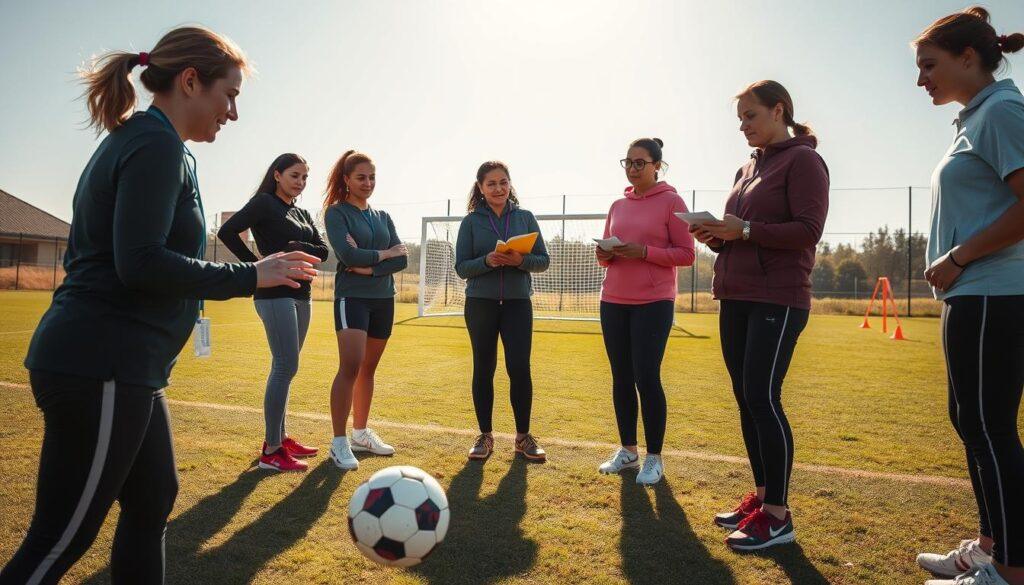
Then, there are in-person clinics where you meet experienced coaches. Imagine talking to someone who has been where you are now. That’s what mentorship is all about.
Directories like the United Soccer Coaches Association are like a big network for coaches. They help you find mentors and connect with others in the field. This network is super helpful as you grow in your coaching career.
Getting certified is more than just a formality. It’s a way to learn important skills. You’ll learn about practice design, leadership, and even dealing with parents. It’s not just about learning from the game; it’s about learning from experts.
So, finding a mentor in women’s soccer is like creating your own adventure. It’s like a “choose your own adventure” book for your coaching career. With the right tools and a sense of humor, you’ll find a mentor and maybe even become one yourself.
Interview Questions to Choose Your Next Coach
Finding the right coach is like dating. It’s about chemistry, capability, and commitment. You need someone who understands the game and can inspire and lead. Asking the right questions can show their leadership philosophy.
Here’s a list of questions to cut through the usual coach-speak. Forget the clichés like, “I develop the whole player.” Instead, ask:
- Describe a time you managed a conflict between two key players. If they say, “I told them to sort it out themselves,” it’s time to run. True leadership means guiding and mediating, not giving up.
- How do you design a practice session for a team that’s low on confidence? Their answer will show if they’re a tactician or a therapist. Today’s game needs both.
- What role does inclusion play in your coaching style? If they say, “I play the best eleven,” that’s a red flag. Leadership should value diversity and make every player feel important.
These questions help you see if the coach is a true leader or just another clipboard holder. I once asked a coach about team dynamics, and they said, “I let the players figure it out.” That’s not leadership. A good leader engages, inspires, and builds a winning culture.
Remember, hiring a coach is like pitching for a CEO role in a small, sweaty company. You want someone who can handle ups and downs, inspire their team, and build resilience. So, choose wisely!
Sample 60-Minute Practice PDF for Teams and Pickup Groups
Ever seen a practice plan that looks like a quick sketch? This 60-minute PDF is your solution. It’s perfect for competitive teams and flexible for pickup games. It focuses on minimum viable structure, maximum engagement.
The warm-up is a dynamic passing circuit that also breaks the ice. It’s not just for warming up muscles. It’s about building team spirit.
The technical block uses a constraints-based approach. Think small grids and specific targets. It makes you feel smart when it works.
Then, we move to the tactical segment: a 4v4+2 possession game. This teaches shape without needing a lecture. It’s better to let the game teach them.
The final part is a conditioned scrimmage with double points for goals from combination play. This encourages teamwork and strategy.
The cool down is brief but important. It includes sharing the “highlight of the session.” It’s about learning and growing together.
So, download the PDF and get ready for a session that’s ready to be printed. Or maybe ignored for a full-field scrimmage. But you’ll have a solid plan just in case.
Coach Shoutouts: Nominate the Next Feature
Every great mentorship program needs recognition. It’s the kind that truly makes a difference, not just sits on a shelf. It’s time to highlight the women soccer coaches who make a real impact.
Think of the coach who stays late to help a player. Or the one who sends a text that really motivates. These heroes need our spotlight.
Nominate a coach who has made a difference in your life. Share their story, and I’ll share it with the world. It’s a chance to celebrate the unsung heroes of soccer.
This effort is all about recognizing the strength of mentorship programs. It’s a small act of leadership that can inspire many.
Before you nominate yourself, remember, true mentorship lifts others up. It’s like “The Great British Bake Off.” Coaching is a mix of science, art, and sometimes, emotional moments. Let’s celebrate those who add sweetness to the game.
Join the conversation. Your shoutout could inspire another coach to keep going and innovate. Let’s shape women’s soccer together, one nomination at a time.