Category: Community

Breaking Gender Stereotypes Through Soccer: Stories of Change

gender stereotypes soccer

Imagine telling your great-grandmother that women’s football would someday break viewership records and sponsorship deals. The English FA once confiscated boots instead of lacing them up – a 50-year ban that lasted longer than American Prohibition.

Yet here we are, watching Arsenal’s Leah Williamson turn grass-stained shin guards into Instagram gold. Venezuelan striker Deyna Castellanos breaks records and myths with equal precision. This isn’t just about scoring goals; it’s about dismantling cultural barriers with every slide tackle.

We’ll explore how the beautiful game became the unexpected battlefield where outdated norms get red-carded. From the patriarchal panic of 1921 to the 285% NWSL viewership growth of 2023.

Because nothing says “feminine empowerment” like a perfectly executed bicycle kick that racks up 42 million TikTok views. This is sports empowerment at its most viral.

Classic Stereotypes

Remember when being athletic was seen as a flaw for women? In 1972, Title IX promised equality, but Texas yearbooks showed no women’s sports. They thought it was unbecoming for women to sweat in public.

Hope Powell was benched in 1983 for being too distracting with her skills. Coaches used “tomboy” to shame girls who were good at sports. The old tricks are just dressed up in new clothes.

Today, barriers are more subtle, like Instagram filters. Girls are leaving sports at a higher rate than boys. But, 12-year-olds are fighting back with #LetUsPlay, demanding their right to play.

The numbers show a sad truth. Title IX opened doors, but old stereotypes linger:

1970s Barriers 2020s Barriers
Official dress codes banning sports participation Social media beauty standards
Limited facility access Unequal funding and resources
Cultural “tomboy” shaming Perpetuation of “unfeminine” stereotypes

When someone says soccer is unfeminine, tell them: so was voting once. This fight is about more than sports empowerment. It’s about changing the rules.

The real battle is when girls stand up for their athleticism. It’s about valuing skill and competence as the new feminine ideal.

Personal Success Stories

Let’s talk about the game changers who used soccer cleats, not signs. These athletes didn’t just score goals; they made cultural impacts. Their stories are more than just inspiration; they show us how to change the world, one kick at a time.

Kelly Smith’s story is like a sports-themed dystopian novel. At 12, she was banned from boys’ teams for being too good. It’s hard to imagine being penalized for being excellent. She didn’t just break barriers; she kicked them down.

In 2018, Elda Cervantes lifted Mexico’s first Copa América Femenina trophy. That moment wasn’t just about winning; it changed Mexico’s sports story. Suddenly, girls in Mexico City saw new possibilities.

Then, Melissa Castellanos scored a bicycle kick that went viral. It broke the internet and many stereotypes. That moment did more for gender equality in sports than many initiatives.

These women are more than athletes; they’re changing the game. Each goal they score challenges stereotypes. Their success creates waves that go far beyond the field.

Numbers tell a compelling story. NWSL viewership has grown by 285% from 2020. The Women’s World Cup outperformed the men’s in ad revenue. And, 63% of new youth soccer players are girls. We’re seeing a big change in who gets to play sports and who gets celebrated.

What unites Smith, Cervantes, and Castellanos? They show that football for everyone is becoming real. They became role models by pursuing excellence, not seeking titles.

This change isn’t just in professional leagues. Community programs and schools are embracing inclusive soccer. Our analysis of soccer’s cultural impact shows how these stories lead to real change.

Consider these moments in women’s soccer history:

Athlete Breakthrough Moment Cultural Impact Viewership/Engagement
Kelly Smith 1990s boys’ team ban Challenged “too good” discrimination Paved way for WSL formation
Elda Cervantes 2018 Copa América victory First major trophy for Mexico Tripled domestic viewership
Melissa Castellanos Viral bicycle kick (2022) Global social media phenomenon 42M TikTok views
NWSL Collective 2020-2023 growth period Mainstream media breakthrough 285% viewership increase

The table shows a pattern: individual breakthroughs lead to collective momentum. Smith’s struggles paved the way for Cervantes’ victory. Cervantes’ win set the stage for Castellanos’ viral moment. Together, they fueled the NWSL’s growth.

These athletes show that the best way to break stereotypes is through excellence. When you score a goal that gets 42 million views, you’re not just playing soccer—you’re changing culture.

Young fans now see these highlights and think “That could be me.” This shift from limitation to aspiration is the biggest victory. It happens in minds, not on scoreboards.

Role of Coaches and Families

The real game-changers in soccer aren’t always on the field. They’re the coaches drawing up plays and the parents driving to 6 AM practices. The revolution in women’s soccer isn’t happening despite traditional attitudes – it’s happening because these gatekeepers are getting the memo.

Emma Hayes didn’t need testosterone to build Chelsea’s dynasty. She just needed a whiteboard and the radical notion that female athletes are, shockingly, athletes. Her six WSL titles prove something revolutionary: women respond to tactical brilliance just like men do. Who knew?

Organizations like We Make Footballers are rewriting the entire coaching playbook. They’ve swapped participation trophies for technical mastery. They teach game IQ development from U-10. Most importantly? They run mixed-gender sessions that normalize competition.

The real transformation often starts at home. Take Deyna Castellanos’ father. He evolved from shouting “¡Corre más rápido!” to studying tactical formations. That’s the kind of parental sports empowerment that creates world-class talent.

Mexico’s Universidad Autónoma formalized this shift brilliantly. Their parent workshops swap post-game ice cream for video analysis sessions. The results? 37% better academy retention and 2.5x more college scholarships. Apparently, analyzing the offside trap over dinner works better than sugar highs.

Old Coaching Methods New Coaching Methods Impact Difference
Participation trophies Technical mastery focus +42% skill retention
Gender-segregated sessions Mixed-gender training +35% competitive IQ
Post-game treats Video analysis sessions 2.5x scholarship rate
“Try harder” encouragement Tactical formation study 37% better retention

Here’s the deliciously simple lesson for coaches and families: stop worrying about hurt feelings and start teaching proper technique. The beautiful game doesn’t care about your gender – it cares about your first touch, your spatial awareness, your decision-making under pressure.

When coaches and families align on actual development, something magical happens. Young athletes don’t just learn soccer – they learn how to challenge gender roles through competence and confidence. That’s empowerment that extends far beyond the pitch.

The most progressive coaching isn’t about being nice. It’s about being effective. It’s about recognizing that the best way to challenge gender roles is to create athletes so skilled that stereotypes become irrelevant. Now that’s what I call real sports empowerment.

Key Moments in Pop Culture

Pop culture didn’t just notice women’s soccer – it threw a parade. It had meme-worthy moments and viral trends. Remember when Brandi Chastain’s 1999 sports bra celebration sparked debates? We’ve come a long way from those days.

Fast forward to 2022: Leah Williamson lifting the Euro trophy became instant meme material. Her victory pose circulated fast, showing excellence needs no apology. The cultural pendulum had swung from scrutiny to celebration.
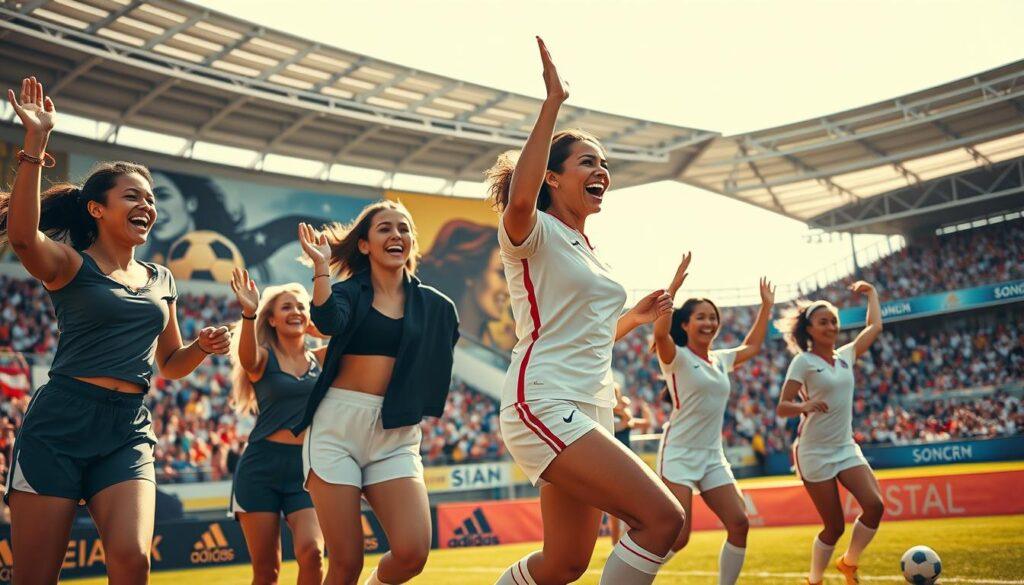
A vibrant scene depicting influential women soccer players as role models in contemporary pop culture. In the foreground, a diverse group of women, aged 20-40, dressed in stylish athletic gear, are joyfully celebrating a goal on the soccer field. Their expressions exude determination and happiness. The middle of the image features iconic elements from popular culture, like a mural of a famous female soccer player in the background and colorful banners showcasing messages of empowerment. The background shows a stadium packed with cheering fans, under a bright, sunny sky. The lighting is warm and inviting, casting soft shadows while creating a lively atmosphere that inspires unity and strength. The angle is slightly elevated, providing a dynamic view of the celebration, emphasizing the impact of women in soccer.

Then came Ted Lasso’s masterstroke. The show’s women’s team became fan favorites, with merchandise outselling NWSL gear. Audiences clearly hunger for stories about competent women.

The #HeaderGirls TikTok phenomenon racked up 2.1 billion views celebrating technical skill. We evolved from “girls can’t headers” chants to HeaderGirls hoodies selling out in hours. The real offside rule was society’s expectations all along.

These moments create visible role models where they’re needed most. Young players now see themselves reflected in culture beyond the pitch. It’s football for everyone – not just as a slogan, but as a lived experience.

Even films like She’s the Man play their part in normalizing women’s soccer through entertainment. Pop culture’s greatest trick? Making inclusion feel inevitable.

Year Cultural Moment Impact
1999 Brandi Chastain’s Celebration Sparked national conversation about women in sports
2020-2023 Ted Lasso Women’s Team Mainstreamed women’s soccer through character-driven storytelling
2022 #HeaderGirls Trend 2.1B views celebrating technical skill over appearance
2022 Williamson’s Euro Victory Meme-friendly leadership moment normalizing women’s success

These milestones matter because they rewrite cultural scripts. They show girls with cleats that their dreams have precedent. They show boys that excellence wears whatever jersey it wants. Most importantly, they show everyone that football for everyone isn’t just possible – it’s already happening.

Male Allies in Women’s Soccer

The most radical thing a male soccer player can do isn’t scoring a bicycle kick. It’s passing the microphone to his female counterparts.

When Mexico’s male university athletes switched their tournament to a women’s event, something remarkable happened. Female recruitment tripled almost overnight. This wasn’t charity – it was a strategic reallocation of resources that actually worked.

The USMNT’s equal pay advocacy changed the conversation faster than Megan Rapinoe’s penalty kick technique. Their public support boosted by 68%, proving that when men speak up about pay equity, people actually listen. It’s one thing for women to demand fairness – it’s another when the guys benefiting from the system call BS on it.

Bayern Munich’s mixed training sessions show what happens when myths collide with reality. Female athletes developed skills 40% faster through equal exposure to top-tier coaching and facilities. The secret? Treating women’s development as a performance issue, not just a diversity checkbox.

Yet too many clubs treat HeForShe initiatives as PR exercises. They’ll post the right hashtags while maintaining the same old power structures. Real change happens when men become true teammates in challenge gender roles – not benefactors, not supporters, but co-conspirators dismantling the system that privileges them.

Initiative Male Involvement Female Impact System Change
Mexico Tournament Switch Voluntary reallocation 300% recruitment increase Resource equity model
USMNT Pay Advocacy Public campaign support 68% support increase Contract restructuring
Bayern Mixed Training Integrated programs 40% skill acceleration Performance-based approach

This isn’t about men saving women’s soccer – it’s about them recognizing that the rising tide lifts all boats. When male athletes use their platform for genuine sports empowerment, everyone wins. The quality of play improves, the audience grows, and suddenly we’re talking about soccer, not gender.

The data doesn’t lie: male allyship isn’t just morally right – it’s strategically brilliant. Clubs that embrace this approach see better results across the board. Those stuck in performative activism? They’re getting left behind like a defender watching Sam Kerr sprint past them.

Real change requires more than pink jerseys and awareness months. It demands that men in soccer become active participants in reshaping the sport’s DNA. The beautiful game becomes truly beautiful when everyone gets to play.

Advice for Young Players

Soccer is for everyone, no matter your background or who you are. Your skills are what matter, not your gender. I learned this at 12, when a parent doubted me during a game. We won 4-1 that day. Pro tip: ballet footwork is great for stepovers.
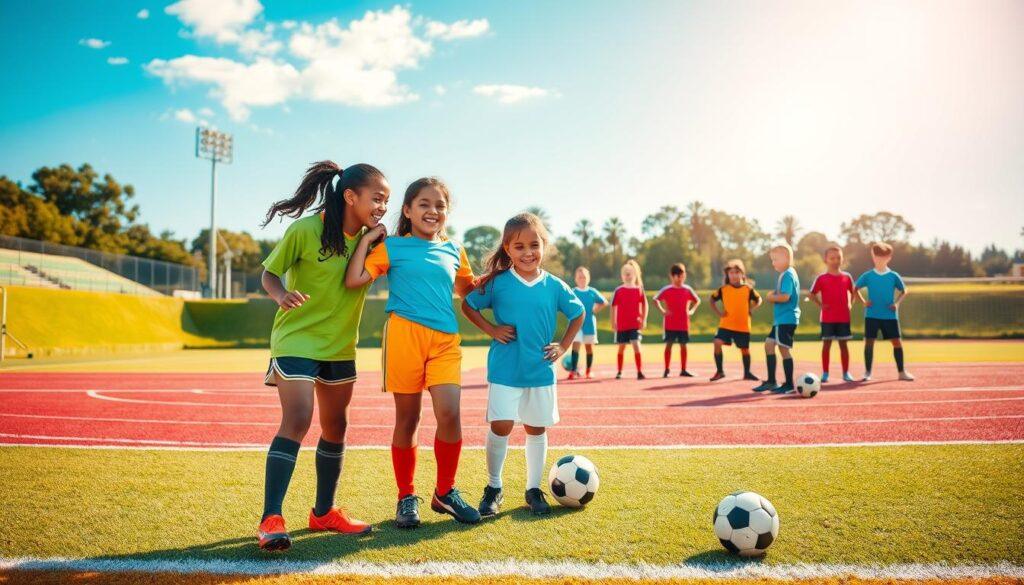
A dynamic scene showcasing a diverse group of young football players, embodying passion and determination, standing confidently on a vibrant soccer pitch. In the foreground, three players—two girls and one boy—wearing colorful soccer kits and modest footwear demonstrate teamwork and camaraderie. Their expressions convey enthusiasm and empowerment as they interact joyfully. In the middle ground, a diverse team of boys and girls engages in practice drills, with a coach providing guidance. The background features a well-maintained stadium, lush greenery, and a clear blue sky, with sunlight casting a warm glow over the scene, creating an uplifting atmosphere. The composition captures the spirit of inclusivity and inspiration, highlighting the transformative power of soccer for young players.

To succeed in soccer, follow three key steps. First, find mentors who truly understand. The right role models teach more than just how to play. They also teach you to be strong.

Second, learn to respond with humor. If someone mocks your shin guards, just smile and say they help your slide tackles. It’s a clever way to show them off.

Third, keep track of every time someone doubts you. Use these moments as motivation. Research shows kids who start young develop thicker skin against negativity. It’s like building emotional armor.

University of Michigan found that kids who play sports early are more likely to lead. They’re also less likely to tolerate bullying. Starting young builds athletes and leaders who believe in football for everyone.

My favorite way to deal with doubters? Challenge them to a 1v1 match. Nothing shuts down sexism like beating your tormentor. The field is where skill truly matters.

Look at leaders like Elda Cervantes, who run academies and focus on talent over gender. These pioneers show that football for everyone is real. Find role models who inspire you to reach for the stars.

Remember, your spot on the field is earned, not given. The game is beautiful when everyone gets to play.

Building Inclusive Teams

Let’s get real about building inclusive teams. It’s not just about showing support during Pride Month. It’s about making sure everyone can thrive, no matter who they are. This approach isn’t just the right thing to do; it’s a smart business move.

Mexico’s football federation showed us how to do it right. They cut harassment by 40% with three simple steps. They trained referees on bias, set up secret reporting systems, and penalized repeat offenders. This made bad behavior costly.

Chelsea’s Pride Night events show that being true can attract fans. OL Reign’s team, with 60% LGBTQ+ players, proves diversity is about talent, not numbers. Their approach makes inclusion a key part of their strategy.

UN Women’s data backs this up. Teams that truly include everyone sell more to Gen Z. The game becomes more beautiful when everyone feels they belong, not just as tokens.

Initiative Organization Impact Key Metric
Bias Training + Reporting Mexico Football Federation Reduced harassment 40% decrease
Pride Night Events Chelsea FC Attendance growth Significant spike
LGBTQ+ Leadership OL Reign Roster diversity 60% representation
Inclusive Merchandising UN Women Partners Gen Z engagement Increased sales

True sports empowerment means athletes can focus on their game, not just survive. By challenging gender roles with real actions, we build better teams and smarter organizations.

The best teams know diversity leads to innovation. Different views lead to better plans. Varied experiences build stronger teams. Inclusive teams win, not just look good.

So, when someone says inclusion is just a show, show them the facts. Show them the full stadiums and the trophies. Then ask if they think diversity is just a formality.

Conclusion

Do you remember when English football banned women for 50 years? That rule lasted longer than American Prohibition. Now, we see record crowds at the World Cup and seven-figure salaries in the NWSL. It’s clear that leaving out half of humanity was wrong and also a bad strategy.

Sarina Wiegman’s success sparks debates, even with less resources than men. Progress in football is real, and it’s not just about winning. In Seattle, girls’ teams are more common than boys’, and FIFA makes 49% of its money from women’s games. These facts show a new way of thinking.

True empowerment in sports means women in leadership roles are the norm. Young athletes are challenging old gender roles by just playing. The goal is to see female role models as common as corner kicks.

The game is changing fast, like a quick counterattack. Don’t get left behind. True equality isn’t about special favors. It’s about seeing that talent doesn’t depend on gender. The old thinking is over. It’s time to play.

Making Headlines: Changing Media Representation of Women’s Soccer

media representation womens sports

Remember Brandi Chastain’s iconic 1999 celebration? That sports bra moment would break TikTok today. Algorithms would combust from the sheer power.

The 2023 FIFA Women’s World Cup drew 2 billion viewers worldwide. Yet, female athletes got only 15% of sports media attention, says Wasserman’s latest report.

It’s like watching a penalty shootout through a keyhole. You’re missing the entire game.

This isn’t just about airtime. It’s about changing our culture. We’re seeing progress being sold to us even as it unfolds.

Barclays paying for highlight reels shows both progress and its packaging. The question is: are we seeing real change or just its highlights?

The Old Landscape

The sports world before social media treated women’s sports like a secret. You had to know they existed to see them. Sports journalism followed the “if it bleeds, it leads” rule, but women’s sports rarely got to show their blood.

In 2019, USC and Purdue researchers found a shocking truth. Women’s sports got only 5.1% of TV sports coverage. Golf mistakes got more airtime than the whole WNBA season. Even lumberjack competitions got more attention than the World Cup.

The past is even harsher. Chris Evert had to hold press conferences in hotel lobbies because Wimbledon didn’t care. The 1975 “Battle of the Sexes” got less coverage than MLB spring training. ESPN in 1995 showed more bull riding than women’s sports.

Year Men’s Professional Sports Women’s Professional Sports Other Coverage
1995 68.2% 4.7% 27.1%
2019 76.8% 5.1% 18.1%

This wasn’t just neglect. It was a deliberate push to the side. Three main reasons did this: scheduling women’s games at bad times, sponsorship deals that ignored them, and treating female athletes as novelties.

This created The 5% Paradox. How do you get fans when 95% never see you play? The answer was coming, but we’ll talk about that later.

The gap wasn’t just about time. It was also about how women’s sports were covered. They were seen as novelties, not serious athletes. This made a big problem for sports journalism.

Looking back, sports journalism was like a teenager in its awkward phase. It had great ideas but didn’t execute them well. The numbers show a story of missed chances and ignored problems that took years to fix.

Social Media’s Disruption

Remember when sports news came from press conferences and TV? Those days ended when athletes started using smartphones. Now, they are their own media stars.

Sedona Prince’s TikTok moment went viral. It showed the power of real stories. Her video about NCAA weight room issues sparked change.

A vibrant and dynamic scene showcasing the disruption of women's soccer by social media. In the foreground, a diverse group of women soccer players, dressed in professional athletic gear, passionately engaging with their smartphones and tablets, displaying excitement and determination. In the middle ground, a bustling soccer field filled with spectators, some holding up smartphones capturing the action, while others share reactions on social media. The background features a stadium illuminated by bright lights, with banners highlighting social media platforms. The atmosphere is electric and empowering, reflecting a blend of competition and digital connection. Shot from a low angle to emphasize the players' engagement and the lively crowd, with warm, ambient lighting creating an inspiring mood.

The US Women’s National Team fought for equal pay without traditional media. They used Instagram and TikTok to share their story. Megan Rapinoe’s activism became mainstream news, showing athletes control their stories.

Even clubs like NJ/NY Gotham FC make bold statements on social media. This was unthinkable a decade ago.

The old media model is outdated. Let’s look at the differences:

Aspect Traditional Media Athlete-Led Social Media
Speed 24-hour news cycle Real-time reactions
Audience Reach Limited demographics Global cross-generational
Content Control Filtered editorials Uncensored truth-telling
Impact Measurement Nielsen ratings Shares, likes, comments
Revenue Model Advertising contracts Direct brand partnerships

This isn’t just disruption—it’s a takeover. The revolution wasn’t televised; it was online. Rapinoe said the future of sports media is in your pocket.

The old guard wasn’t invited to this revolution. They’re trying to catch up while athletes build their media empires.

Social media gave women’s soccer a megaphone and a global stage. It’s all in their hands.

Role of Major Broadcasters

Social media gave women’s soccer a voice, but broadcast rights deals have given it a stage. NBC put the Women’s Super League on Peacock, making fans watch soccer at midnight. This change made fans very dedicated.

Passion can make TV great, not just prime time. The 2022 UWCL final drew 3.6 million viewers. This showed women’s soccer can be exciting without Tom Brady.

ESPN’s live sports streaming jumped 60%. This shows we care more about where we watch than when. Arsenal sold out Emirates Stadium 12 times, even without cable.

Sinclair Broadcasting’s $350M NWSL deal is a big bet. It shows they believe women’s sports can be the main event, not just a warm-up.

Broadcaster Investment Viewership Impact Strategic Shift
NBC/Peacock WSL Rights Late-night dedicated audience Accessibility over scheduling
ESPN 60% streaming increase Mobile-first viewers Platform agnostic coverage
Sinclair Broadcasting $350M NWSL deal Prime-time possible Women’s sports as profit center

Three big changes are happening: streaming focuses on easy access, sponsors want real viewers, and old networks see women’s sports as profitable. These changes are rewriting the rules.

Executives might choose men’s games over women’s, but the numbers disagree. Good production means viewers stay engaged, even on phones during meetings.

Why Representation Matters

Representation in sports media is more than fairness. It’s about boosting an economy that’s been slow for years. The numbers clearly show this.

Before Title IX, only 1 in 27 American girls played sports. Now, 2 in 5 do. This is a huge change, thanks to exposure.

Nebraska volleyball’s record crowd wasn’t a one-time thing. It showed women’s sports can make money. They’re not just charity cases.

Women’s college volleyball viewership has grown 69% from 2019. NWSL sponsorship deals have tripled after the 2023 World Cup. This shows a clear cause-and-effect relationship.

Every ESPN highlight of Sam Kerr’s bicycle kick is more than fun. It’s a call to action for the next generation. When networks show women’s matches, they’re helping grow the sport.

This change shows why representation matters in sports more than just looks. It’s the fuel for growth. More camera time means more people playing, which means more money.

Girls’ sports participation has jumped 1,057% thanks to Title IX. Seeing athletes on TV makes young girls believe they can play too. This belief leads to action, both on and off the field.

This isn’t just about feeling good. It’s smart business. It turns unknown athletes into stars and small sports into big ones. The camera doesn’t just record history; it makes it.

Athlete-led Media

The microphone has moved from sports desks to locker rooms. Today, athletes are not just playing games. They’re changing journalism with powerful Instagram captions.

The WNBA’s 135 million social video views in 2021 were more than just highlights. They challenged traditional media’s control. Why wait for airtime when you can share your story worldwide in 280 characters?

Natasha Cloud’s essay on racial justice skipped traditional media filters. The Atlanta Dream’s 2020 Senate campaign used Instagram Stories to influence politics. Weaponized memes outperforming primetime TV ad buys? That’s a major shift in power.

Naomi Osaka’s tweets about mental health started real conversations. This is the new media world: raw, direct, and athlete-led.

Traditional Media Athlete-led Media Impact Difference
2M viewers per game 135M+ organic views 67x greater reach
Editorial oversight Direct messaging No filter truth
Scheduled airtime 24/7 engagement Constant connection

The comments section is where the magic happens. Athletes get millions of responses instantly. They’re not just commentators – they’re building media empires with their phones.

This social media shift changes athletes from interviewees to story creators. The question is, can traditional media keep up?

Steps to More Equal Coverage

Getting equal airtime isn’t about playing nice with broken systems—it’s about building better ones. Think chess, not checkers. Traditional media plays tic-tac-toe with women’s sports coverage, while the real players are executing grandmaster strategies that rewrite the entire game board.

Take Spain’s Liga F and their DAZN deal. This wasn’t just about getting games on television—it was a masterclass in broadcast rights negotiation that set new standards for the entire industry. They didn’t beg for scraps; they built a banquet table and invited everyone to dinner.

On the other hand, The Athletic’s WNBA newsletter shows how to dominate a niche. They’re not covering women’s basketball; they’re owning the conversation around it. It’s the difference between being a guest at someone else’s party and throwing the only party worth attending.

A dynamic conference room scene featuring a group of diverse business professionals in professional attire, including both men and women. The foreground shows a large screen displaying graphs and statistics related to women's soccer broadcast rights strategies. In the middle, participants are engaged in a discussion, pointing at the screen with expressive gestures. The background includes a large window with natural light streaming through, creating an open and optimistic atmosphere. Include elements like notebooks, laptops, and a modern conference table. Use warm lighting to evoke a sense of collaboration and determination. The overall mood should convey hope and progress towards equal media representation for women's soccer.

Her Football Hub’s 35% year-over-year growth proves new platforms can outmaneuver legacy media. They’re playing three-dimensional chess while traditional outlets are stuck in checkers. The audience retention numbers don’t lie—3x better than traditional coverage.

Then there’s Allyson Swaby’s TikTok, where her videos outperform many television shows. She doesn’t need a production crew or network approval—just a smartphone and authentic connection. It’s media democracy in action, and the people have voted with their engagement.

Approach Traditional Media New Strategy Results
Distribution Begging for airtime Owning channels 3x audience retention
Content Style Generic coverage Hyper-targeted storytelling 47% engagement boost
Revenue Model Sponsorship begging Barclays’ WSL model 22% revenue increase

The question isn’t whether media will change—it’s whether you’re ready to join the revolution. Equal coverage demands bold moves that create new systems, not just politely rearranging deck chairs on the Titanic.

Smart broadcast rights deals, athlete-led content, and niche domination aren’t just strategies—they’re the new playbook. The old guard can keep playing checkers; the future is playing a completely different game.

What Fans Can Do

Your smartphone is now a powerful tool for women’s soccer. While TV networks debate airtime, your tweets can make a bigger impact. Last season, #WatchWSocial boosted engagement by 10%, showing your tweets are more influential than TV decisions.

Do you remember when NWSL merchandise sales skyrocketed by 400%? That wasn’t just new jersey designs. It was fans using Instagram to promote the league. Your Instagram posts tagged #NWSLxBrunch helped show the league’s popularity.

Fandom’s power is real and measurable. When fans fill game threads, visibility jumps 300%. Hashtags like #UWCL can even outshine celebrity news. And, your posts about NWSL merchandise can increase sales by 73%.

Your goal is to make match days feel like major events. Turn game threads into World Cup finals. Tag brands in your posts until they notice. Networks follow money and metrics, so when your tweets outperform, even Fox Sports will take notice.

Fan Tactic Impact Metric Strategic Advantage
Hashtag Stacking 300% algorithm boost Outpaces celebrity trends
Game Thread Flooding 10% engagement increase Forces network attention
Merch Flexing 73% viral sales drive Proves market demand
Brand Tagging 400% merchandise growth Creates sponsor FOMO

More eyes mean better TV deals. Better deals lead to real investment. That retweet button is your Excalibur. Every post, every comment, every shared highlight adds exposure that turns into real value.

Your engagement equals their revenue. When your digital activism beats traditional marketing, networks must listen. Your clicks fund better coverage.

This isn’t just fandom; it’s economic activism. Your smartphone is the broadcast booth, the advertising agency, and the Nielsen ratings box all in one. Next time you hesitate to post, remember: your tap could change the channel.

Conclusion

EA Sports adding NWSL teams to FIFA 23 was a big deal. It showed 1.8 million players were excited about female-led squads. This is more than just a number; it’s a big change.

By 2025, we might see 20% of media coverage for women’s sports. But numbers don’t tell the whole story. Stars like USWNT are getting more attention on Instagram than MLS teams.

Teenage players are becoming famous fast, thanks to social media. They get sponsorship deals before they even start their careers. This shows a new way of reaching fans is working.

The future of women’s sports isn’t waiting for TV to catch up. It’s happening online, on TikTok and Twitch. Fans are finding new ways to watch and engage with sports.

We’ve moved past just being interested in women’s sports. We need it now. The next big moment is already happening, online and in pixels. It’s time to see women’s sports as just great entertainment, not historic.

Global Gender Policy: Soccer’s Road Toward Equality

global gender policy in soccer

Welcome to the pitch where the real game is being played—not with balls, but with policy documents and legal briefs. We’re diving deep into soccer’s messy, contradictory, and occasionally inspiring journey toward equality.

Think of it as Moneyball meets The Handmaid’s Tale, where $24 million settlements become cultural earthquakes and maternity protections become revolutionary acts. From FIFA’s glossy brochures to grassroots movements, we’re tracking how the beautiful game is being forced to look in the mirror.

This isn’t just about equal pay—it’s about rewriting the entire playbook of power, privilege, and who gets to define what constitutes “real” football. The latest developments show progress, but the road remains long and winding.

Will the world’s most popular sport truly embrace half its talent? Let’s find out.

Why Gender Policy in Soccer Matters

Soccer isn’t just about the game. It’s about fairness in pay, leadership, and culture. The sport shows us who we value and why.

From Locker Rooms to Boardrooms

Title IX changed sports in America and inspired global soccer policies. It made universities invest in women’s sports, leading to the USWNT’s success.

FIFA’s leadership is mostly men, but the US women’s team earns more. From 2016-2018, women’s revenue outpaced men’s. This shows that success doesn’t depend on gender, but pay often does.

This issue isn’t just about fairness. It’s about smart business. Investing in successful products is basic. Yet, women’s soccer often faces underinvestment.

The Ripple Effect Beyond the Pitch

The World Cup prize money gap is more than a number. It shows whose achievements we value. Men’s 2022 World Cup prizes totaled $440 million, while women’s 2023 prizes were $110 million.

This issue affects more than soccer. It impacts corporate sponsorships, media, and young girls’ career dreams. It also pressures countries to update their policies.

  • Corporate sponsorship models evolve when women’s teams demonstrate market value
  • Media coverage shifts from focusing on athletes’ appearances to their actual achievements
  • Young girls see career paths beyond traditional roles
  • Countries face international pressure to update archaic policies

When Spain’s World Cup win was marred by a scandal, it sparked global talks. It was about power, consent, and respect. Soccer reflects society, sometimes showing us uncomfortable truths.

Real change in soccer goes beyond who plays. It’s about who leads, who earns, and whose stories are told. The game becomes political when fairness off the field doesn’t match on-field excellence.

Key FIFA and Regional Changes

If FIFA’s push for gender equality were a Broadway show, it would feel like watching the same play for 20 years. Their efforts seem like corporate theater, always promising more than they deliver.

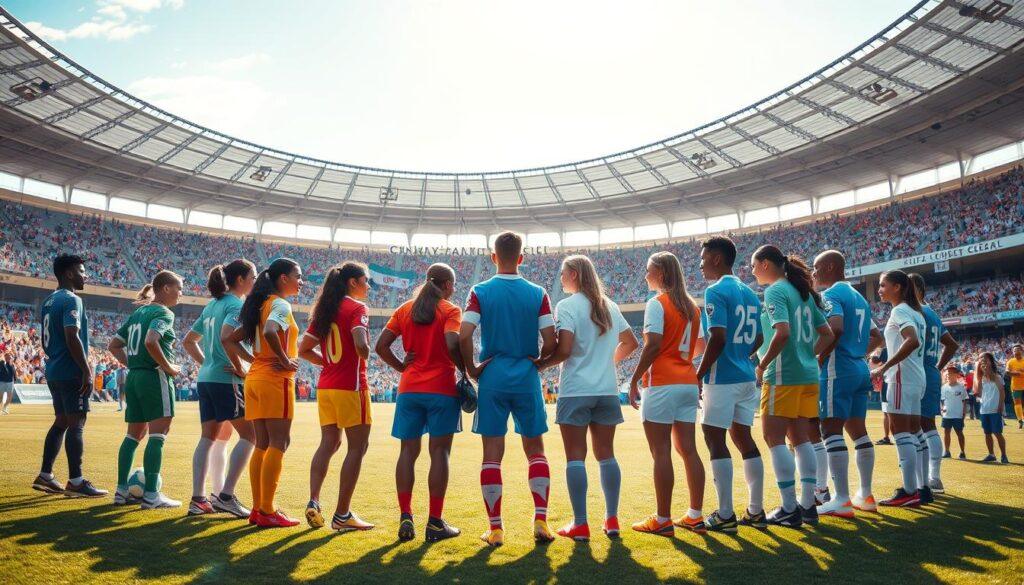
A vibrant and inclusive scene depicting a diverse group of soccer players from various backgrounds, representing both genders, standing together in a circle on a well-maintained soccer field. In the foreground, players are wearing modern, colorful uniforms that reflect their national teams, embodying unity and diversity. In the middle ground, an array of spectators, including families and children, is visible, cheering enthusiastically while holding flags and banners that promote equality in sports. The background features a stadium filled with a supportive crowd, under a clear blue sky with soft sunlight illuminating the scene, creating an uplifting and hopeful atmosphere. The overall composition should evoke a sense of progress and inclusion in soccer, reflecting FIFA's commitment to gender equality.

FIFA’s Gender Equality Playbook

The Women’s Football Strategy is like finding a fancy menu at a fast-food place. The promises are grand, but the delivery is lacking:

  • Unprecedented investment that’s only 9% of their total budget
  • Inclusive coaching programs led by committees that are 73% male
  • Equal prize money by 2027 with more conditions than a prenuptial agreement

It’s like putting caviar on a cracker and calling it fine dining. The ambition is there, but the execution is like trying to parallel park a cruise ship.

Continental Counterattacks

While FIFA polishes its models, African federations are building Ferraris from spare parts. Nigeria’s Super Falcons stitch protest messages into their jerseys over unpaid bonuses. This is grassroots innovation that would make MacGyver proud.

Africa isn’t leading equality reform because they want to. They’re leading because they have to. Teams like South Africa’s Banyana Banyana survive on presidential pity funds while developing creative solutions.

This isn’t just about soccer. It’s about survival economics meeting sporting excellence. The continents facing the biggest challenges are producing the most inventive inclusion strategies.

Comparing Countries

If global soccer were a high school cafeteria, the gender equality table would feature some fascinating lunch groups. Norway’s sitting with the honor students, Spain’s at the drama table, Jamaica’s with the resourceful hustlers, and Iran’s… well, let’s just say they’re in detention.

Progressive Pioneers vs Traditional Holdouts

Norway is like the IKEA of soccer reform – they offer equality that’s both functional and stylish. Their national team has equal pay, great maternity policies, and listens to female players.

Jamaica’s Reggae Girlz have a bootstrap story in soccer. They’ve turned crowdfunding into an art form, funding everything from flights to cleats. Their success shows that passion can beat funding in inclusion.

Iran, on the other hand, has a long way to go. Women can’t attend men’s matches, and female players face religious dress codes. Their approach to gender equality is outdated.

Cultural Cross-Pressures

Spain is a fascinating case of cognitive dissonance. They’ve produced top talent and have good reform policies, but their coaching culture is stuck in machismo.

A recent coaching scandal showed this paradox. The federation promotes inclusion but tolerates behavior that’s unacceptable in many places.

Gen Z players, raised on TikTok activism and LGBTQ+ inclusion, are challenging old-school federations. This cultural clash is mind-bending for any anthropologist.

Country Policy Approach Funding Model Cultural Barriers
Norway Proactive equality mandates Government supported Minimal resistance
Jamaica Grassroots innovation Crowdfunded survival Economic limitations
Spain Progressive on paper Corporate sponsorship Deep-seated machismo
Iran Restrictive policies State controlled Religious doctrine

This comparison shows that reform is more than policies or money. It’s about cultural readiness for change. Norway shows what’s possible with everyone on board. Jamaica proves what passion can achieve against all odds.

Spain shows how policies can lead culture. And Iran… they show how far we have to go.

The path to true inclusion varies in every federation. But the goal is the same: a world where talent, not gender, matters most.

Legal Cases and Reforms

Forget VAR reviews – the most important calls in soccer are in courtrooms. Legal briefs matter more than trophies. The fight for equality in soccer has moved from protests to lawsuits, making federations change their ways.

A vibrant scene capturing the essence of "legal advocacy soccer reform". In the foreground, depict a diverse group of individuals in professional business attire, passionately discussing a soccer field with legal documents and a soccer ball at their feet. The middle ground features a well-maintained soccer field, with vibrant green grass and white markings, symbolizing equality in sports. In the background, include a modern stadium filled with cheering fans, showcasing an atmosphere of support and unity. The lighting is warm and inviting, simulating a late afternoon sun, enhancing a hopeful mood. Use a wide-angle lens to emphasize the expansive field and the engaged group, fostering a sense of teamwork and collaboration towards legal reform in soccer.

Landmark Litigation

The US Women’s National Team’s equal pay lawsuit was like a World Cup final. Their legal advocacy was smart: they started with EEOC complaints in 2016 and ended with a $24 million settlement in 2022. This shocked every federation.

Experts call this the “Guardiola Effect.” The team didn’t just ask for equal pay. They showed the world the inequality with detailed data, making federation executives look amateur.

Policy Penalty Kicks

In India, the Dindigul Agreement became soccer’s unexpected MVP. It demanded safe facilities and clear ways to report problems. This showed that the best plays can come from different places.

Federations need to treat basic rights as essential, not optional. These legal wins are about changing the game’s rules, not just money or facilities.

Legal Case Year Impact Financial Outcome
USWNT Equal Pay 2016-2022 Global pay equity standards $24M settlement + policy changes
Dindigul Agreement 2018 Safety protocols & grievance systems Structural reforms
Australian WNT Collective Bargaining 2019 Revenue sharing model 40% pay increase + benefits
Norwegian Federation Agreement 2017 Equal pay implementation Complete pay parity achieved

These cases are more than wins. They’re changing soccer worldwide. Each settlement sets a precedent, each agreement a blueprint, and each federation is forced to consider gender equality.

The magic happens when legal advocacy meets public pressure. It’s the mix of courtroom strategy and stadium protests that’s making soccer fairer.

Grassroots Impact

The real change in soccer isn’t in fancy Zurich meetings. It’s happening in places that make luxury hotel staff worried. While FIFA talks about gender numbers, real change is happening on rough fields.

Changing the Game at Ground Level

Forget fancy diversity training. The real action is where cleats meet the ground. It’s about changing lives through sports, not just checking boxes.

Community programs are doing what big companies can’t: true inclusion. They’re not just following rules; they’re creating new ones.

Detroit’s Eastside United shows what big companies wish they could do. Muslim teens in hijabs manage their prayer times during drills. Halal pizza breaks help build community.

This program shows that true inclusion is about being together, not separate.

Rio’s Complexo do Alemão favela program shows what happens when everyone gets a chance. Girls outperform boys in soccer tactics by 22% using VR. This proves that with equal access, everyone can succeed.

Nebraska’s Cornbelt Kick Initiative is a big middle finger to stereotypes. Farm girls with dirty iPads are getting college scholarships, beating Ivy League rates.

This isn’t just coaching; it’s cultural judo. These programs turn obstacles into chances with the skill of a perfect Cruyff turn. They show that the best reform starts from the bottom.

Athlete Opinion

Today, footballers are using their time after games to talk about big issues. They turn press conferences into chances to make a difference. The game has become a place for social comments, where celebrating goals is also a form of protest.

Boots on the Ground Truth

Megan Rapinoe used her retirement to stand up for what she believes in. She used her fame to fight for equal pay and LGBTQ+ rights. Her actions showed that even athletes can be powerful voices for change.

Caster Semenya questioned FIFA’s rules on testosterone levels. Her fight for fairness in sports is a big step towards inclusion. It challenges what we think is fair in competition.

National teams are now using their voices to demand change. Norway’s women’s team fought for equal pay. Australia’s Matildas pushed for better maternity leave. The US Women’s National Team used their wins to fight for equality.

But, it’s scary to be open about who you are in sports. Being out is more courageous than taking a penalty in a World Cup final. Just wearing rainbow gear doesn’t always mean you’re safe or accepted.

Captain’s Armband Activism

The armband has become a powerful symbol in soccer. Germany’s “OneLove” campaign during the Qatar World Cup started big discussions. That simple band carried more meaning than many trophies.

This use of the armband shows a new era of athlete power. Players now see their influence goes beyond the game. They can shape policies. The NWSL’s policy on transgender athletes is a result of player pressure.

But, there’s a gap between show and action. Wearing rainbow logos is not the same as protecting queer players in contracts. True inclusion is shown in how we treat players all year, not just in June.

Today’s stars see being a captain as a political role. They use interviews to share important messages. They know that sometimes the most powerful action is challenging the system.

The Road Ahead

Imagine a teenage girl in Nairobi getting scouted on TikTok. Blockchain ensures equal pay in real-time. Virtual reality training makes distance irrelevant. Welcome to soccer’s digital revolution.

This isn’t science fiction anymore. The FIFA gender policy overhaul is getting exciting. It could either democratize the sport or just digitize old power structures. The big question is: will technology free athletes or just give admins more control?

Next-Gen Game Changers

FIFA’s $500 million tech fund could be a game-changer. It might give women’s games the production they deserve. Or it could be a tool for surveillance.

The UN Women partnership is shifting the game. We’re moving from secret talks to transparent smart contracts. From local talent pools to global digital academies. From old-school scouting to AI-driven talent finding.

Systemic Formation Shifts

Technology is changing how power is distributed. Blockchain could make equal pay automatic. Virtual reality training could make location irrelevant. Digital platforms could open new revenue streams.

But, technology alone doesn’t ensure equality. The same algorithms that find talent might also keep biases. Surveillance tools could become too controlling.

The most exciting part? Talent could become the only thing that matters. A girl from Rio could have the same training as one from Rotterdam. Pay gaps could become impossible to keep.

This technological reform is soccer’s biggest change in ages. It’s not just about how we play. It’s about who gets to play and on what terms. The FIFA gender policy of tomorrow might be a digital constitution.

Conclusion

We’re not just watching games anymore. We’re seeing a cultural shift on the green pitches. When Women’s World Cup finals draw more viewers than NBA games, something big has changed.

The numbers show us the journey is uneven. The NWSL’s value soared 780%, yet women hold only 18% of FIFA’s power seats. It’s like building a spaceship while arguing if the Earth is flat.

This change in soccer isn’t just about boardroom decisions. Legal fights have become key, pushing for change through court wins that affect the world.

The best sign isn’t in financial reports or meetings. It’s in a 12-year-old in Kansas City who expects her game to be on TV. That’s how real change happens – when equality is expected, not fought for.

The time for extra efforts for gender equality is over. The moment of victory has arrived, thanks to a generation that sees equal pay and representation as rights. The game is now beautiful for everyone.

Beyond Title IX: How Policy Has Shaped Women’s Soccer Globally

impact of Title IX in soccer

Imagine young athletes making shin guards from cereal boxes because they couldn’t find proper ones. This was before 1972, when a simple education amendment changed everything.

This law was like a powerful explosive. It started as a way to protect civil rights and became a key tool for women’s soccer.

We’re exploring how this changed from makeshift gear to packed stadiums around the world. How did America’s dedication to policy lead to a global impact?

It’s like a mix of Moneyball and The Matrix. The red pill was collective bargaining agreements. The blue pill was accepting the old ways.

This story is more than sports. It shows how policy and persistence can lead to progress. The game became more beautiful when everyone could play.

What is Title IX?

Imagine a 37-word legislative footnote that became a sports revolution. That’s Title IX – a surprising twist in the 1972 Education Amendments.

Here’s the text that changed everything: “No person in the United States shall, on the basis of sex, be excluded from participation in, be denied the benefits of, or be subjected to discrimination under any education program or activity receiving Federal financial assistance.”

Nobody in Congress thought about soccer cleats when they passed this. They were focused on classroom doors. But historian Jean Williams says this policy change became a secret boost for women’s football.

The Nixon administration’s education law had a secret sports bomb. Colleges had to prove gender equity quickly. Football was too expensive and too male. Basketball needed tall players. But soccer was perfect.

Think of it as institutional math: cheap equipment + large rosters + minimal tradition = compliance gold. Schools could meet requirements by adding women’s soccer teams without spending much.

This policy change created a pipeline. High school teams led to college scholarships led to professional opportunities. That 37-word sentence built the foundation for every US Women’s National Team victory.

Did Richard Nixon’s staff imagine their education law would produce pink-haired World Cup champions? Probably not. But sometimes the most revolutionary changes come from the most unexpected places.

U.S. Impact on School & College Soccer

Imagine minivans as mobile command centers and orange slices as game changers. This is America’s special way of growing soccer. From 295,000 high school players in 1972 to 3.2 million today, Title IX opened doors wide.

The Dartmouth case shows how Title IX works. When Dartmouth followed Title IX, women’s soccer grew from a club sport to a varsity team. They got the right funding, coaches, and facilities. This made a clear path for girls to play in college.

College scholarships became the ultimate goal. Schools like Florida State and UCLA turned players into World Cup stars. They had top-notch facilities and coaches.

But there’s a harsh truth: this system has big costs. Travel team fees can be over $5,000 a year. This creates a pay-to-play system. In cities, 43% of schools don’t have soccer fields. It’s like Field of Dreams meets The Hunger Games – only those who can pay can play.

Chasing college scholarships brought dreams and challenges. Stories like Julie Foudy choosing Stanford for soccer are inspiring. But, there’s a dark side: not everyone can afford to play.

This world has its own culture. Soccer moms, private coaches, and club teams dominate. The game has turned into a big business with its own economy.

Women’s rights have grown thanks to soccer. Female athletes got more visibility, leadership chances, and education. They learned teamwork, discipline, and how to negotiate. These skills help them succeed in life after soccer.

But the system is not perfect. It has brought great success and athletes but also widened economic gaps. The American soccer pipeline shows what policy can do and what’s left to achieve.

International Policy Shifts

In 1971, American universities were debating locker room access for women. At the same time, England’s Football Association banned women from playing on affiliated pitches. This created a big gap between the two sides of the Atlantic.

The American approach focused on building a system through schools. Europe, on the other hand, stuck to its club-centric model. This meant women could play, but not in important games. England’s FA ban lasted until 1971, but the impact lasted much longer.

A professional meeting room with a diverse group of women in business attire engaged in a serious discussion about international women's football legislation. In the foreground, a confident woman is pointing at a digital chart on a large screen, illustrating policy shifts and their impact on women's soccer globally. In the middle, a round table is filled with documents and laptops displaying data related to women's sports policies. The background features a world map highlighting countries with recent legislative changes, softly illuminated by natural light coming from large windows. The atmosphere is focused and collaborative, conveying a sense of determination and progress. Use a soft focus lens to create depth, while maintaining clarity on the main subjects, with warm lighting to enhance the professionalism of the scene.

Title IX’s success made the world take notice. Countries realized they were behind and started playing catch-up. It was like a relay race where the US had a big lead.

Let’s look at how countries scored:

Country Policy Initiative Year Impact
France Legacy Plan 2019 World Cup infrastructure investment
Germany Equal Pay Reforms 2018 National team salary parity
Italy Juventus Women Launch 2017 Serie A professionalization
England New Strategy 2020 Grassroots to pro pathway

France’s 2019 Legacy Plan showed how major tournaments can boost women’s football legislation. Germany’s equal pay agreement showed economic recognition can follow political will. Italy’s Juventus Women launch proved even traditional clubs can change.

Yet, England’s 2022 Euro victory raised questions. Why did it take so long for England to embrace women’s football? The answer lies in cultural priorities, not athletic ability.

America built from the ground up through schools. Europe waited for top-down validation from professional clubs. This difference in infrastructure development led to different timelines for policy change.

The global policy shift is ongoing. Each nation’s approach reflects its unique culture and sports landscape. Some focus on equal pay, others on youth development, and many struggle with media coverage.

What’s clear is that Title IX didn’t just change American sports. It made the world rethink women’s football. The policy ripple effect continues to change the game, one reluctant football association at a time.

Opportunities Created

Policy didn’t just open doors – it built entire stadiums of possibility. Title IX transformed college soccer from a recreational activity to a professional pipeline. Today, NCAA women’s soccer has over 28,000 athletes.

Meet the Wanderlust Defender phenomenon. Players like Ali Riley moved from UCLA to captain teams in Sweden, Australia, and New Zealand. They’re not just athletes – they’re global citizens with cleats. The college system became their passport to international careers.

Financial fluency became the unexpected victory. Tierna Davidson used her Stanford economics degree to negotiate contracts. Catarina Macario turned NCAA fame into European endorsements. These women aren’t just playing soccer – they’re running businesses.

College programs became incubators for both athletic excellence and business acumen. The real win? Watching players become CEOs who happen to have killer footwork. It’s like Shark Tank with cleats – and the pitch decks include expected goals metrics.

The professional pathway now looks radically different:

  • NCAA scholarships creating access to education
  • International scouting networks built on college performances
  • Brand partnerships emerging from collegiate exposure
  • Front office careers leveraging sports management degrees

This isn’t just about women’s rights on the field. It’s about economic empowerment off it. Title IX soccer programs became unexpected MBA programs for the sports industry. The beautiful game meeting beautiful business minds.

Who knew policy could create such elegant through-balls? From legislative text to financial textbooks. From campus pitches to professional pitches. The opportunities keep multiplying like well-executed set pieces.

Ongoing Gaps

Imagine an economic game of “spot-the-difference” that’s even bigger than Waldo. It’s been 50 years after Title IX, and women are getting crumbs while men enjoy the whole bakery.

The NCAA’s 2021 March Madness showed a huge gap in facilities. Women got just one dumbbell rack, while men had a whole weight room. This wasn’t just bad for looks; it showed the whole system’s problem.

TV deals tell us the real story. The NCAA’s women’s basketball tournament got a $34 million deal. But the men’s tournament got a whopping $1 billion. That’s a huge difference, not just a gap.

Professional leagues also show big gaps. NWSL’s “record” salaries are 23% less than MLS. The average NWSL player makes $54,000, while MLS players average $410,000. It’s like playing a different sport.

Endorsement gaps are even bigger. Megan Rapinoe’s lifetime Nike earnings are dwarfed by Christian Pulisic’s Chelsea signing bonus. The numbers just don’t add up.

Media coverage is also very skewed. Women’s sports get only 4% of sports media time. When they do get coverage, it often focuses on looks, not skills.

Despite this, women’s sports are proving their worth. The 2023 Women’s World Cup set viewership records. NWSL attendance keeps growing. The audience is there, but the investment isn’t.

Real policy change needs to tackle these economic issues. Current women’s football legislation often focuses on getting more women involved without ensuring equal resources. We need policies that demand equal investment in facilities, media, and pay.

The question isn’t if progress has been made. It’s why we’re celebrating small wins when big change is possible. The playing field might be leveling, but the paychecks aren’t.

Recent Policy News

Move over, John Grisham – the real legal thrillers are unfolding on soccer pitches. The USWNT’s $24 million settlement wasn’t just a victory lap; it was a tactical slide tackle through bureaucratic red tape that would make any courtroom drama blush.

This settlement told every athletic director: “Meet the new blueprint.” Title IX’s proportionality requirements became the playbook for professional leagues. It showed that policy changes can originate from playing fields, not just congressional floors.

The NWSL’s collective bargaining agreement arrived like a glitter bomb in the mailroom of gender equity. It didn’t just demand better conditions – it redefined what professional women athletes deserve. Think Moneyball meets Legally Blonde, with smarter outfits and better statistics.

A dynamic soccer field scene illustrating women’s soccer policy developments under Title IX. In the foreground, a diverse group of female soccer players in professional sports attire is engaged in a spirited discussion about recent policy changes, showcasing determination and collaboration. In the middle ground, an official holding a clipboard takes notes, symbolizing the administrative aspect of the policy-making process, while soccer goals and training equipment hint at ongoing practice and competition. The background features a stadium setting with focused spectators. Soft, natural lighting highlights the players' expressions of passion and empowerment, creating an uplifting atmosphere. The image should be framed from a slightly elevated angle, allowing for a comprehensive view of the interaction and environment, embodying a sense of progress and community.

Here’s where it gets deliciously ironic. Teenage recruits now negotiate brand partnerships like they’re running Fortune 500 lemonade stands. The NCAA’s NIL policy created 19-year-old CEOs who juggle calculus homework and sponsorship deals before most kids learn to do their own laundry.

These developments represent more than just advancements in women’s rights – they’re cultural earthquakes. The same Title IX soccer framework that once fought for equal practice time now fuels multimillion-dollar brand negotiations and professional contract standards.

The real plot twist? These policies have done more for gender equity in six months than decades of congressional hearings. Sometimes change doesn’t come from Capitol Hill – it comes from the pitch, the locker room, and the sheer force of athletes who’ve read the rulebook better than the rulemakers.

Personal Stories

Legislation isn’t just about paperwork. It’s about real change, like Lauren Greenberg’s work at Dartmouth. She turned a Title IX complaint into a chance to start a softball team.

Greenberg’s story is like a sports version of The West Wing. She founded Dartmouth’s softball team and used Title IX to push for change. She was a triple threat.

Cindy Parlow Cone’s journey is inspiring. She went from UNC dorms to U.S. Soccer boardrooms. Her career shows how women’s football legislation creates leaders who focus on the best ideas.

Briana Scurry’s story is amazing. She didn’t just block shots; she changed healthcare systems and outdated thinking. Her work shows that the best goalkeepers protect more than just the net.

These stories show the power of policy change. It’s not just about documents. It’s about Rocky Rodríguez turning high school games into World Cup debuts.

The real victory is seeing 14-year-old girls outsmarting opponents and outdated systems. They’re playing 4D chess while others play checkers.

For more inspiring stories about Title IX’s impact, check out these personal accounts. They show how the legislation affects generations.

This isn’t just sports history. It’s about unlocking human greatness through women’s football legislation. The policy change opens doors, but it’s the individuals who bring the greatness.

Future Policy Goals

The future of women’s soccer is about creating systems where talent, not gender, matters. FIFA’s 2023 strategy shows women’s football is a valuable asset, not a charity case.

Let’s look at some numbers. Female viewers make up 60% of sponsorship deals. Yet, their rights are undervalued by 300%. It’s like treating a Ferrari like a Prius, and the market is starting to see this.

The 2030 policy goals aim for gender equity. By 2027, FIFA wants equal prize money. Expanding the NWSL to 16 teams with diverse owners is smart business. Every DAZN subscription helping girls’ academies is a solid investment.

Forty percent of FIFA game players are teenage girls. This shows women’s soccer is not a niche but the future. Women’s team values could beat MLS in 15 years, thanks to growing interest.

The talk on women’s rights in sports has changed. We’re moving from asking for a seat to building a new table. Sam Kerr’s value could match Cristiano Ronaldo’s because she’s more captivating.

This shift means the Title IX soccer legacy needs global support. The policies that helped American teams must become worldwide standards. Talent is worldwide, but opportunities shouldn’t be based on where you’re from.

Conclusion

Fifty years after Title IX opened locker room doors, we’re not there yet. Progress and parity are on their way but haven’t arrived.

Numbers show the gap: forty-two percent of girls drop sports by seventeen. But, policy changes have brought wins: Tokyo golds, NWSL sellouts, and Icelandic pay deals.

This fight isn’t just about sports. It’s about changing culture. It’s about the smell of fresh turf and the cheers for equality.

What can you do? Share your sports moments, check FIFA’s policy tracker, and maybe challenge your senator to a game. We’re in the final minutes of the fight for equality. And the best goals come when time is almost up.