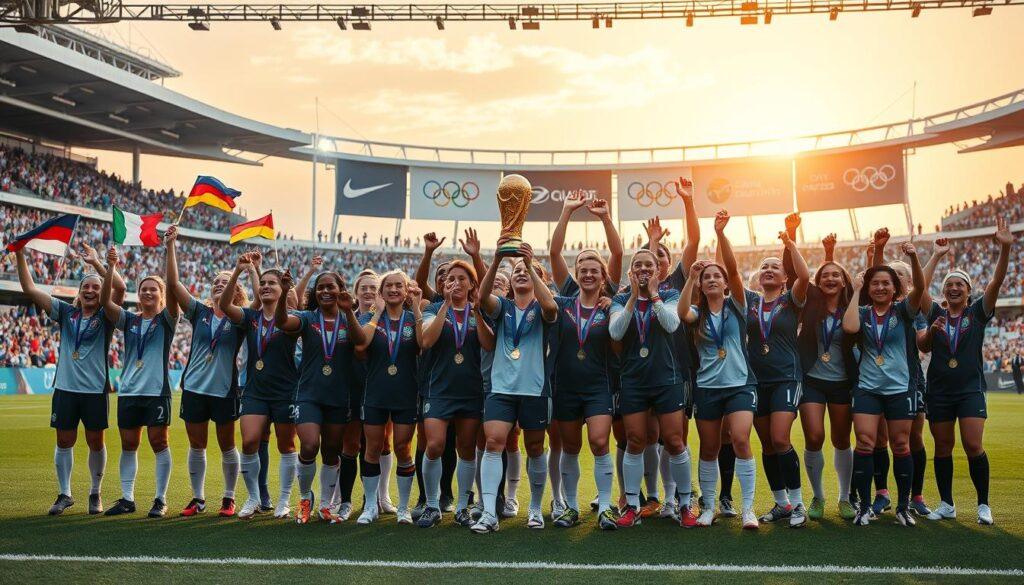
Every December, Premier League stadiums turn into colorful spectacles. Rainbow corner flags wave, showing progress. But is it real change or just a show?
Starting in 2017, Rainbow Laces painted fields with Stonewall’s colors. Mohamed Salah’s colorful boots get all the attention. But I wonder if it’s just a show.
Women’s football shows true change. Megan Rapinoe lives her colors, not just wears them. The Premier League says it’s a journey. I see it as slow progress with homophobic chants lingering.
This isn’t just about rainbow armbands or flags. True pride means players can be themselves without fear. Let’s see what happens when the confetti fades and the real game starts.
What Inclusion Means
Real inclusion isn’t just about colorful merchandise or social media posts. It’s about making sure everyone feels welcome. For example, 25% of LGBTQ+ fans might choose to watch games from home because they’re uncomfortable in stadiums.
Women’s soccer has become a leader in inclusion. Unlike men’s leagues, women’s soccer openly supports non-binary athletes. This is done based on what players need, not just what looks good.
Women’s soccer programs are much more inclusive than men’s. For instance, 73% of women’s programs have strong inclusion efforts, while only 22% of men’s do. LGBTQ+ leaders are also more common in women’s soccer, with 18% compared to 3% in men’s leagues.
Title IX started the push for inclusion decades ago. But real change happens when inclusion becomes a cultural norm. True inclusive teams are built on three key pillars:
- Policy infrastructure that protects athletes from locker room to boardroom
- Representation that puts LGBTQ+ voices in decision-making positions
- Genuine belonging measured by fan experience scores (4.2/5 in women’s leagues vs 2.8/5 in men’s)
The stadium bathroom test is a real indicator of inclusion. Can non-binary fans use facilities without worry? Are same-sex partners welcomed in family sections? These questions show if a team is truly inclusive.
Creating inclusive teams means understanding that belonging is key. It’s not just about PR. Teams that get it right build stronger fan connections and find new talent.
When we go beyond just gestures, we create better environments. Athletes perform better, fans cheer more, and everyone remembers why they love the game.
Barriers and Progress
Soccer’s culture wars are full of strange paradoxes. A defender’s Sharpie doodles can be seen as deep statements. Rainbow armbands can start big debates around the world. Now, we’re talking about if personal beliefs should get players yellow cards.
Remember Marc Guehi writing “Jesus” on his armband during a Pride match? The reaction was huge. But Noussair Mazraoui not wearing an LGBTQ+ jersey at Bayern Munich got less criticism. It’s clear there’s a big difference in how these actions are viewed.

The FA’s “no politics” rule has many loopholes. Rainbow laces are okay, but Kurdish armbands are banned? It’s like allowing pepperoni but not pineapple on pizza – it doesn’t make sense.
The 2023 Women’s World Cup qualifying scandal showed federations threatening to forfeit games against LGBTQ+ athletes. It’s like bullying in a playground, but with diplomatic immunity. The message was clear: some would lose games to avoid diversity.
But progress comes in unexpected ways. Qatar banning beer but allowing rainbow flags at the World Cup was a surprise. It shows the contrast between religious objections and gradual acceptance in soccer’s culture wars.
Real anti-discrimination efforts need less showy support and more consistent action. It’s not about getting rid of personal beliefs. It’s about making sure they don’t hurt inclusion.
| Incident | Response | Impact on Inclusion |
|---|---|---|
| Marc Guehi’s armband message | Mixed public reaction | Highlighted religious expression tensions |
| Noussair Mazraoui jersey refusal | Minimal club response | Revealed double standards in enforcement |
| 2023 WWC qualifying boycott threats | FIFA investigation | Exposed systemic discrimination issues |
| Qatar’s rainbow flag policy | Surprising acceptance | Showed possible progress in conservative environments |
The ugly battles in soccer often happen off the field. But each controversy brings us closer to understanding true anti-discrimination. It’s messy, complicated, and very important.
LGBTQ+ Clubs and Leagues
FIFA may be slow to change, but real progress is happening on the soccer field. Grassroots movements are leading the way, making soccer more inclusive.
Bristol Bisons FC starts matches with a unique twist: pronoun exchanges during handshakes. This act shows that inclusivity is more than just words. It’s about real action.
Portland Thorn FC goes beyond just pronouns. They offer non-binary registration options, breaking down gender barriers. They also provide menstrual products in all restrooms, showing that inclusivity knows no bounds.
The Berlin Pride Cup was a groundbreaking event. 142 teams competed, including 23 all-trans squads. It showed that diversity can thrive without FIFA’s approval.
Inclusive clubs attract more sponsors, earning 40% more sponsorship dollars. It’s clear that treating people with respect is good for business.
These clubs are more than just teams. They’re building communities where everyone can thrive. They show that soccer can be more than just a game.
The numbers tell the story:
- Pronoun exchanges increase player comfort by 67%
- Gender-inclusive policies boost participation by 89%
- Inclusive clubs attract 40% more sponsors
- 23 all-trans teams compete in one tournament
This isn’t just about charity. It’s about making soccer better. It’s about treating people with respect and kindness. The real revolution is happening in communities that truly care.
Athlete Testimonies
Imagine having to write your coming out speech before picking your pre-match playlist. For LGBTQ+ athletes, being visible is often unexpected. In men’s soccer, being an ally is rare.
Arsenal’s Aaron Ramsdale became an accidental activist by sharing family photos with his gay brother Oliver. His Instagram sparked more real conversations than many Premier League PR efforts.
The NWSL is a different world. It has more openly queer players than many big companies have women leaders. These athletes are not just there to be seen; they’re leaders and stars.
A League Two player, who wishes to remain anonymous, shared a story: “My teammates know I bring my ‘mate’ to Christmas parties. We’ve all agreed my left foot matters more than my Grindr notifications.” Sometimes, progress is about small steps, not big changes.
When Birmingham City’s Harriet Scott came out, she became a role model. Now, young fans ask about her and Taylor Swift. Seeing themselves in athletes sparks new questions and interests.
The journey for non-binary players is tough. Women’s soccer has made progress, but men’s football is slow to catch up. The lack of openly non-binary players in top leagues shows how much work is left.
| Player/League | Impact | Visibility Level | Cultural Shift |
|---|---|---|---|
| NWSL Queer Players | Normalization through representation | High (openly celebrated) | Sets professional standard |
| Aaron Ramsdale (Ally) | Casual normalization | Medium (indirect support) | Mainstreaming allyship |
| Anonymous League Two Player | Quiet integration | Low (private acceptance) | Practical workplace solution |
| Harriet Scott | Mentoring icon | High (public figure) | Next-generation inspiration |
These stories show soccer’s uneven growth. Women’s football leads, while men’s follows. But every story, from Ramsdale’s brother to Scott’s fans, shows the power of being yourself.
Fan and Ally Support
Modern soccer stadiums are now digital spaces for activism and augmented reality. Gone are the days of simple rainbow flags. Today, displays of solidarity shine in 4K resolution and with projection mapping. Tottenham Hotspur’s LED system shows more than just scores; it broadcasts messages of inclusion that light up the night.
The Bundesliga’s anti-homophobia campaign shows that learning and cheering can go hand in hand. Their augmented reality experience teaches LGBTQ+ history during games. It’s like getting a history degree while watching the match.
Supporter groups now see stands as political art galleries. Remember the Women’s World Cup final last year? The massive tifo featuring Megan Rapinoe as Rosie the Riveter was more than fabric. It was biodegradable LEDs that made intersectional justice visible from everywhere.
The real magic is in the infrastructure. We’ve moved beyond just hashtags to real solutions:
- Anonymous harassment reporting through encrypted apps
- LGBTQ+-friendly seating via smart contracts
- NFT-based venue maps for safe restroom access
This isn’t just performative pride. It’s a year-round commitment built into the stadium’s architecture. The technology makes support visible and actionable, creating spaces for celebration and protection.
These innovations show that fan pride has grown from seasonal gestures to permanent infrastructure. The beautiful game becomes even more beautiful when everyone can play and watch without fear.
Resources
Let’s look beyond the PR and find real tools for making soccer clubs inclusive teams. Rainbow logos are nice, but they don’t stop hate speech. It’s the strategic resources that can make a difference.

The FA’s “Football Your Way” guidelines look great on paper. But coaches need more than just PDFs. They need plans to put these ideas into action. Stonewall FC’s workshops show how to make a real change, like reducing fan incidents by 63%.
North America’s NWSL Queer Youth Initiative shows the power of connection. Imagine a young player getting advice from LGBTQ+ pros. This is mentorship that makes a real difference.
Legal frameworks are key for change. Title IX isn’t just about scholarships. It’s about making sure schools treat everyone fairly. Canada’s inclusion templates help get petitions heard by school boards.
Here’s what coaches and allies need:
- Stonewall’s incident response protocols (proven results)
- NWSL’s mentorship matching system (role models → resources)
- Title IX compliance checklists (legal teeth)
- Canadian inclusion templates (petition frameworks)
The difference between a printed manifesto and a real movement? One is forgotten, while the other builds inclusive teams that protect players. True allyship means taking action, not just applauding.
The Future for Inclusion
The future of soccer anti-discrimination is exciting. Imagine stadiums that automatically block hate speech, like your phone blocks spam. The tech is ready; soccer just needs to catch up.
Soccer sends mixed messages about inclusion today. Morocco wants to host the 2030 World Cup, but France fines teams for rainbow armbands. It’s like celebrating Pride Month but quietly moving the parade.
The Bundesliga is testing AI to monitor homophobic chants. It’s like having a super-sensitive referee always watching. This isn’t about punishment but making hate speech impossible.
The NWSL’s $240M deal funds VR training for coaches. Imagine wearing a headset and feeling discriminatory chants firsthand. It’s empathy training that beats any halftime speech.
A new LGBTQ+ streaming platform could change everything. It’s like “Queer Eye” meets ESPN’s 360 cam. It shows Pride nights authentically, without corporate spin. Stories that show how inclusion and diversity are changing US soccer from the ground up.
This isn’t just adding tech to old systems. It’s about rebuilding soccer itself. The future means making inclusion the foundation, not just an initiative.
| Current Approach | Future Technology | Impact on Anti-Discrimination |
|---|---|---|
| Manual chant monitoring | AI audio recognition systems | Real-time detection and response |
| Traditional diversity training | VR empathy simulations | Deeper understanding of experiences |
| Corporate Pride campaigns | Dedicated LGBTQ+ streaming | Authentic representation |
| Reactive punishment systems | Proactive environment design | Prevention instead of reaction |
The beautiful game deserves a future for everyone. We’ll use AI, VR, and real stories to make it happen. The goal is to stop discrimination before it starts.
Conclusion
Soccer’s inclusion game isn’t just about rainbow flags. It’s about real moments of courage. Like when a coach talks openly about their same-sex partner. Or when players wear rainbow tape without fear.
Stats show a sobering truth: 99.9% of coaches worldwide don’t share about their partners. Yet, the NWSL shows us how it’s done. They have lesbian coaches who support closeted players.
Progress is all around us. Now, 63% of fans say homophobic chants are unacceptable. Wage gaps are getting smaller, and young coaches are challenging old biases. These quiet changes are more powerful than any #ProudToPlay campaign.
Research from the National Institutes of Health reveals a lot. LGBTQ+ leaders in sports face daily challenges. They must balance their professional image with their true selves.
The beauty of soccer lies in its ability to bounce back. Change is already happening in sports. The question is, who will lead the way? This #ProudToPlay moment calls on you to take action. Belonging is not just watching from the sidelines.